QUESTION IMAGE
Question
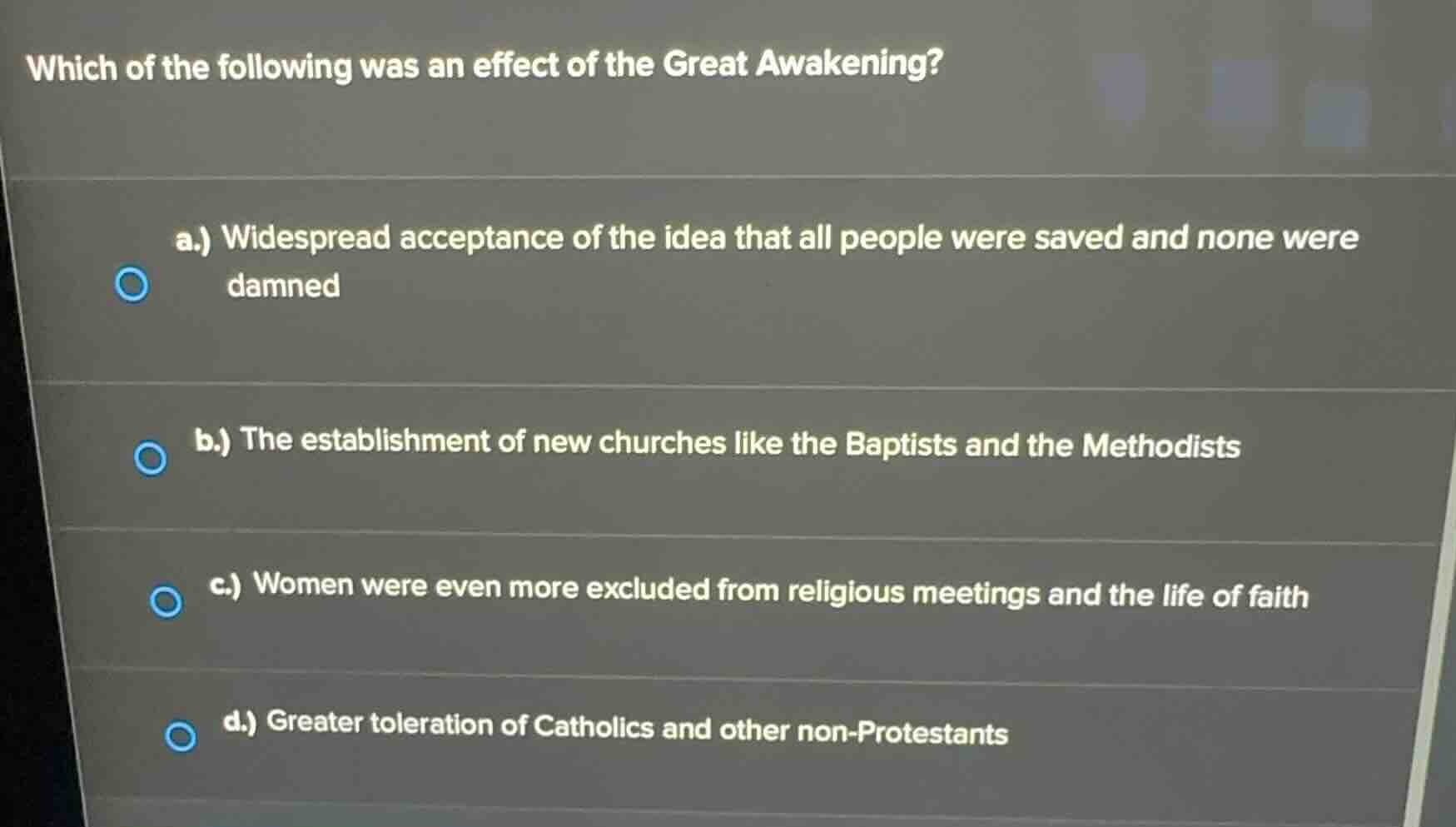
which of the following was an effect of the great awakening?
a.) widespread acceptance of the idea that all people were saved and none were damned
b.) the establishment of new churches like the baptists and the methodists
c.) women were even more excluded from religious meetings and the life of faith
d.) greater toleration of catholics and other non-protestants
Analyze the Great Awakening
The First Great Awakening (1730s–1740s) was a major religious revival in the American colonies. It emphasized individual spiritual experience, personal salvation, and emotional connection to faith over traditional church hierarchies and formal doctrines.
Evaluate the options
- Option a: This describes universalism (the idea that everyone is saved), which contradicts the core Calvinist and evangelical teachings of the Awakening that emphasized the reality of damnation and the urgent need for personal repentance.
- Option b: The revival led to a major split between "Old Lights" (traditionalists) and "New Lights" (revivalists). This fragmentation resulted in the rapid growth and establishment of newer, more democratic Protestant denominations, particularly the Baptists and Methodists.
- Option c: The movement actually provided more opportunities for women and marginalized groups to participate in religious gatherings, speak, and express their faith, rather than excluding them further.
- Option d: The Great Awakening was an intensely Protestant movement and did not significantly increase toleration for Catholics or non-Protestants.
Select the correct option
The establishment and rapid growth of new denominations like the Baptists and Methodists is a well-documented, major historical consequence of the Great Awakening.

Snap & solve any problem in the app
Get step-by-step solutions on Sovi AI
Photo-based solutions with guided steps
Explore more problems and detailed explanations
- a.) Widespread acceptance of the idea that all people were saved and none were damned
- b.) The establishment of new churches like the Baptists and the Methodists (Correct answer)
- c.) Women were even more excluded from religious meetings and the life of faith
- d.) Greater toleration of Catholics and other non-Protestants