QUESTION IMAGE
Question
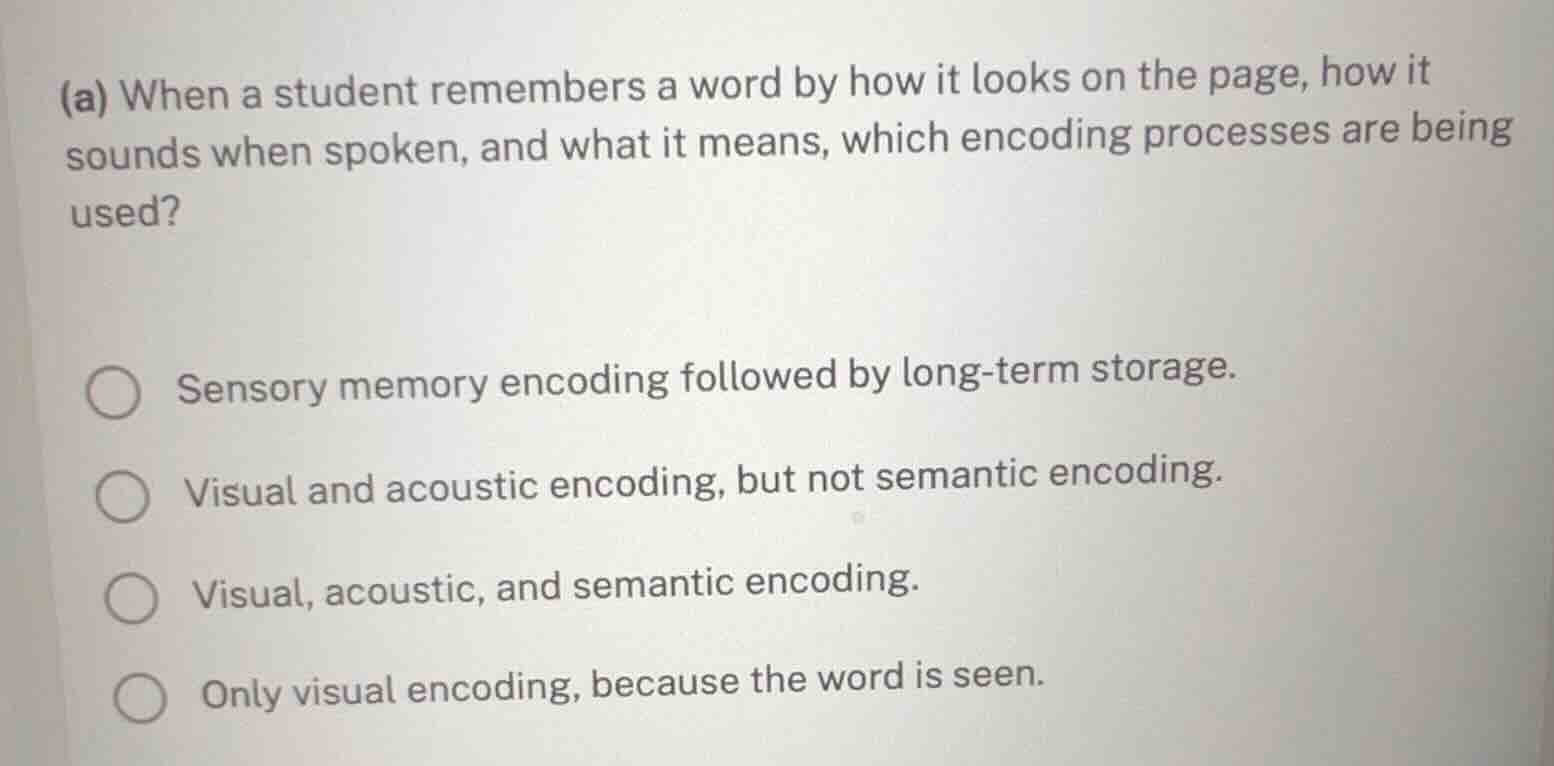
(a) when a student remembers a word by how it looks on the page, how it sounds when spoken, and what it means, which encoding processes are being used?
sensory memory encoding followed by long-term storage.
visual and acoustic encoding, but not semantic encoding.
visual, acoustic, and semantic encoding.
only visual encoding, because the word is seen.
Identify the components of the memory process
The question describes a student remembering a word using three distinct characteristics:
- How it looks on the page (visual appearance).
- How it sounds when spoken (auditory representation).
- What it means (conceptual meaning).
Map each component to its corresponding encoding type
In cognitive psychology, information is processed and entered into memory through different types of encoding:
- Encoding the physical appearance or visual imagery of a stimulus is known as visual encoding.
- Encoding the sound of a stimulus (such as spoken words) is known as acoustic encoding (or phonological encoding).
- Encoding the meaning of a stimulus, including its context and relationship to other concepts, is known as semantic encoding.
Match with the given options
Since the student is using all three methods—how the word looks, how it sounds, and what it means—they are utilizing visual, acoustic, and semantic encoding processes. This directly corresponds to the third option.

Snap & solve any problem in the app
Get step-by-step solutions on Sovi AI
Photo-based solutions with guided steps
Explore more problems and detailed explanations
- Sensory memory encoding followed by long-term storage.
- Visual and acoustic encoding, but not semantic encoding.
- Visual, acoustic, and semantic encoding. (Correct answer)
- Only visual encoding, because the word is seen.