QUESTION IMAGE
Question
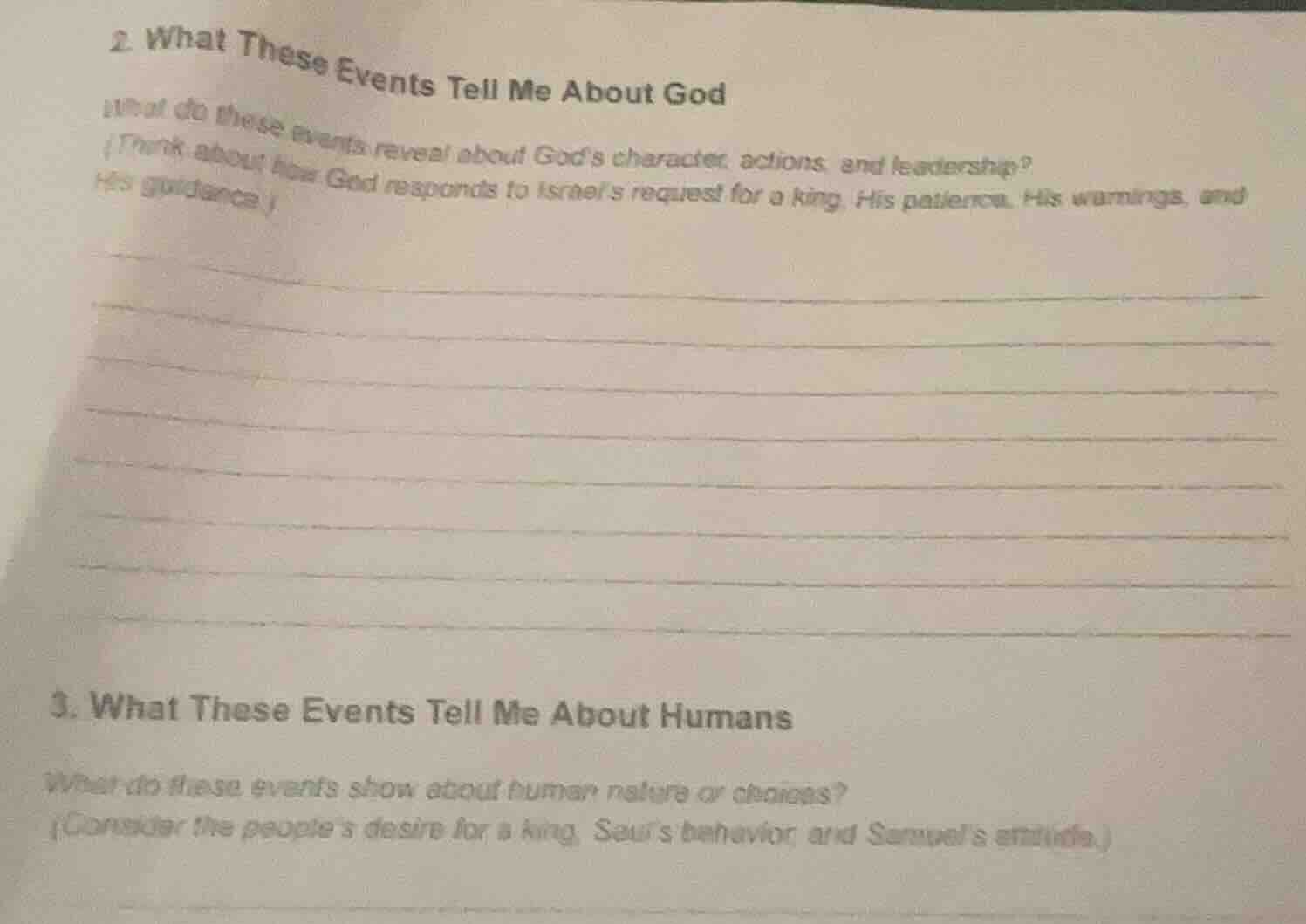
- what these events tell me about god
what do these events reveal about god’s character, actions, and leadership?
(think about how god responds to israel’s request for a king, his patience, his warnings, and his guidance.)
- what these events tell me about humans
what do these events show about human nature or choices?
(consider the people’s desire for a king, saul’s behavior, and samuel’s attitude.)
For question 2: The events (from the Hebrew Bible's account of Israel requesting a king) show God is patient: he honors Israel's request despite it rejecting his direct leadership, warns them of the harms of a human king (like taxation, conscription), and provides guidance by choosing Saul as their king while holding them accountable. God's character is compassionate yet just, prioritizing his people's autonomy while seeking to protect them.
For question 3: These events reveal human nature often prioritizes worldly, familiar structures (a human king like other nations) over divine leadership, showing a tendency to doubt non-visible guidance. Saul's behavior demonstrates human weakness: succumbing to pride and disobeying divine commands when pressured. Samuel's attitude shows that humans can struggle with grief when their understanding of leadership is challenged, but can also act as faithful mediators between people and the divine.

Snap & solve any problem in the app
Get step-by-step solutions on Sovi AI
Photo-based solutions with guided steps
Explore more problems and detailed explanations
- These events reveal God is patient, just, and compassionate: He grants Israel's request for a king despite their rejection of His direct rule, warns them of the negative consequences of human kingship, and provides guidance by selecting Saul, balancing respect for their autonomy with a desire to protect them.
- These events show humans often prioritize worldly, conventional systems over divine guidance, struggle with weakness and disobedience (seen in Saul), and can experience conflict between loyalty to tradition and divine will (seen in Samuel), highlighting a universal tendency to seek familiar, human-led authority rather than trusting non-visible divine leadership.