QUESTION IMAGE
Question
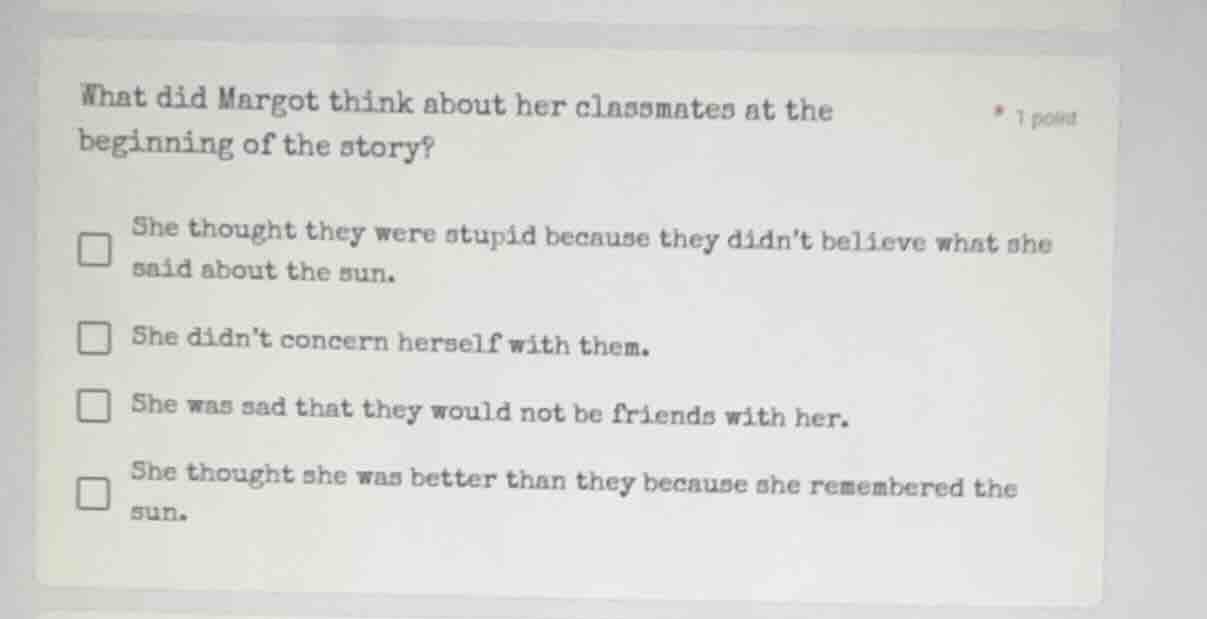
what did margot think about her classmates at the beginning of the story? * 1 point
she thought they were stupid because they didnt believe what she said about the sun.
she didnt concern herself with them.
she was sad that they would not be friends with her.
she thought she was better than they because she remembered the sun.
⚡ Using what you learned: Inferential comprehension and textual evidence
Step 1: Analyze Margot's behavior and attitude
In Ray Bradbury's short story "All Summer in a Day", Margot is depicted as deeply isolated, quiet, and withdrawn from her classmates. At the beginning of the story, she does not actively engage with them, play their games, or seek their approval. Instead, she remains detached and focused entirely on her memories of the sun and her longing to return to Earth.
Step 2: Evaluate the options against the text
- "She thought they were stupid because they didn't believe what she said about the sun."
- Incorrect. Margot does not show contempt, anger, or feelings of intellectual superiority toward her classmates.
- "She didn't concern herself with them."
- Correct. The text emphasizes her complete detachment. When they play games in the echoing tunnels, she stands apart and does not participate. She is indifferent to their presence because her mind is entirely consumed by her memories of Earth and the sun.
- "She was sad that they would not be friends with her."
- Incorrect. While Margot is deeply sad, her grief stems from the absence of the sun and her displacement from Earth, not from a desire to fit in or make friends with the other children.
- "She thought she was better than they because she remembered the sun."
- Incorrect. Although the other children are jealous of her because she remembers the sun, Margot herself does not act arrogant or look down on them.

Snap & solve any problem in the app
Get step-by-step solutions on Sovi AI
Photo-based solutions with guided steps
Explore more problems and detailed explanations
She didn't concern herself with them.