QUESTION IMAGE
Question
what was the main cause for the trend shown in the graph during the 1940s and 1950s?
a sharp decrease in the price of agricultural products during and after world war ii
increased racial discrimination in the south during and after world war ii
economic opportunities to work in factories during and after world war ii
a decreased need for agricultural labor in the south during and after world war ii
Analyze the graph and identify the trend
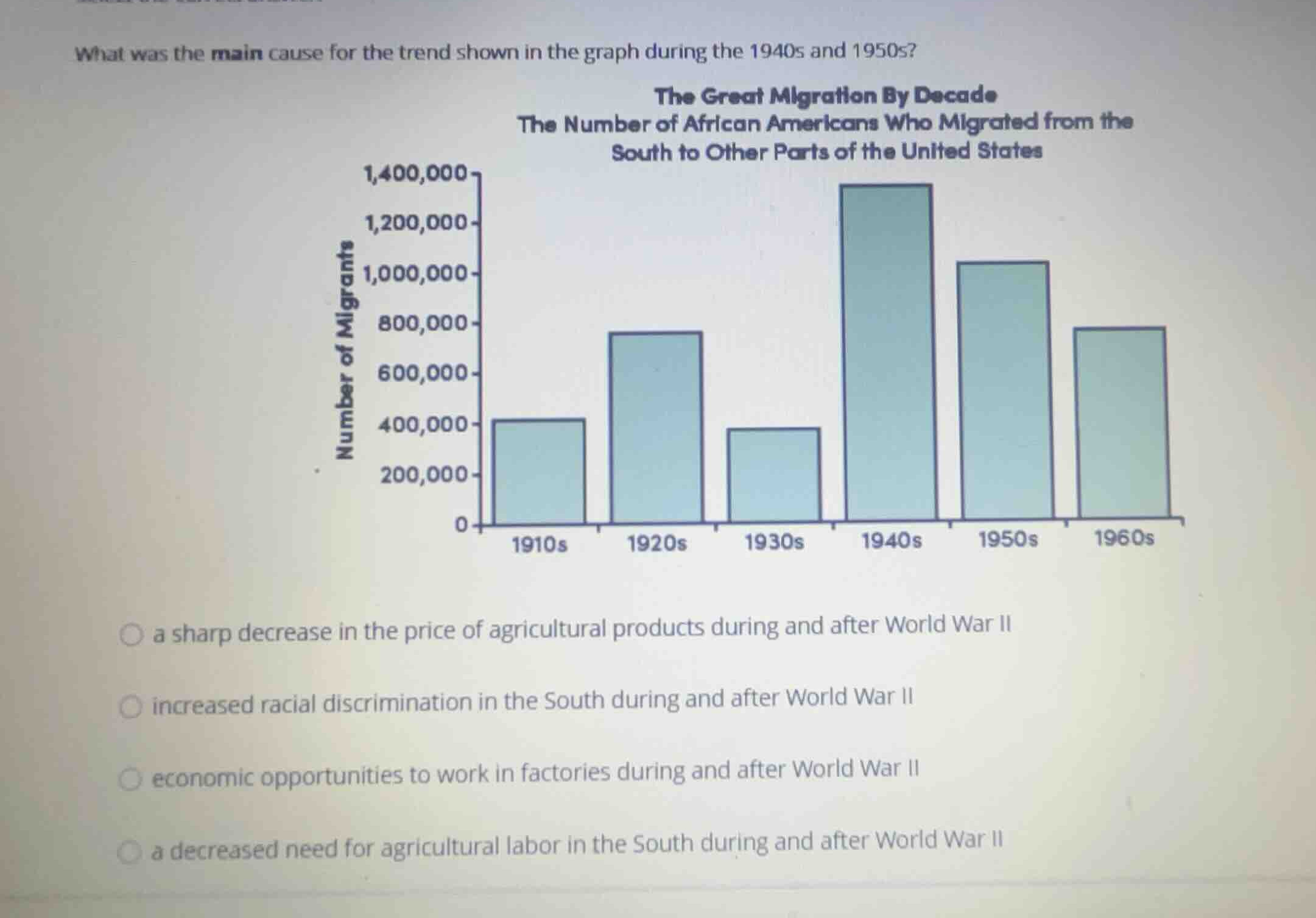
The bar graph titled "The Great Migration By Decade" shows the number of African Americans who migrated from the South to other parts of the United States. During the 1940s and 1950s, the graph shows a massive surge in migration, reaching its peak in the 1940s with over 1.3 million migrants and remaining very high in the 1950s with over 1 million migrants.
Evaluate the historical context of the 1940s and 1950s
The 1940s marked the United States' involvement in World War II. The war effort triggered a massive expansion in industrial manufacturing, particularly in Northern, Midwestern, and Western cities. Defense industries and factories faced severe labor shortages as millions of workers were drafted, creating unprecedented job opportunities.
Assess the provided options
- Option 1: A sharp decrease in agricultural prices does not historically align as the primary driver for this massive, targeted industrial migration wave.
- Option 2: While racial discrimination (Jim Crow laws) was a constant push factor, it did not suddenly spike in a way that explains the specific, dramatic surge during the 1940s war years.
- Option 3: Economic opportunities in factories during and after World War II acted as a powerful pull factor, drawing millions of African Americans to urban industrial centers for well-paying defense and manufacturing jobs.
- Option 4: While agricultural mechanization did decrease the need for farm labor, the primary catalyst for the massive peak during the 1940s was the immediate pull of wartime industrial employment.
Determine the correct option
The primary driver for the dramatic increase in migration during the 1940s and 1950s was the abundance of industrial jobs in urban centers outside the South, catalyzed by the defense production of World War II and the subsequent post-war economic boom.

Snap & solve any problem in the app
Get step-by-step solutions on Sovi AI
Photo-based solutions with guided steps
Explore more problems and detailed explanations
- a sharp decrease in the price of agricultural products during and after World War II
- increased racial discrimination in the South during and after World War II
- economic opportunities to work in factories during and after World War II (Correct answer)
- a decreased need for agricultural labor in the South during and after World War II