QUESTION IMAGE
Question
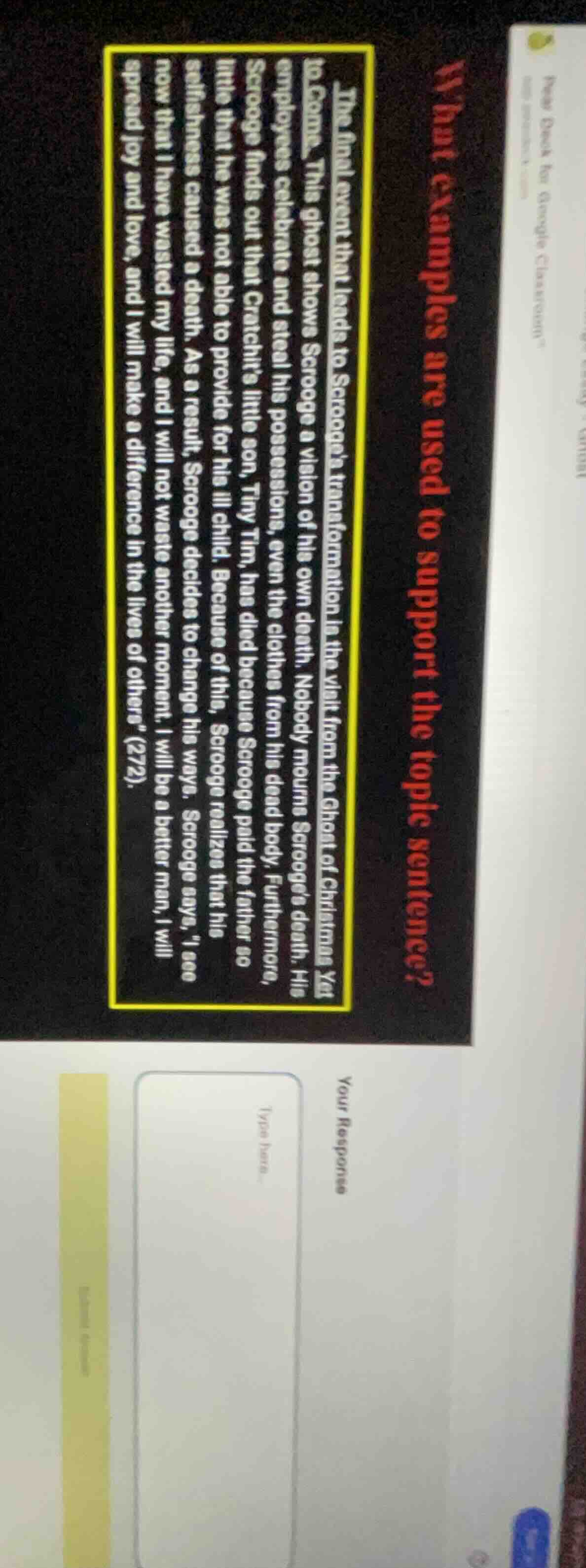
what examples are used to support the topic sentence? the final event that leads to scrooges transformation is the visit from the ghost of christmas yet to come. this ghost shows scrooge a vision of his own death. nobody mourns scrooges death. his employees celebrate and steal his possessions, even the clothes from his dead body. furthermore, scrooge finds out that cratchits little son, tiny tim, has died because scrooge paid the father so little that he was not able to provide for his ill child. because of this, scrooge realizes that his selfishness caused a death. as a result, scrooge decides to change his ways. scrooge says, \i see now that i have wasted my life, and i will not waste another moment. i will be a better man, i will spread joy and love, and i will make a difference in the lives of others.\ (272).
The supporting examples are specific, concrete details from the text that illustrate Scrooge's transformation trigger:
- The Ghost of Christmas Yet to Shows Scrooge a vision of his own ignored, un-mourned death, where his employees steal his possessions.
- The ghost shows Scrooge that Tiny Tim, Bob Cratchit's son, dies because Scrooge's low wages left the family unable to care for the ill child.
- Scrooge's explicit, remorseful declaration that he will change his ways and spread joy to others.

Snap & solve any problem in the app
Get step-by-step solutions on Sovi AI
Photo-based solutions with guided steps
Explore more problems and detailed explanations
- The Ghost of Christmas Yet to Come shows Scrooge a vision of his own death, where no one mourns him and his employees steal his possessions.
- The ghost reveals that Tiny Tim, Bob Cratchit's son, dies because Scrooge's insufficient pay left the family unable to provide proper care for the sick child.
- Scrooge's stated resolve to change his ways, saying, "I see now that I have wasted my life, and I will not waste another moment. I will be a better man, I will spread joy and love, and I will make a difference in the lives of others" (272).