Sovi.AI - AI Math Tutor

Scan to solve math questions

QUESTION IMAGE

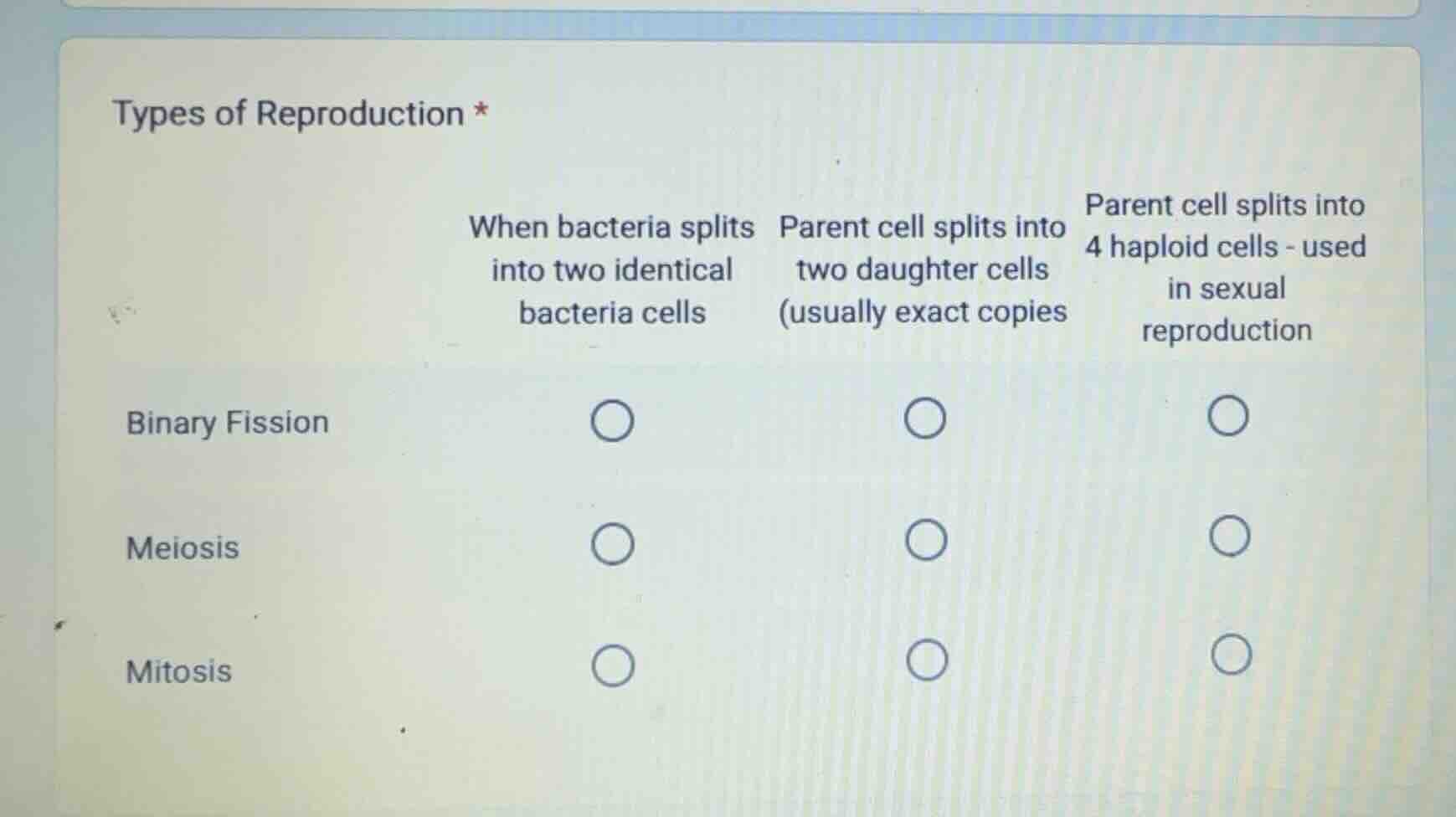
types of reproduction * | | when bacteria splits into two identical bac…

Question

types of reproduction *

when bacteria splits into two identical bacteria cellsparent cell splits into two daughter cells (usually exact copies)parent cell splits into 4 haploid cells - used in sexual reproduction
meiosis
mitosis

Explanation:

Response

<pre_analysis>
{
"quality": "clear",
"question_count": 3,
"skills_matched": [
"direct_cot",
"table_formatter",
"explain_then_answer",
"tutor"
],
"needs_drawing": false,
"concepts_used": [
"Prokaryotic Cell Division",
"Eukaryotic Cell Division",
"Meiosis"
],
"new_concepts": [],
"current_concepts": [
"Prokaryotic Cell Division",
"Eukaryotic Cell Division",
"Meiosis",
"Mitosis Stages"
]
}
</pre_analysis>

<reasoning>

Analyze bacterial division

The first column describes "When bacteria splits into two identical bacteria cells." Bacteria are prokaryotes, and their primary mechanism of asexual reproduction and cell division is Prokaryotic Cell Division, specifically known as binary fission.

Analyze somatic cell division

The second column describes "Parent cell splits into two daughter cells (usually exact copies)." This is the standard process of asexual eukaryotic cell division, which is Eukaryotic Cell Division, specifically mitosis.

Analyze gamete production

The third column describes "Parent cell splits into 4 haploid cells - used in sexual reproduction." This reduction division is the process of Meiosis, which produces genetically diverse haploid gametes for sexual reproduction.
</reasoning>

<answer>

Type of ReproductionDescription
MitosisParent cell splits into two daughter cells (usually exact copies)
MeiosisParent cell splits into 4 haploid cells - used in sexual reproduction

</answer>

<post_analysis>
{
"subject": "Natural Science",
"question_type": "Fill-in-the-blank",
"knowledge_point": [
"Natural Science",
"Biology",
"Cell Division"
]
}
</post_analysis>

Answer:

<pre_analysis>
{
"quality": "clear",
"question_count": 3,
"skills_matched": [
"direct_cot",
"table_formatter",
"explain_then_answer",
"tutor"
],
"needs_drawing": false,
"concepts_used": [
"Prokaryotic Cell Division",
"Eukaryotic Cell Division",
"Meiosis"
],
"new_concepts": [],
"current_concepts": [
"Prokaryotic Cell Division",
"Eukaryotic Cell Division",
"Meiosis",
"Mitosis Stages"
]
}
</pre_analysis>

<reasoning>

Analyze bacterial division

The first column describes "When bacteria splits into two identical bacteria cells." Bacteria are prokaryotes, and their primary mechanism of asexual reproduction and cell division is Prokaryotic Cell Division, specifically known as binary fission.

Analyze somatic cell division

The second column describes "Parent cell splits into two daughter cells (usually exact copies)." This is the standard process of asexual eukaryotic cell division, which is Eukaryotic Cell Division, specifically mitosis.

Analyze gamete production

The third column describes "Parent cell splits into 4 haploid cells - used in sexual reproduction." This reduction division is the process of Meiosis, which produces genetically diverse haploid gametes for sexual reproduction.
</reasoning>

<answer>

Type of ReproductionDescription
MitosisParent cell splits into two daughter cells (usually exact copies)
MeiosisParent cell splits into 4 haploid cells - used in sexual reproduction

</answer>

<post_analysis>
{
"subject": "Natural Science",
"question_type": "Fill-in-the-blank",
"knowledge_point": [
"Natural Science",
"Biology",
"Cell Division"
]
}
</post_analysis>