QUESTION IMAGE
Question
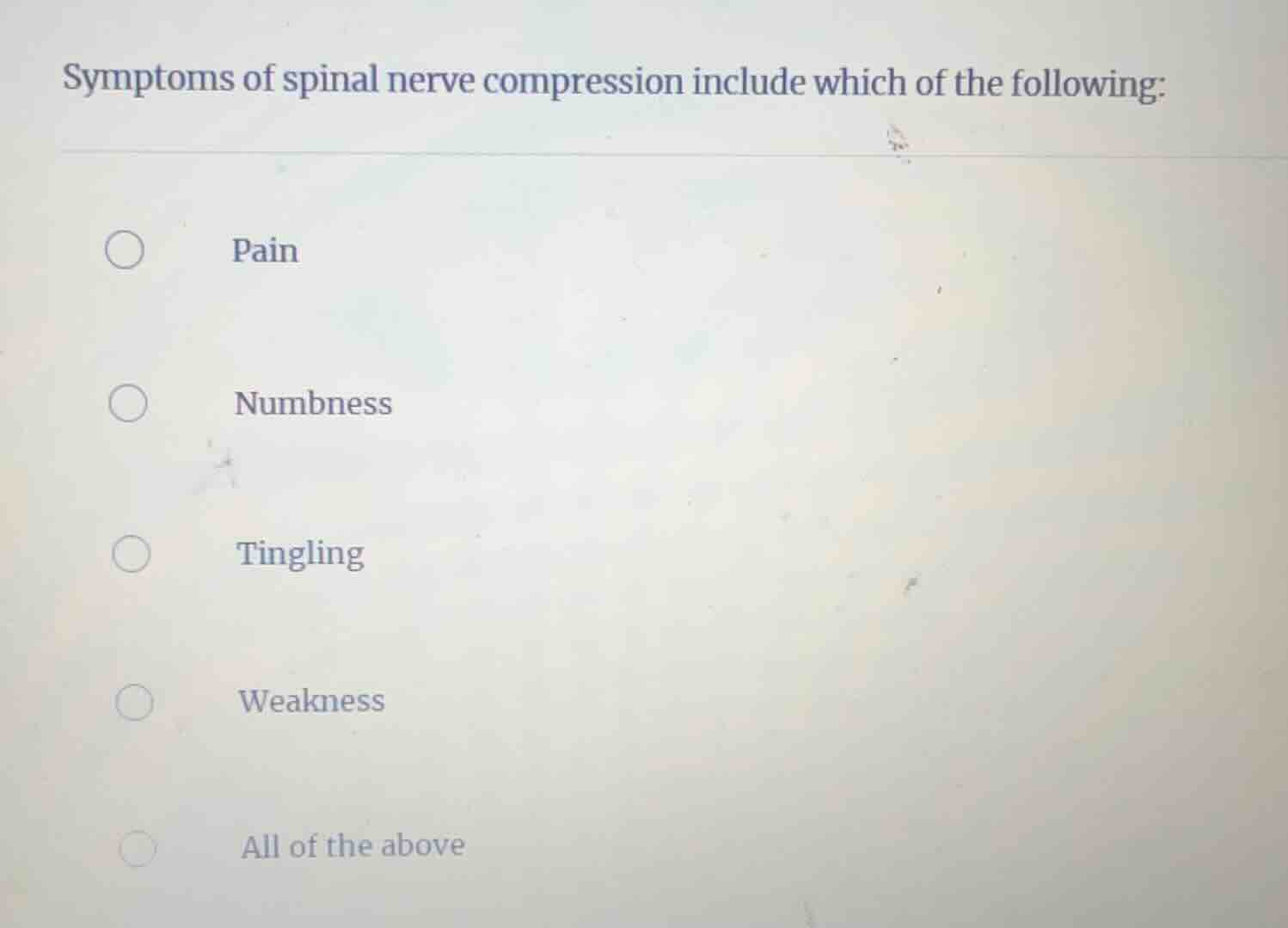
symptoms of spinal nerve compression include which of the following:
pain
numbness
tingling
weakness
all of the above
Analyze spinal nerve compression
Spinal nerve compression occurs when pressure is placed on a nerve root exiting the spinal cord. This pressure can disrupt normal sensory and motor signal transmission.
Evaluate individual symptoms
- Pain: Compression of a nerve root frequently causes localized or radiating pain along the nerve pathway (radiculopathy).
- Numbness: Interrupted sensory signals often lead to a loss of sensation or numbness in the dermatome supplied by the affected nerve.
- Tingling: Abnormal sensory signaling commonly manifests as a "pins and needles" sensation (paresthesia).
- Weakness: When motor nerve fibers are compressed, the signals to muscles are impaired, resulting in localized muscle weakness.
Connect to clinical risks
Using the Spine Surgery Risks knowledge point, we monitor patients postoperatively for these exact neurological deficits to ensure there is no new or worsening nerve root compression. Since pain, numbness, tingling, and weakness are all classic clinical signs of nerve compression, they are all correct.
Determine the correct option
Because all the listed symptoms are primary indicators of spinal nerve compression, the most comprehensive and correct choice is "All of the above".

Snap & solve any problem in the app
Get step-by-step solutions on Sovi AI
Photo-based solutions with guided steps
Explore more problems and detailed explanations
- Pain
- Numbness
- Tingling
- Weakness
- All of the above (Correct answer)