QUESTION IMAGE
Question
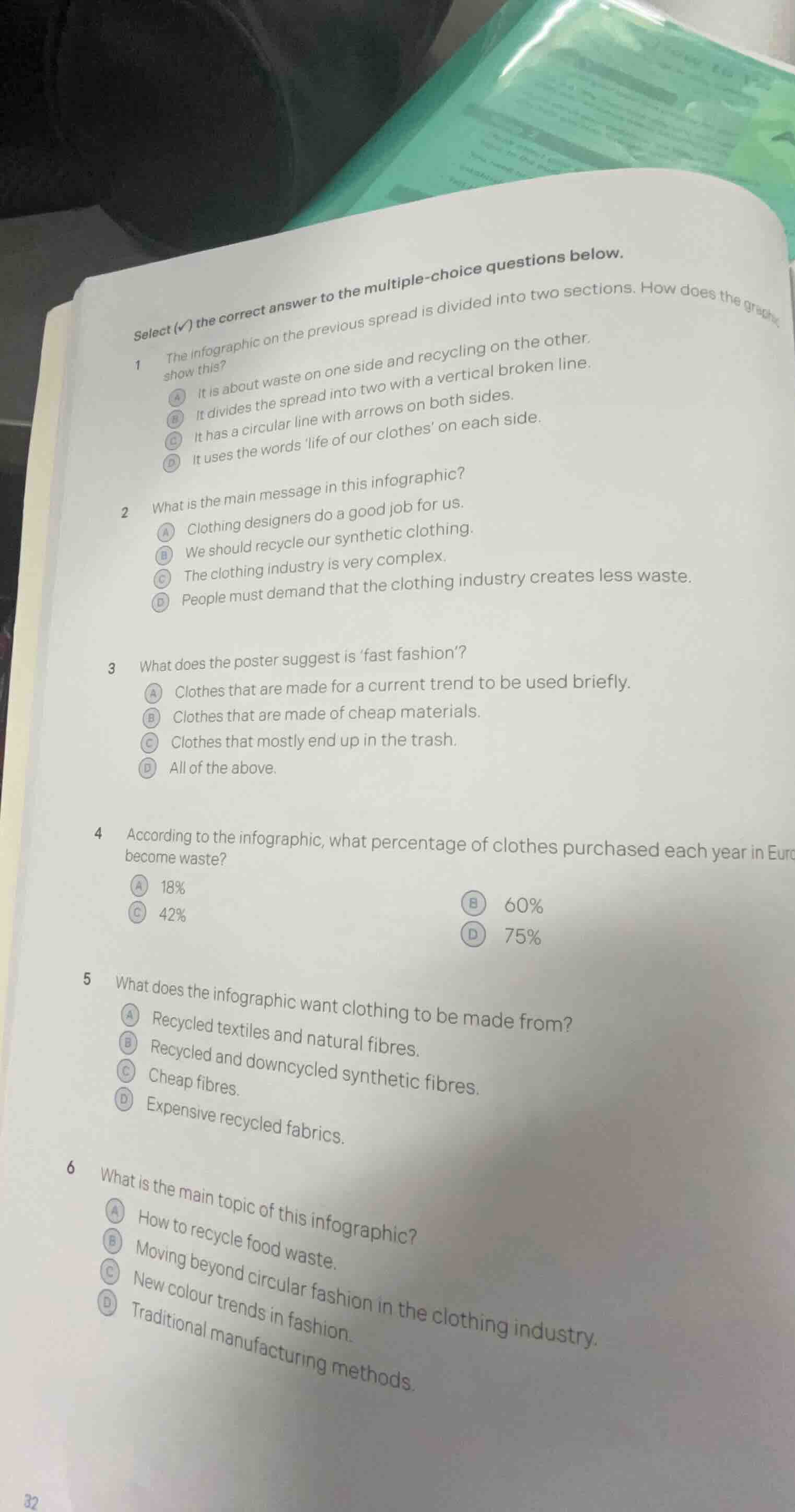
select (\checkmark) the correct answer to the multiple-choice questions below.
1 the infographic on the previous spread is divided into two sections. how does the graphic show this?
a it is about waste on one side and recycling on the other.
b it divides the spread into two with a vertical broken line.
c it has a circular line with arrows on both sides.
d it uses the words life of our clothes on each side.
2 what is the main message in this infographic?
a clothing designers do a good job for us.
b we should recycle our synthetic clothing.
c the clothing industry is very complex.
d people must demand that the clothing industry creates less waste.
3 what does the poster suggest is fast fashion?
a clothes that are made for a current trend to be used briefly.
b clothes that are made of cheap materials.
c clothes that mostly end up in the trash.
d all of the above.
4 according to the infographic, what percentage of clothes purchased each year in europe become waste?
a 18%
b 60%
c 42%
d 75%
5 what does the infographic want clothing to be made from?
a recycled textiles and natural fibres.
b recycled and downcycled synthetic fibres.
c cheap fibres.
d expensive recycled fabrics.
6 what is the main topic of this infographic?
a how to recycle food waste.
b moving beyond circular fashion in the clothing industry.
c new colour trends in fashion.
d traditional manufacturing methods.
Analyze questions 1, 2, and 3
- Question 1 asks how the graphic shows the division of the infographic into two sections. The options describe visual elements. Option B ("It divides the spread into two with a vertical broken line") is a standard layout feature for two-section spreads.
- Question 2 asks for the main message. The options focus on the clothing industry and waste. Option D ("People must demand that the clothing industry creates less waste") represents a typical call-to-action message for environmental infographics.
- Question 3 asks about the definition of 'fast fashion' suggested by the poster. Fast fashion is characterized by clothes made for current trends to be used briefly, cheap materials, and high waste. Therefore, Option D ("All of the above") is the most comprehensive and correct choice.
Analyze questions 4, 5, and 6
- Question 4 asks for the percentage of clothes purchased each year in Europe that become waste. Based on standard environmental data regarding textile waste in Europe, approximately 75% of textiles end up in landfills or incinerators. Thus, Option D ("75%") is the correct choice.
- Question 5 asks what the infographic wants clothing to be made from. Sustainable fashion advocates for circularity. Option A ("Recycled textiles and natural fibres") represents the ideal sustainable materials.
- Question 6 asks for the main topic of the infographic. The questions focus on waste, recycling, fast fashion, and circularity in the clothing industry. Option B ("Moving beyond circular fashion in the clothing industry") best captures this overarching theme.

Snap & solve any problem in the app
Get step-by-step solutions on Sovi AI
Photo-based solutions with guided steps
Explore more problems and detailed explanations
Question 1
- (A) It is about waste on one side and recycling on the other.
- (B) It divides the spread into two with a vertical broken line. (Correct answer)
- (C) It has a circular line with arrows on both sides.
- (D) It uses the words 'life of our clothes' on each side.
Question 2
- (A) Clothing designers do a good job for us.
- (B) We should recycle our synthetic clothing.
- (C) The clothing industry is very complex.
- (D) People must demand that the clothing industry creates less waste. (Correct answer)
Question 3
- (A) Clothes that are made for a current trend to be used briefly.
- (B) Clothes that are made of cheap materials.
- (C) Clothes that mostly end up in the trash.
- (D) All of the above. (Correct answer)
Question 4
- (A) 18%
- (B) 60%
- (C) 42%
- (D) 75% (Correct answer)
Question 5
- (A) Recycled textiles and natural fibres. (Correct answer)
- (B) Recycled and downcycled synthetic fibres.
- (C) Cheap fibres.
- (D) Expensive recycled fabrics.
Question 6
- (A) How to recycle food waste.
- (B) Moving beyond circular fashion in the clothing industry. (Correct answer)
- (C) New colour trends in fashion.
- (D) Traditional manufacturing methods.