QUESTION IMAGE
Question
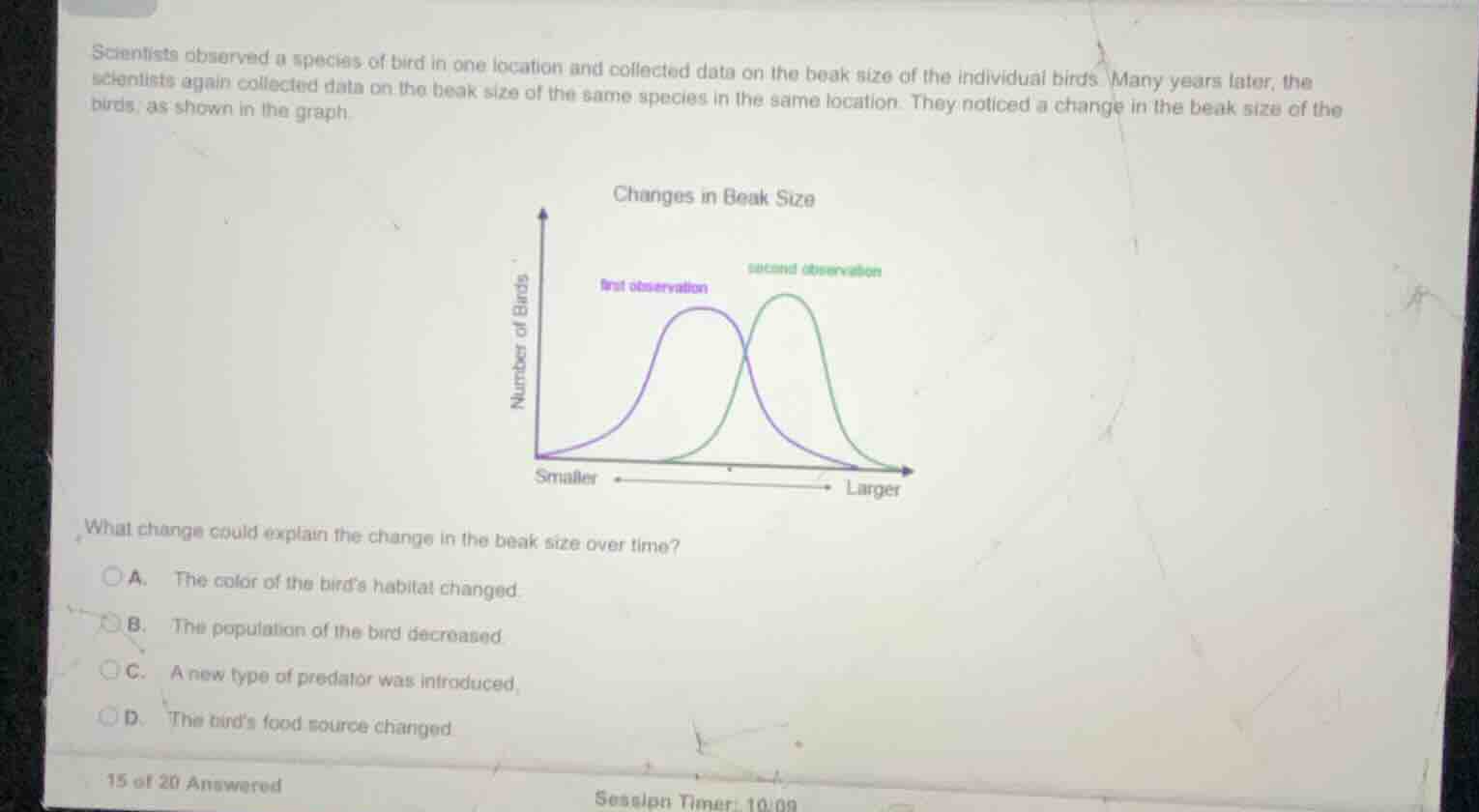
scientists observed a species of bird in one location and collected data on the beak size of the individual birds. many years later, the scientists again collected data on the beak size of the same species in the same location. they noticed a change in the beak size of the birds, as shown in the graph.
what change could explain the change in the beak size over time?
a. the color of the birds habitat changed.
b. the population of the bird decreased.
c. a new type of predator was introduced.
d. the birds food source changed.
Analyze the graph
The graph shows two curves representing the distribution of beak sizes in a bird population at two different times. The purple curve represents the "first observation," and the green curve represents the "second observation." Over time, the peak of the distribution has shifted to the right, indicating that the average beak size of the bird population has become larger.
Evaluate the options
We need to identify which environmental change would most likely drive natural selection toward larger beak sizes:
- A. The color of the bird's habitat changed: Habitat color typically influences camouflage and predation risk, affecting feather color rather than beak size.
- B. The population of the bird decreased: A simple decrease in population size does not systematically select for a specific physical trait like larger beaks.
- C. A new type of predator was introduced: Predators usually select for traits related to defense, speed, or camouflage, rather than beak size (unless the beak is used primarily for defense, which is less common than its role in feeding).
- D. The bird's food source changed: Beak size and shape are highly specialized adaptations for obtaining and consuming food. A change in the available food source (for example, from soft seeds to larger, harder seeds) would favor individuals with larger, stronger beaks, leading to directional selection over generations.
Formulate the conclusion
A change in the food source is the most direct and well-documented driver of evolutionary changes in bird beak size (such as in Darwin's finches). Therefore, option D is the correct explanation.

Snap & solve any problem in the app
Get step-by-step solutions on Sovi AI
Photo-based solutions with guided steps
Explore more problems and detailed explanations
- (A) The color of the bird's habitat changed
- (B) The population of the bird decreased
- (C) A new type of predator was introduced
- (D) The bird's food source changed (Correct answer)