QUESTION IMAGE
Question
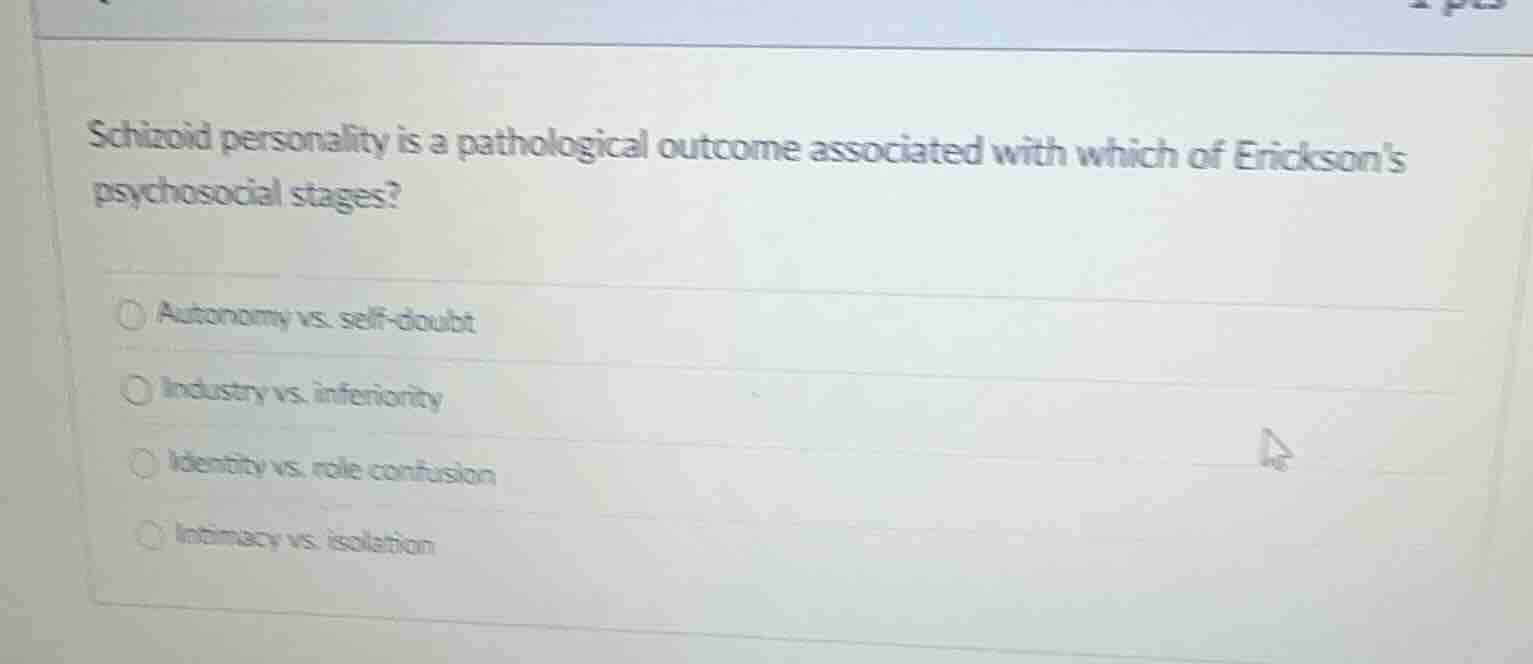
schizoid personality is a pathological outcome associated with which of ericksons psychosocial stages?
autonomy vs. self-doubt
industry vs. inferiority
identity vs. role confusion
intimacy vs. isolation
🆕 New Concept Discovered: Erikson's Psychosocial Pathology
Connecting developmental crises to personality disorders.
Step 1: Understand Schizoid Personality
Schizoid personality is characterized by a persistent pattern of detachment from social relationships and a restricted range of expression of emotions in interpersonal settings. Individuals with this style prefer solitary activities, lack close friends, and appear indifferent to praise or criticism.
Step 2: Analyze Erikson's Psychosocial Stages
Erik Erikson proposed eight stages of psychosocial development, each characterized by a core conflict. If a conflict is not resolved successfully, it can lead to specific pathological outcomes or personality difficulties later in life:
- Autonomy vs. Shame and Doubt (or Self-Doubt): Early childhood stage. Failure leads to paranoia, obsessiveness, or self-doubt.
- Industry vs. Inferiority: School-age stage. Failure leads to feelings of inadequacy and mediocrity.
- Identity vs. Role Confusion: Adolescence. Failure leads to identity diffusion or delinquent behavior.
- Intimacy vs. Isolation: Young adulthood. The core task of this stage is forming intimate, loving relationships with others. A failure to achieve intimacy leads to deep-seated isolation, social withdrawal, and an inability to connect with others—which is the hallmark pathological outcome associated with Schizoid Personality.
Step 3: Match the Pathology to the Correct Stage
Because schizoid personality involves a profound detachment from social relationships and an inability to form close bonds, it represents a severe, pathological failure to resolve the conflict of Intimacy vs. Isolation (resulting in extreme, permanent isolation).

Snap & solve any problem in the app
Get step-by-step solutions on Sovi AI
Photo-based solutions with guided steps
Explore more problems and detailed explanations
Intimacy vs. isolation