QUESTION IMAGE
Question
resist oppression
10 points
add class comment
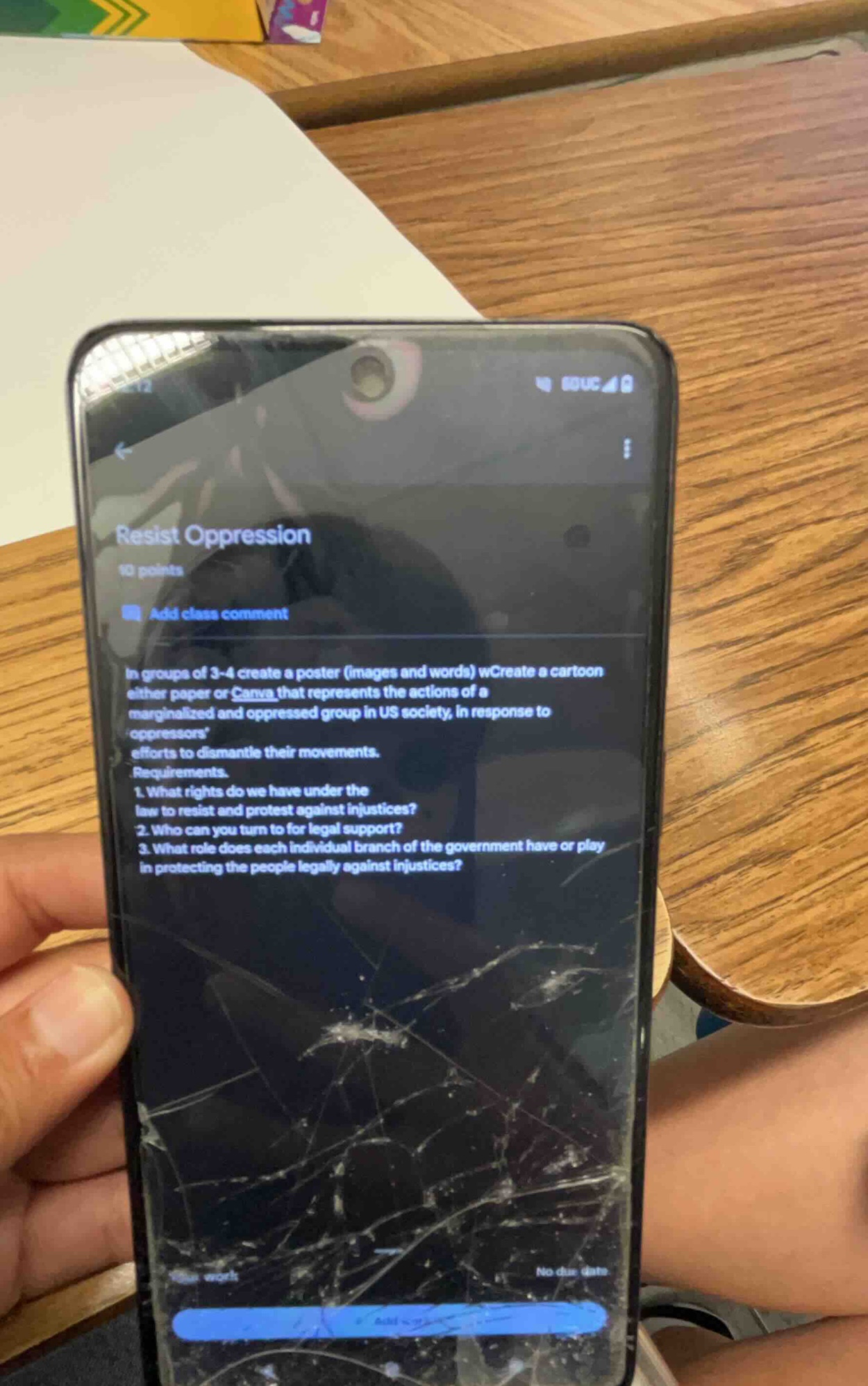
in groups of 3-4 create a poster (images and words) wcreate a cartoon either paper or canva that represents the actions of a marginalized and oppressed group in us society, in response to oppressors efforts to dismantle their movements.
requirements:
- what rights do we have under the law to resist and protest against injustices?
- who can you turn to for legal support?
- what role does each individual branch of the government have or play in protecting the people legally against injustices?
Constitutional rights to protest
The First Amendment protects peaceful assembly and free speech.
These rights allow citizens to protest systemic injustices legally.
Sources of legal support
Civil rights organizations offer legal aid to marginalized groups.
Public defenders and legal aid societies assist with representation.
Executive branch role in protection
The executive branch enforces federal civil rights laws.
The Department of Justice investigates systemic rights violations.
Legislative branch role in protection
Congress passes laws that protect citizens from discrimination.
These statutes establish legal frameworks for civil rights.
Judicial branch role in protection
The courts interpret laws and evaluate constitutional protections.
Judges strike down laws that violate civil liberties.

Snap & solve any problem in the app
Get step-by-step solutions on Sovi AI
Photo-based solutions with guided steps
Explore more problems and detailed explanations
Question 1
Under United States law, the primary protections for resisting and protesting injustices are found in the First Amendment of the Constitution, which guarantees:
- Freedom of Speech: The right to voice opinions and criticize policies or actions.
- Freedom of Assembly: The right to gather peacefully in public spaces to protest.
- Freedom to Petition: The right to present complaints and request changes from the government.
Question 2
Individuals and groups seeking legal support can turn to several resources:
- Civil Rights Organizations: Groups like the American Civil Liberties Union (ACLU) or the NAACP Legal Defense Fund.
- Legal Aid Societies: Non-profit organizations providing free or low-cost legal services to low-income individuals.
- Government Agencies: The Office for Civil Rights (OCR) or the Equal Employment Opportunity Commission (EEOC) for filing formal discrimination complaints.
Question 3
Each branch of the government plays a distinct role in protecting civil rights:
- Legislative Branch (Congress): Writes and passes federal laws that outlaw discrimination and protect civil liberties (e.g., the Civil Rights Act of 1964).
- Executive Branch (President & Agencies): Enforces these laws through departments like the Department of Justice (DOJ) to ensure rights are actively protected.
- Judicial Branch (Supreme Court & Federal Courts): Interprets the laws and the Constitution, resolving legal disputes and striking down laws or actions that violate citizens' constitutional rights.