QUESTION IMAGE
Question
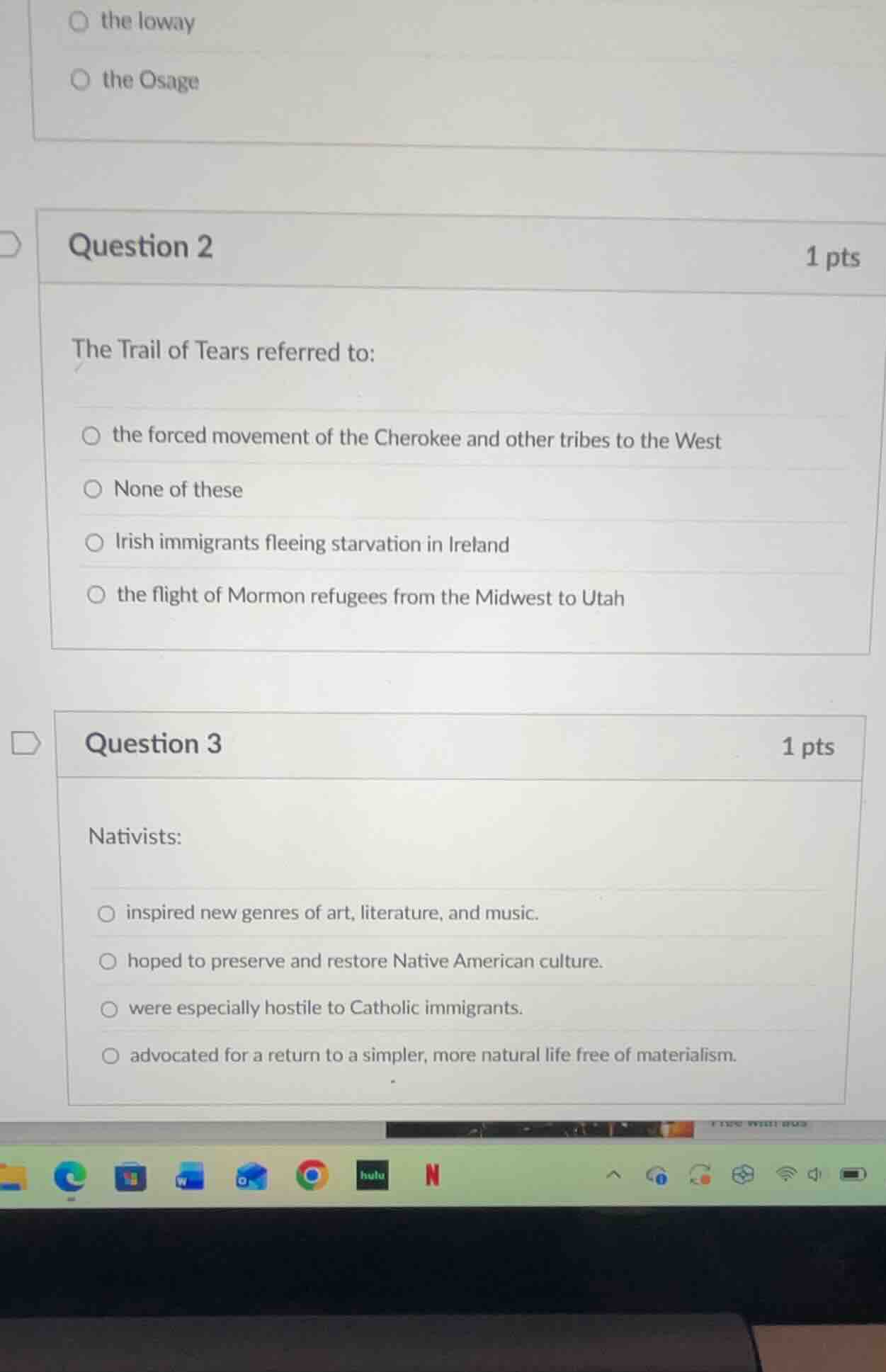
question 2
1 pts
the trail of tears referred to:
the forced movement of the cherokee and other tribes to the west
none of these
irish immigrants fleeing starvation in ireland
the flight of mormon refugees from the midwest to utah
question 3
1 pts
nativists:
inspired new genres of art, literature, and music.
hoped to preserve and restore native american culture.
were especially hostile to catholic immigrants.
advocated for a return to a simpler, more natural life free of materialism.
⚡ Using what you learned: westward expansion policy and outcomes · 🆕 New Concept: Nativism in American History
Anti-immigrant sentiment and protection of native-born interests
Step 1: Analyze Question 2 (The Trail of Tears)
The Trail of Tears is a direct outcome of the Indian Removal Act of 1830 under President Andrew Jackson. It refers to the forced relocation of the Cherokee Nation and other Southeastern Native American tribes (including the Creek, Choctaw, Chickasaw, and Seminole) from their ancestral homelands to designated "Indian Territory" in modern-day Oklahoma.
- Option 1: "the forced movement of the Cherokee and other tribes to the West" — Correct.
- Option 2: "None of these" — Incorrect.
- Option 3: "Irish immigrants fleeing starvation..." — Incorrect (this refers to the Great Famine migration).
- Option 4: "the flight of Mormon refugees..." — Incorrect (this refers to the Mormon Pioneer Trail).
Step 2: Analyze Question 3 (Nativists)
In 19th-century American history, "Nativism" refers to a political and social stance that favored established, native-born inhabitants over immigrants. During the mid-1800s, this sentiment was heavily directed against incoming Irish and German immigrants, who were predominantly Roman Catholic. Nativists feared Catholic influence and papal allegiance would undermine American democratic institutions.
- Option 1: "inspired new genres of art..." — Incorrect (this describes movements like Romanticism or Transcendentalism).
- Option 2: "hoped to preserve and restore Native American culture" — Incorrect (despite the linguistic similarity, "nativists" did not advocate for Indigenous peoples).
- Option 3: "were especially hostile to Catholic immigrants" — Correct.
- Option 4: "advocated for a return to a simpler, more natural life..." — Incorrect (this describes Transcendentalism).

Snap & solve any problem in the app
Get step-by-step solutions on Sovi AI
Photo-based solutions with guided steps
Explore more problems and detailed explanations
- Question 2: the forced movement of the Cherokee and other tribes to the West
- Question 3: were especially hostile to Catholic immigrants