QUESTION IMAGE
Question
question 92
1 pts
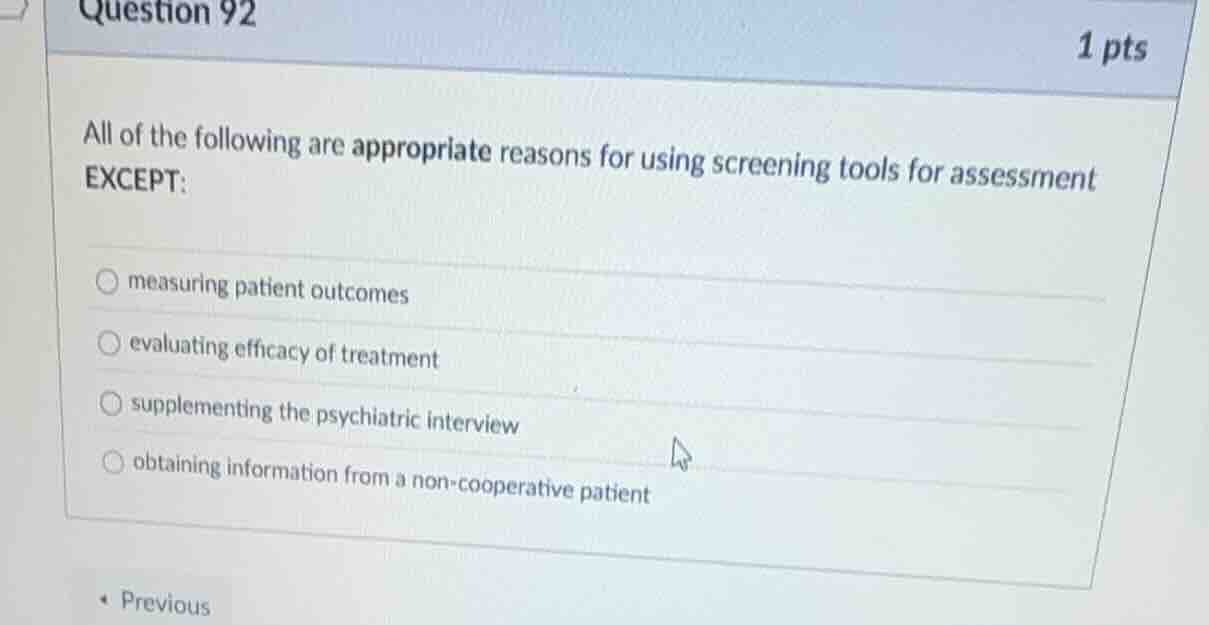
all of the following are appropriate reasons for using screening tools for assessment except:
measuring patient outcomes
evaluating efficacy of treatment
supplementing the psychiatric interview
obtaining information from a non-cooperative patient
🆕 New Concept Discovered: Clinical Screening Tools
Using standardized instruments to identify risks or track progress.
Step 1: Understand the purpose of clinical screening tools
Clinical screening tools (such as standardized questionnaires or rating scales) are designed to gather structured, objective data. They are highly effective for:
- Establishing a baseline and measuring patient outcomes over time.
- Evaluating how well a treatment is working (efficacy).
- Supplementing a clinical or psychiatric interview with standardized metrics.
Step 2: Analyze the limitation of screening tools
Screening tools almost always require active participation, self-reporting, or cooperative engagement from the patient to answer questions honestly and accurately. If a patient is entirely non-cooperative, they will not complete the questionnaire or engage with the scale, making a standard screening tool ineffective for obtaining reliable information. Other clinical observation methods or collateral history must be used instead.

Snap & solve any problem in the app
Get step-by-step solutions on Sovi AI
Photo-based solutions with guided steps
Explore more problems and detailed explanations
obtaining information from a non-cooperative patient