QUESTION IMAGE
Question
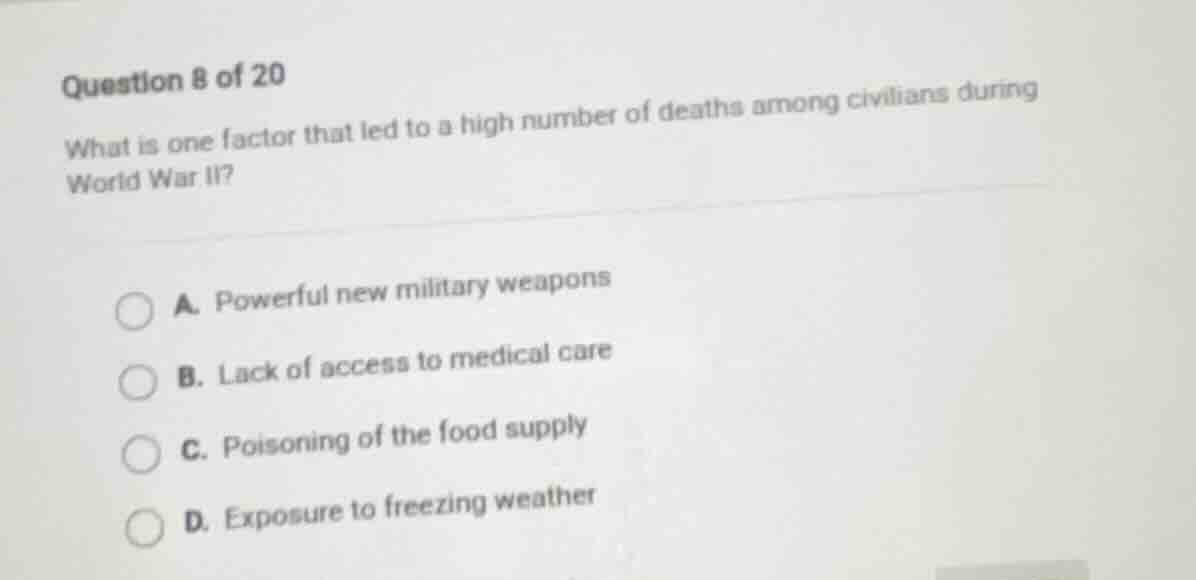
question 8 of 20
what is one factor that led to a high number of deaths among civilians during world war ii?
a. powerful new military weapons
b. lack of access to medical care
c. poisoning of the food supply
d. exposure to freezing weather
Analyze the question and options
Using the World War II Casualties knowledge point
- Question: What is one factor that led to a high number of deaths among civilians during World War II?
- Option A (Powerful new military weapons): World War II saw the introduction and widespread use of highly destructive military technologies, including long-range strategic bombers, firebombing campaigns, and atomic weapons. These technologies targeted or heavily impacted densely populated urban centers, leading directly to unprecedented civilian casualties.
- Option B (Lack of access to medical care): While medical infrastructure suffered, it was not the primary systemic driver of the massive scale of civilian deaths compared to direct military actions and strategic bombing.
- Option C (Poisoning of the food supply): There was no widespread, systematic intentional poisoning of the general civilian food supply by combatants as a primary driver of these casualties.
- Option D (Exposure to freezing weather): While harsh winters affected specific campaigns (like the Siege of Leningrad), general exposure to freezing weather was not the primary global factor for the high civilian death toll.
Determine the correct option
Using the World War II Casualties knowledge point
- The development and deployment of highly destructive, powerful new military weapons (such as strategic bombing aircraft and atomic bombs) directly targeted or devastated civilian populations in cities across Europe and Asia, making Option A the most accurate and comprehensive factor.

Snap & solve any problem in the app
Get step-by-step solutions on Sovi AI
Photo-based solutions with guided steps
Explore more problems and detailed explanations
- A. Powerful new military weapons (Correct answer)
- B. Lack of access to medical care
- C. Poisoning of the food supply
- D. Exposure to freezing weather