QUESTION IMAGE
Question
question 19 of 20
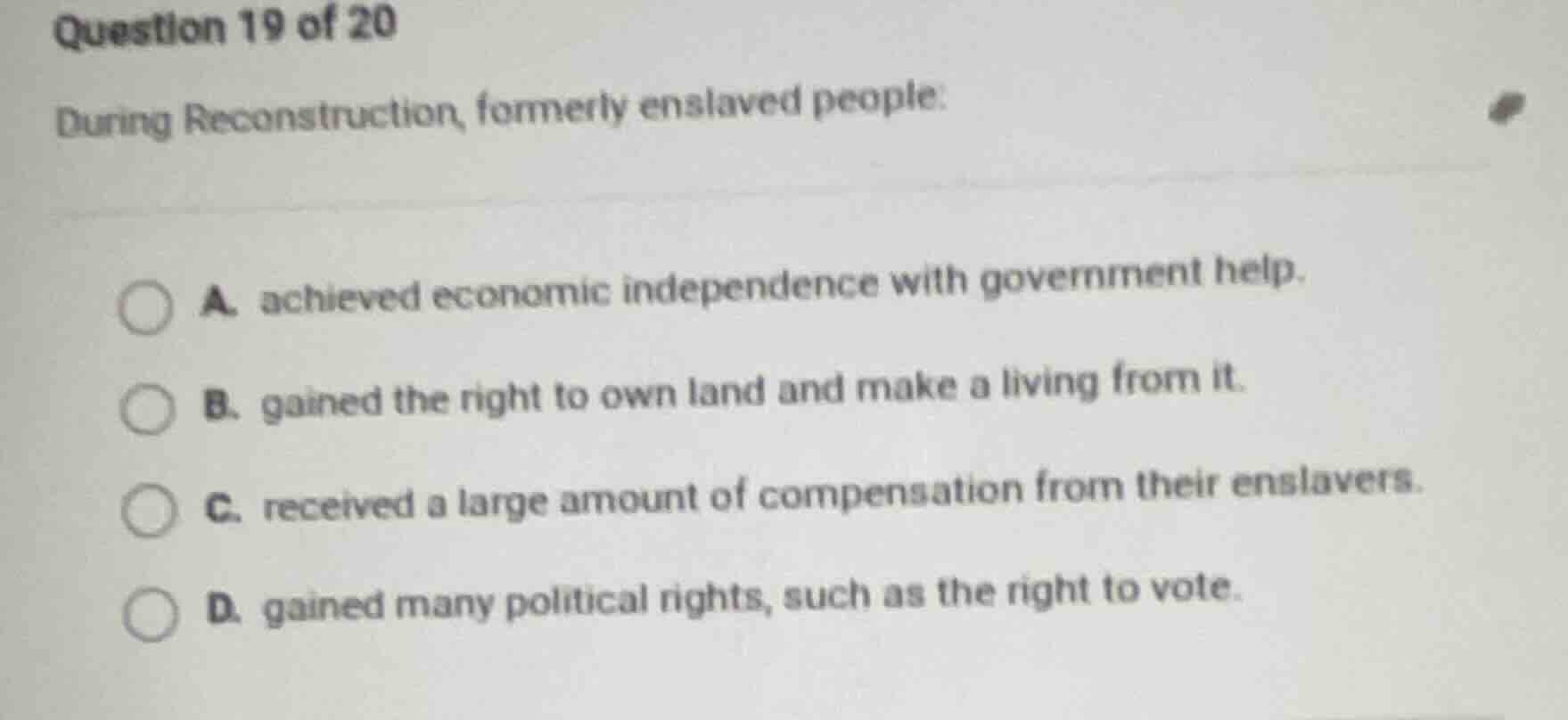
during reconstruction, formerly enslaved people:
a. achieved economic independence with government help.
b. gained the right to own land and make a living from it.
c. received a large amount of compensation from their enslavers.
d. gained many political rights, such as the right to vote.
Analyze economic outcomes of Reconstruction
Using the Sharecropping System and Reconstruction Era knowledge points
- Economic independence was rarely achieved due to the rise of the sharecropping system, which trapped many formerly enslaved people in cycles of debt.
- Land redistribution proposals (like "forty acres and a mule") were largely abandoned, meaning most did not gain the right to own land or make a living from it.
- No monetary compensation was paid to formerly enslaved people by their former enslavers.
Analyze political outcomes of Reconstruction
Using the Fifteenth Amendment and Reconstruction Era knowledge points
- The passage of the Reconstruction Amendments (specifically the Fourteenth and Fifteenth Amendments) granted citizenship and voting rights to African American men.
- Formerly enslaved people actively participated in politics, holding local, state, and federal offices during Radical Reconstruction.

Snap & solve any problem in the app
Get step-by-step solutions on Sovi AI
Photo-based solutions with guided steps
Explore more problems and detailed explanations
- A. achieved economic independence with government help.
- B. gained the right to own land and make a living from it.
- C. received a large amount of compensation from their enslavers.
- D. gained many political rights, such as the right to vote. (Correct answer)