QUESTION IMAGE
Question
question 14
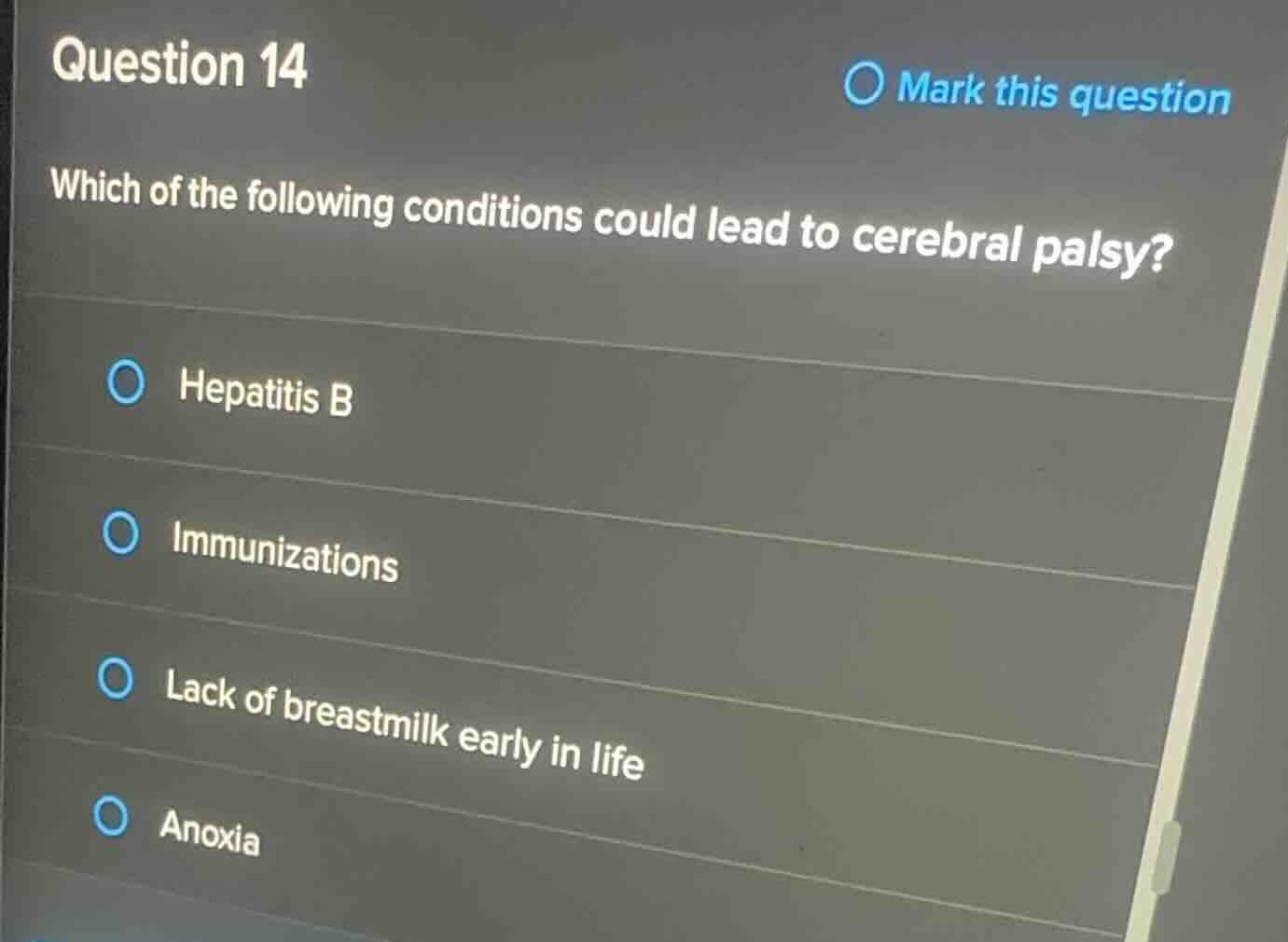
which of the following conditions could lead to cerebral palsy?
hepatitis b
immunizations
lack of breastmilk early in life
anoxia
Define cerebral palsy and its primary causes
Developmental Psychology studies the biological and environmental factors that influence early human development. Cerebral palsy is a group of disorders affecting a person's ability to move and maintain balance and posture. It is caused by abnormal brain development or damage to the developing brain, which most often occurs before birth, during childbirth, or shortly after birth.
Evaluate the role of oxygen deprivation
A major cause of brain damage during the birthing process is oxygen deprivation. Anoxia refers to a complete lack of oxygen supply to the brain's tissues, while hypoxia refers to a partial lack. When a newborn experiences prolonged anoxia during labor or delivery, brain cells begin to die, which can directly lead to neurological disorders such as cerebral palsy.
Analyze the incorrect options
- Hepatitis B: This is a viral infection that primarily affects the liver, not the motor control centers of the developing brain.
- Immunizations: Routine childhood vaccinations are safe and do not cause brain damage or cerebral palsy.
- Lack of breastmilk early in life: While breastfeeding provides nutritional and immunological benefits, a lack of breastmilk does not cause the neurological damage associated with cerebral palsy.

Snap & solve any problem in the app
Get step-by-step solutions on Sovi AI
Photo-based solutions with guided steps
Explore more problems and detailed explanations
- Hepatitis B
- Immunizations
- Lack of breastmilk early in life
- Anoxia (Correct answer)