QUESTION IMAGE
Question
question 8 of 10
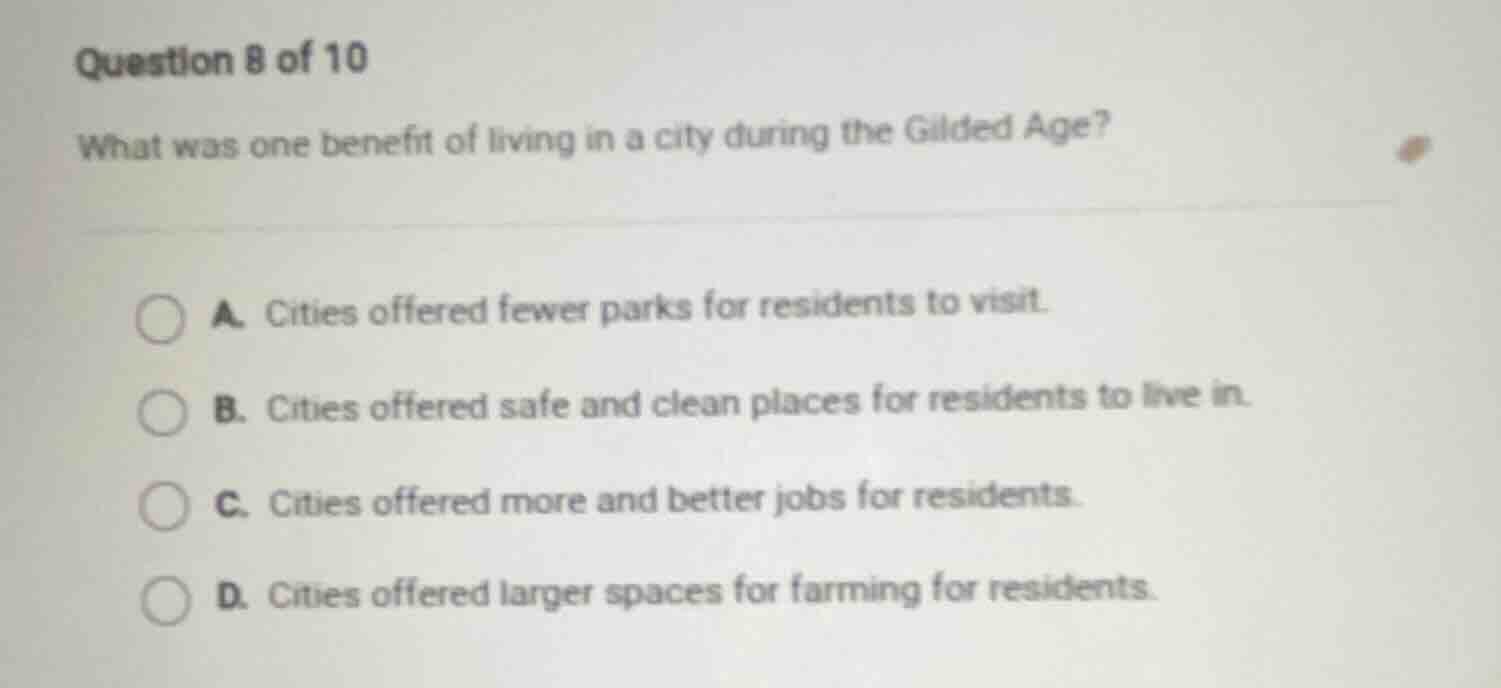
what was one benefit of living in a city during the gilded age?
a. cities offered fewer parks for residents to visit.
b. cities offered safe and clean places for residents to live in.
c. cities offered more and better jobs for residents.
d. cities offered larger spaces for farming for residents.
Analyze the historical context of Gilded Age cities
During the Gilded Age, rapid industrialization drew millions of people to urban centers. This massive influx of population created severe overcrowding, sanitation issues, and tenement housing crises, meaning cities were generally not safe or clean, nor did they offer farming spaces.
Evaluate the provided options
- A is incorrect because fewer parks is not a benefit, and urban planning (like the City Beautiful movement) actually sought to add parks.
- B is incorrect because Gilded Age cities faced severe sanitation, pollution, and safety challenges.
- C is correct because the primary pull factor of cities was the abundance of industrial and manufacturing jobs.
- D is incorrect because cities lacked agricultural land for farming.

Snap & solve any problem in the app
Get step-by-step solutions on Sovi AI
Photo-based solutions with guided steps
Explore more problems and detailed explanations
- (A) Cities offered fewer parks for residents to visit.
- (B) Cities offered safe and clean places for residents to live in.
- (C) Cities offered more and better jobs for residents. (Correct answer)
- (D) Cities offered larger spaces for farming for residents.