QUESTION IMAGE
Question
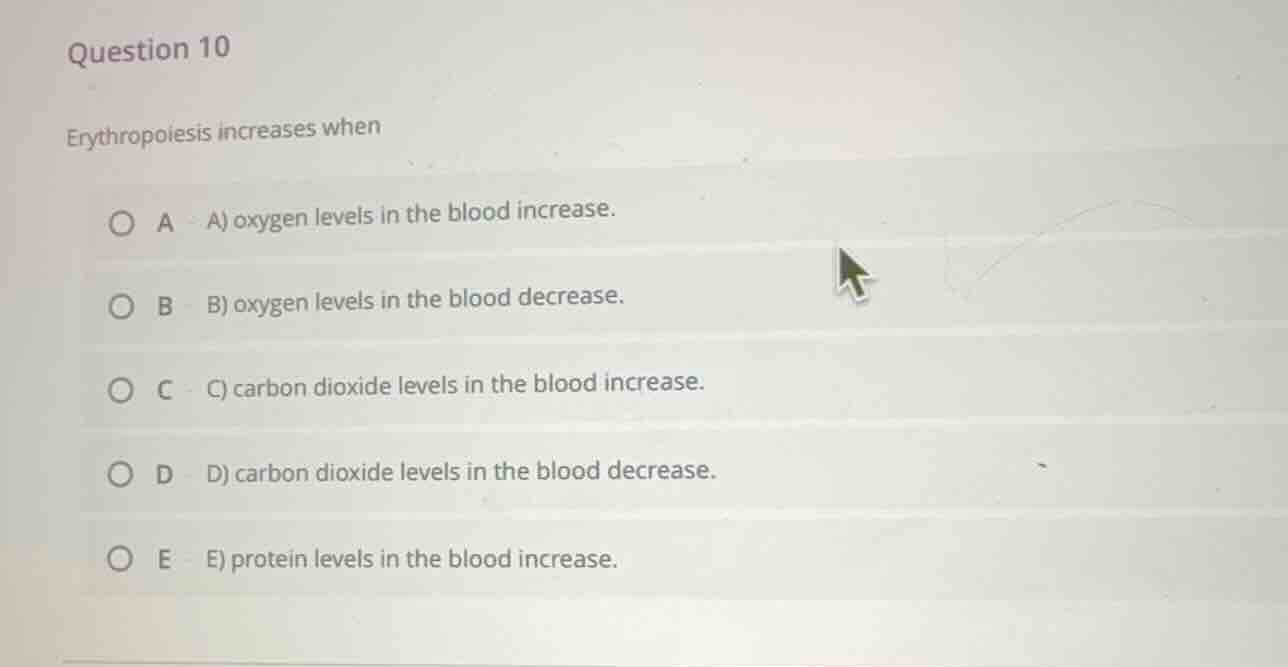
question 10
erythropoiesis increases when
a) oxygen levels in the blood increase.
b) oxygen levels in the blood decrease.
c) carbon dioxide levels in the blood increase.
d) carbon dioxide levels in the blood decrease.
e) protein levels in the blood increase.
Define erythropoiesis and its primary trigger
Erythropoiesis is the process of producing red blood cells (erythrocytes). The primary physiological stimulus for this process is tissue hypoxia, which occurs when oxygen delivery to tissues is insufficient.
Analyze the feedback mechanism
When blood oxygen levels decrease, the kidneys detect the hypoxia and release the hormone erythropoietin (EPO). EPO travels to the red bone marrow to stimulate the production and maturation of red blood cells, thereby increasing oxygen-carrying capacity.
Evaluate the given options
- Option A: Increased oxygen levels would inhibit EPO release, decreasing erythropoiesis.
- Option B: Decreased oxygen levels directly trigger EPO release, increasing erythropoiesis.
- Options C and D: Carbon dioxide levels primarily regulate respiration rate, not red blood cell production.
- Option E: Blood protein levels do not directly regulate erythropoiesis.

Snap & solve any problem in the app
Get step-by-step solutions on Sovi AI
Photo-based solutions with guided steps
Explore more problems and detailed explanations
- A) oxygen levels in the blood increase.
- B) oxygen levels in the blood decrease. (Correct answer)
- C) carbon dioxide levels in the blood increase.
- D) carbon dioxide levels in the blood decrease.
- E) protein levels in the blood increase.