QUESTION IMAGE
Question
question 10 of 10
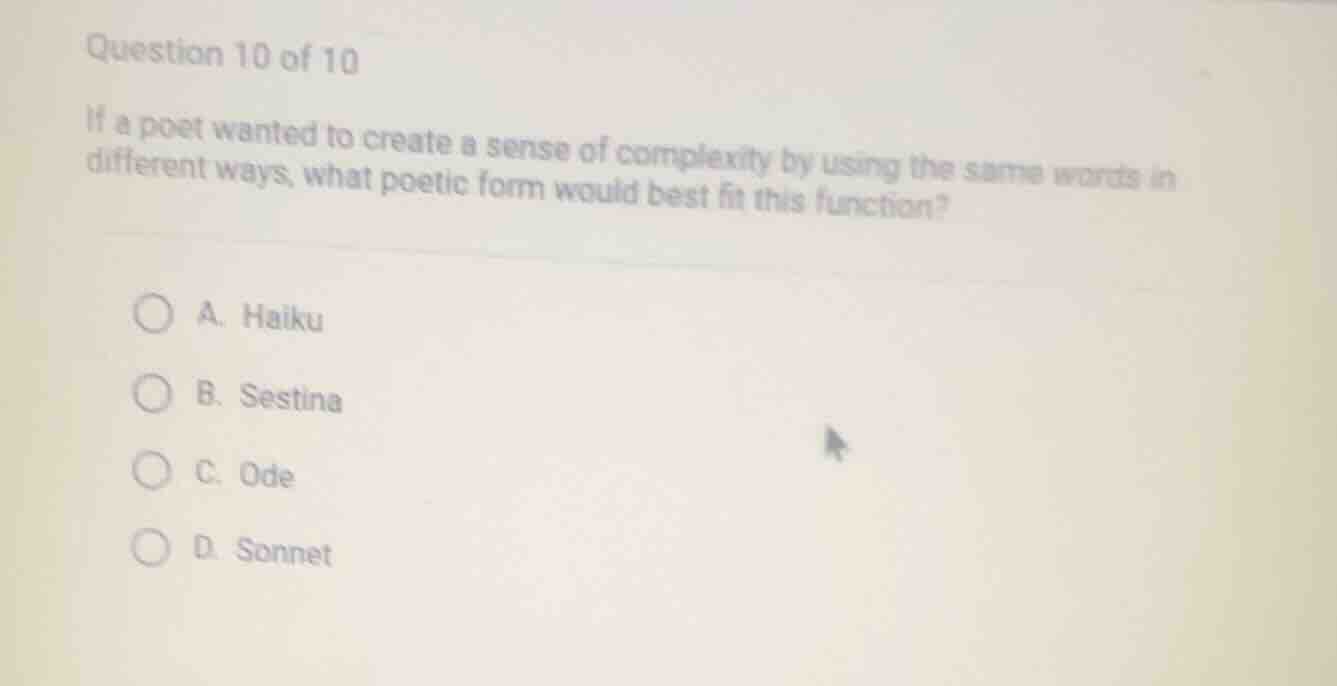
if a poet wanted to create a sense of complexity by using the same words in different ways, what poetic form would best fit this function?
a. haiku
b. sestina
c. ode
d. sonnet
Identify the key function described in the prompt
The prompt asks for a poetic form that creates complexity by repeating the same words in different ways.
Analyze the characteristics of each option
- Haiku: A short three-line Japanese poetic form with a 5-7-5 syllable structure, focusing on nature and imagery rather than word repetition.
- Sestina: A complex 39-line poetic form consisting of six stanzas of six lines each, followed by a three-line envoy. It relies on repeating the same six end-words in a rotating pattern across stanzas, which shifts their meaning and context to create complexity.
- Ode: A formal, often lyrical address to a particular subject, not structured around strict word repetition.
- Sonnet: A 14-line poem typically written in iambic pentameter with a specific rhyme scheme, focusing on a thematic turn (volta) rather than systematic word repetition.
Select the best fit
The sestina is specifically designed to reuse the same six words in different patterns to build thematic complexity.

Snap & solve any problem in the app
Get step-by-step solutions on Sovi AI
Photo-based solutions with guided steps
Explore more problems and detailed explanations
- (A) Haiku
- (B) Sestina (Correct answer)
- (C) Ode
- (D) Sonnet