QUESTION IMAGE
Question
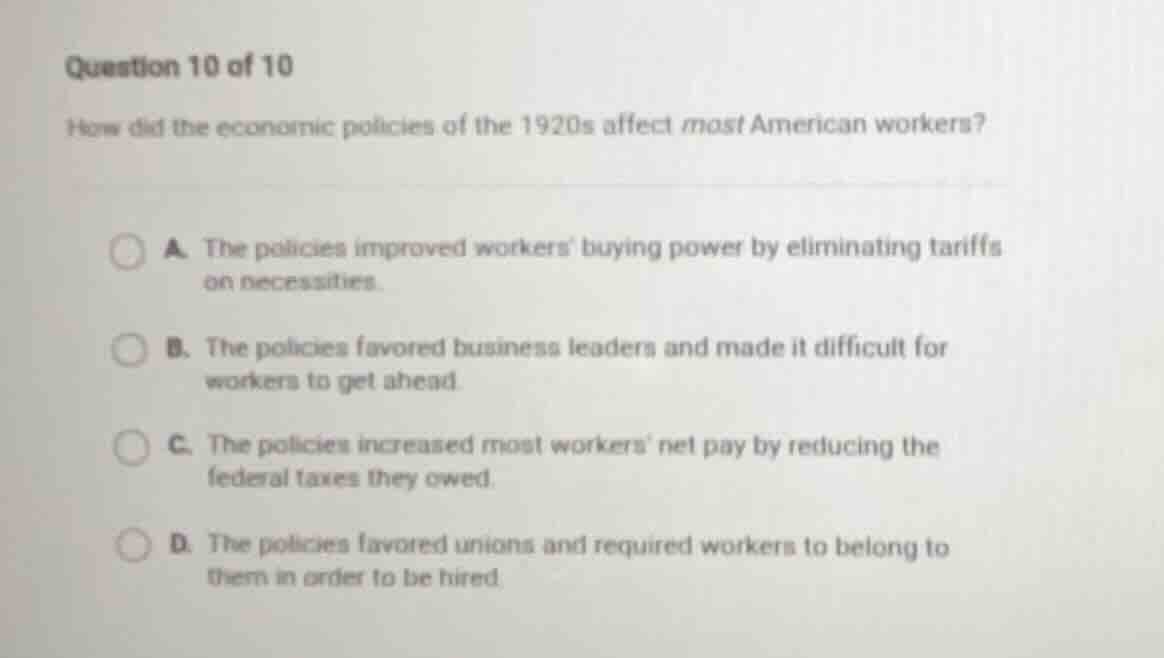
question 10 of 10
how did the economic policies of the 1920s affect most american workers?
a. the policies improved workers buying power by eliminating tariffs on necessities.
b. the policies favored business leaders and made it difficult for workers to get ahead.
c. the policies increased most workers net pay by reducing the federal taxes they owed.
d. the policies favored unions and required workers to belong to them in order to be hired.
Analyze the economic policies of the 1920s
Using the 1920s Economic Policies knowledge point
During the 1920s, the federal government pursued pro-business, laissez-faire policies, including high protective tariffs (such as the Fordney-McCumber Tariff) and tax cuts primarily benefiting corporations and wealthy individuals. These policies did not eliminate tariffs on necessities, nor did they focus on reducing federal taxes for average workers or supporting labor unions.
Evaluate the impact on American workers
Using the 1920s Economic Policies knowledge point
The pro-business environment favored corporate leaders, while wages for most workers did not keep pace with rising productivity and corporate profits. Furthermore, the government and courts actively discouraged unionization, making it difficult for average workers to organize and improve their economic standing. Therefore, the policies favored business leaders and made it difficult for workers to get ahead.

Snap & solve any problem in the app
Get step-by-step solutions on Sovi AI
Photo-based solutions with guided steps
Explore more problems and detailed explanations
- (A) The policies improved workers' buying power by eliminating tariffs on necessities.
- (B) The policies favored business leaders and made it difficult for workers to get ahead. (Correct answer)
- (C) The policies increased most workers' net pay by reducing the federal taxes they owed.
- (D) The policies favored unions and required workers to belong to them in order to be hired.