QUESTION IMAGE
Question
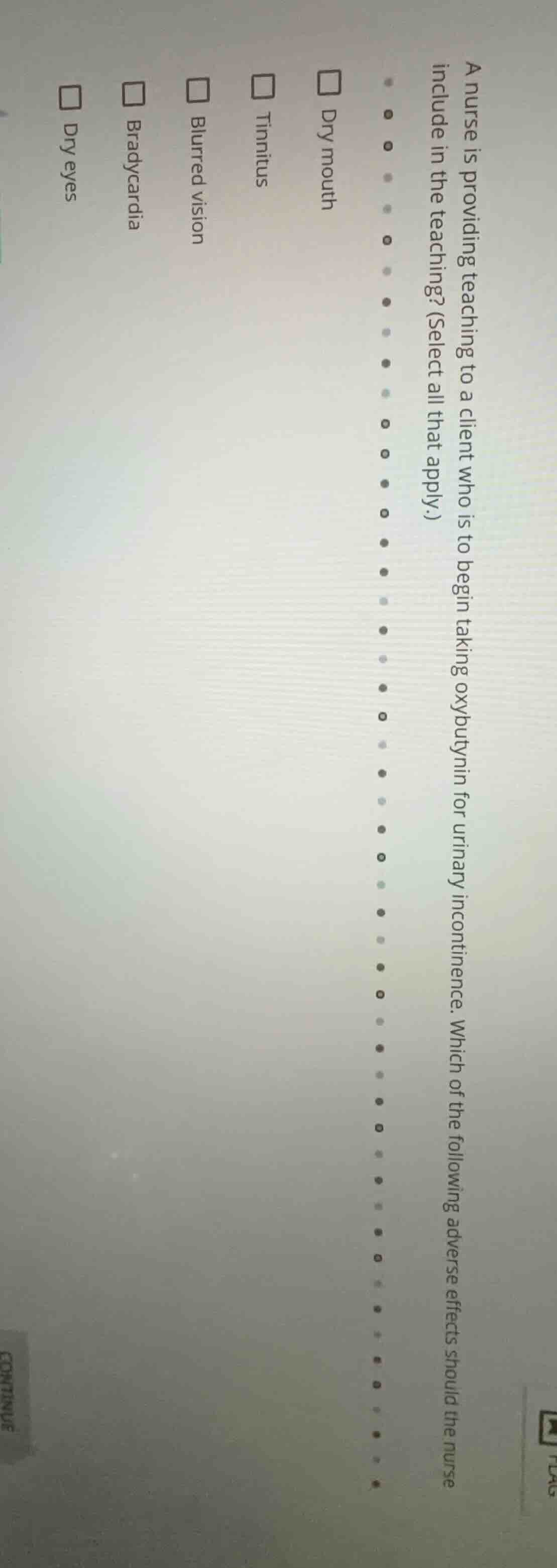
a nurse is providing teaching to a client who is to begin taking oxybutynin for urinary incontinence. which of the following adverse effects should the nurse include in the teaching? (select all that apply.)
dry mouth
tinnitus
blurred vision
bradycardia
dry eyes
Identify the drug class and mechanism of action
The client is starting oxybutynin for urinary incontinence. Oxybutynin is an anticholinergic medication that works by blocking muscarinic acetylcholine receptors, which relaxes the detrusor muscle of the bladder.
Determine the physiological effects of muscarinic blockade
Using the Ophthalmic Anticholinergics knowledge point, blocking muscarinic receptors reduces parasympathetic nervous system activity ("rest and digest" functions). This leads to classic anticholinergic side effects:
- Decreased salivary secretion (causing dry mouth).
- Decreased lacrimal secretion (causing dry eyes).
- Mydriasis and cycloplegia (causing blurred vision).
- Tachycardia (rather than bradycardia) due to blockade of vagal inhibitory inputs to the sinoatrial node.
- Tinnitus is not a standard anticholinergic adverse effect.
Evaluate the given options
- Dry mouth: Correct. It is a direct result of decreased salivation.
- Tinnitus: Incorrect. Not associated with anticholinergic therapy.
- Blurred vision: Correct. Caused by pupillary dilation and loss of accommodation.
- Bradycardia: Incorrect. Anticholinergics cause tachycardia, not bradycardia.
- Dry eyes: Correct. It is a direct result of decreased lacrimal secretions.

Snap & solve any problem in the app
Get step-by-step solutions on Sovi AI
Photo-based solutions with guided steps
Explore more problems and detailed explanations
- Dry mouth (Correct answer)
- Tinnitus
- Blurred vision (Correct answer)
- Bradycardia
- Dry eyes (Correct answer)