QUESTION IMAGE
Question
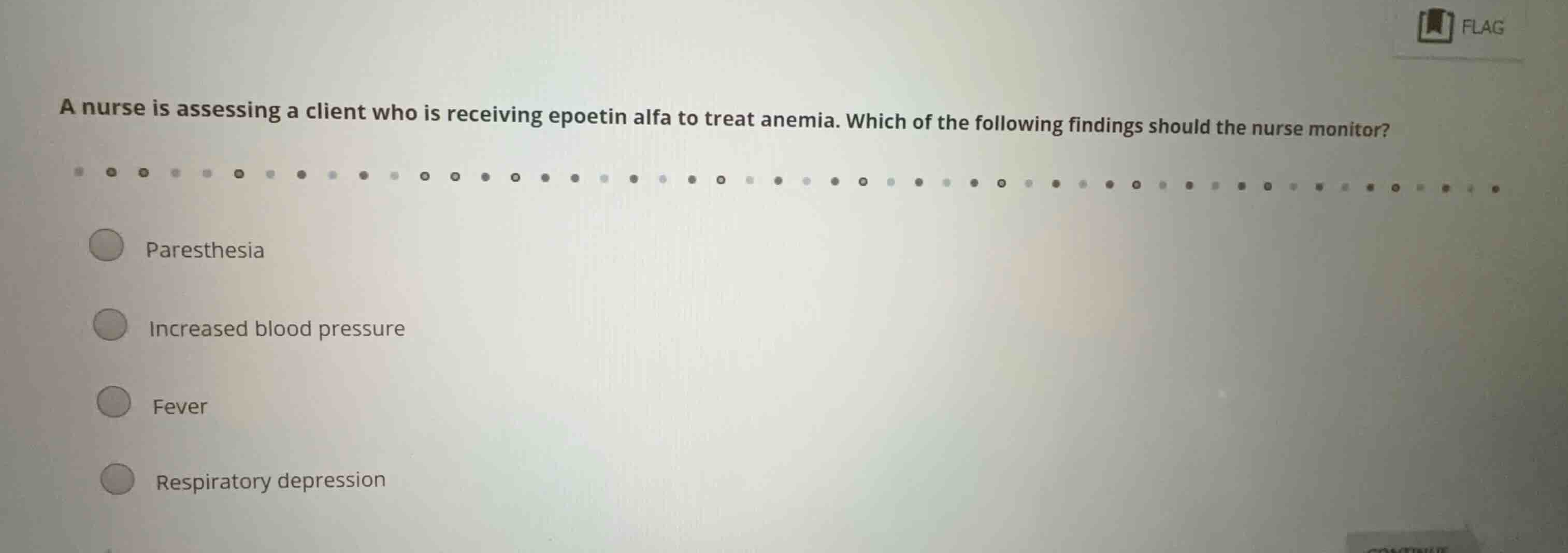
a nurse is assessing a client who is receiving epoetin alfa to treat anemia. which of the following findings should the nurse monitor?
paresthesia
increased blood pressure
fever
respiratory depression
Identify the mechanism of epoetin alfa
Epoetin alfa is a synthetic form of erythropoietin, a hormone produced by the kidneys that stimulates the bone marrow to produce red blood cells. It is primarily used to treat anemia associated with chronic kidney disease, chemotherapy, or certain other conditions.
Analyze the physiological effects and adverse reactions
As red blood cell production increases, blood volume and viscosity rise. This increase in hematocrit and blood viscosity is strongly associated with a rise in systemic vascular resistance, which can lead to or worsen hypertension.
Evaluate the clinical monitoring priorities
Because of the risk of rapid increases in red blood cell volume, the most common and serious adverse effect of epoetin alfa is arterial hypertension. Therefore, blood pressure must be monitored closely before and during therapy. If blood pressure rises too rapidly or becomes uncontrolled, the medication may need to be held or antihypertensive therapy initiated.
Compare the given options
- Paresthesia: Not a primary or common adverse effect associated with epoetin alfa therapy.
- Increased blood pressure: Directly linked to the increased red blood cell mass and blood viscosity caused by erythropoiesis-stimulating agents. This is a critical monitoring parameter.
- Fever: While a transient flu-like syndrome can occur, it is not the primary physiological finding requiring systematic monitoring compared to cardiovascular risks.
- Respiratory depression: Not associated with epoetin alfa; this is typically a concern with central nervous system depressants like opioids.

Snap & solve any problem in the app
Get step-by-step solutions on Sovi AI
Photo-based solutions with guided steps
Explore more problems and detailed explanations
- Paresthesia
- Increased blood pressure (Correct answer)
- Fever
- Respiratory depression