QUESTION IMAGE
Question
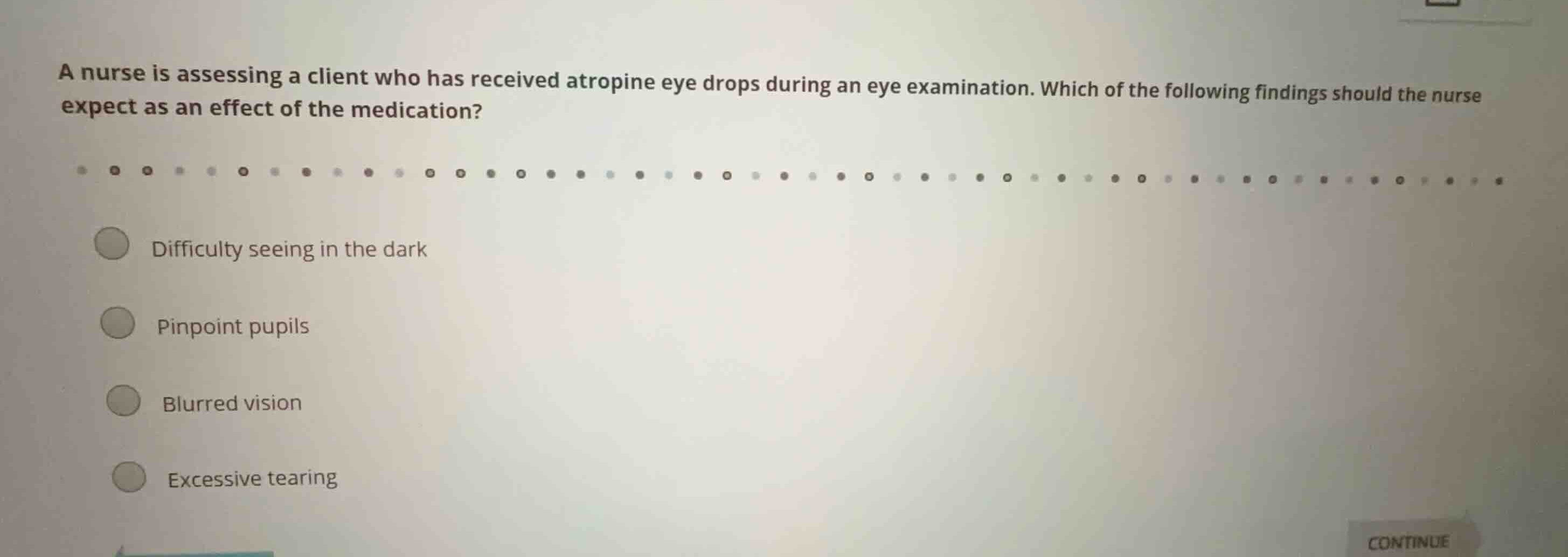
a nurse is assessing a client who has received atropine eye drops during an eye examination. which of the following findings should the nurse expect as an effect of the medication?
difficulty seeing in the dark
pinpoint pupils
blurred vision
excessive tearing
Analyze the mechanism of action of atropine eye drops
Atropine is an ophthalmic anticholinergic agent. It blocks acetylcholine receptors in the eye, inhibiting parasympathetic stimulation. This blockade leads to relaxation of the sphincter muscle of the iris and the ciliary muscle.
Determine the physiological effects on the eye
The inhibition of parasympathetic signals in the eye results in two primary clinical effects:
- Mydriasis: Dilation of the pupil due to relaxation of the iris sphincter muscle.
- Cycloplegia: Paralysis of the ciliary muscle, which prevents accommodation (the ability of the lens to focus on near objects).
Evaluate the clinical consequences of these effects
- Mydriasis allows more light to enter the eye, which typically causes photophobia (sensitivity to bright light), not difficulty seeing in the dark.
- Cycloplegia prevents the lens from changing shape to focus on close objects, leading directly to blurred vision (especially for near vision).
- Anticholinergic blockades decrease secretions, leading to dry eyes rather than excessive tearing.
- Pupil dilation (mydriasis) is the opposite of pinpoint pupils (miosis).
Match findings with the given options
- Difficulty seeing in the dark: Incorrect. Mydriasis allows more light in, which does not impair dark adaptation in this manner.
- Pinpoint pupils: Incorrect. Atropine causes pupillary dilation (mydriasis), not constriction (miosis).
- Blurred vision: Correct. Cycloplegia (loss of accommodation) causes near vision to become blurry.
- Excessive tearing: Incorrect. Atropine decreases secretions, causing dry eyes.

Snap & solve any problem in the app
Get step-by-step solutions on Sovi AI
Photo-based solutions with guided steps
Explore more problems and detailed explanations
- Difficulty seeing in the dark
- Pinpoint pupils
- Blurred vision (Correct answer)
- Excessive tearing