QUESTION IMAGE
Question
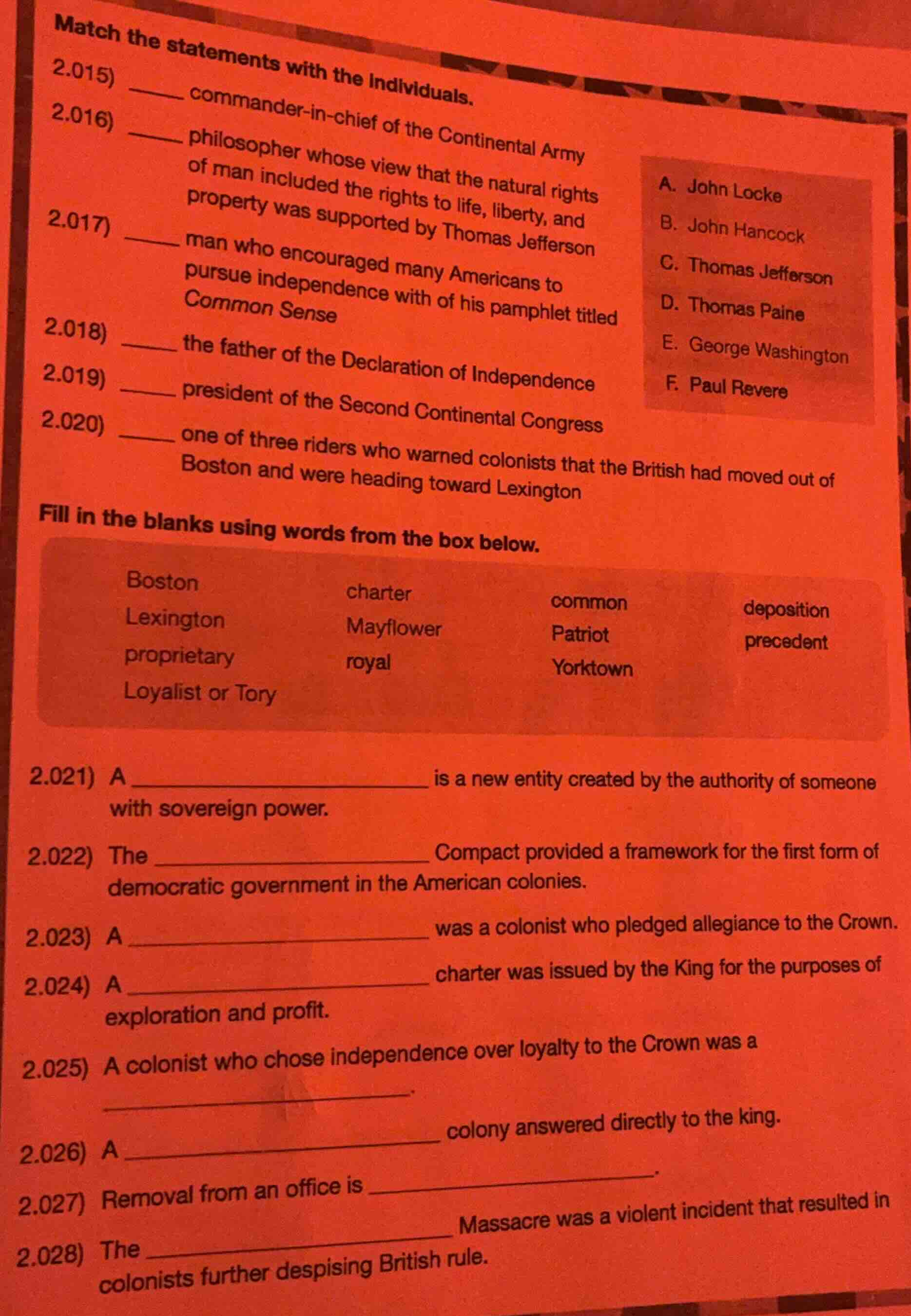
match the statements with the individuals.
2.015) ______ commander - in - chief of the continental army
2.016) ______ philosopher whose view that the natural rights of man included the rights to life, liberty, and property was supported by thomas jefferson
2.017) ______ man who encouraged many americans to pursue independence with of his pamphlet titled common sense
2.018) ______ the father of the declaration of independence
2.019) ______ president of the second continental congress
2.020) ______ one of three riders who warned colonists that the british had moved out of boston and were heading toward lexington
a. john locke
b. john hancock
c. thomas jefferson
d. thomas paine
e. george washington
f. paul revere
fill in the blanks using words from the box below.
boston charter common deposition
lexington mayflower patriot precedent
proprietary royal yorktown
loyalist or tory
2.021) a ______________ is a new entity created by the authority of someone with sovereign power.
2.022) the ______________ compact provided a framework for the first form of democratic government in the american colonies.
2.023) a ______________ was a colonist who pledged allegiance to the crown.
2.024) a ______________ charter was issued by the king for the purposes of exploration and profit.
2.025) a colonist who chose independence over loyalty to the crown was a ______________.
2.026) a ______________ colony answered directly to the king.
2.027) removal from an office is ______________.
2.028) the ______________ massacre was a violent incident that resulted in colonists further despising british rule.
Matching Statements with Individuals:
2.015)
George Washington was the commander - in - chief of the Continental Army.
John Locke was a philosopher whose view of natural rights (life, liberty, property) was supported by Thomas Jefferson.
Thomas Paine wrote the pamphlet "Common Sense" which encouraged Americans to pursue independence.

Snap & solve any problem in the app
Get step-by-step solutions on Sovi AI
Photo-based solutions with guided steps
Explore more problems and detailed explanations
E. George Washington