QUESTION IMAGE
Question
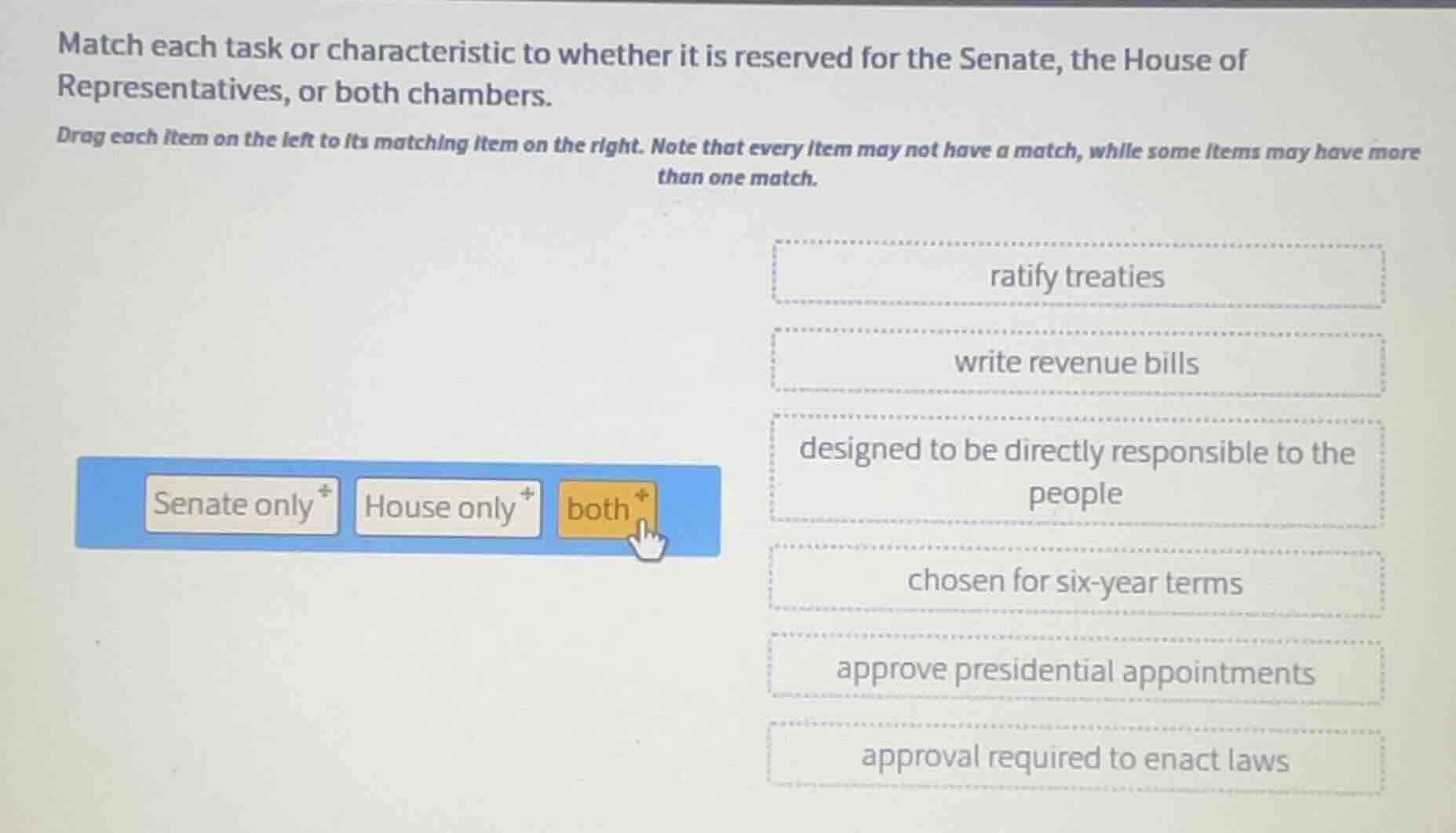
match each task or characteristic to whether it is reserved for the senate, the house of representatives, or both chambers.
drag each item on the left to its matching item on the right. note that every item may not have a match, while some items may have more than one match.
senate only
house only
both
ratify treaties
write revenue bills
designed to be directly responsible to the people
chosen for six-year terms
approve presidential appointments
approval required to enact laws
Analyze constitutional powers and characteristics of each chamber
- ratify treaties: Article II, Section 2 of the Constitution grants the Senate sole power to approve treaties by a two-thirds vote. (Senate only)
- write revenue bills: Article I, Section 7 (Origination Clause) mandates that all bills for raising revenue must originate in the House of Representatives. (House only)
- designed to be directly responsible to the people: The House of Representatives was designed with frequent elections (every two years) and direct popular vote from its inception to be highly responsive to public opinion. (House only)
- chosen for six-year terms: Article I, Section 3 establishes that Senators serve six-year terms. (Senate only)
- approve presidential appointments: Article II, Section 2 grants the Senate the power of "advice and consent" to confirm federal judges, ambassadors, and cabinet officials. (Senate only)
- approval required to enact laws: Under the bicameral system, both the House and the Senate must pass identical versions of a bill before it can become law. (both)

Snap & solve any problem in the app
Get step-by-step solutions on Sovi AI
Photo-based solutions with guided steps
Explore more problems and detailed explanations
- ratify treaties: Senate only
- write revenue bills: House only
- designed to be directly responsible to the people: House only
- chosen for six-year terms: Senate only
- approve presidential appointments: Senate only
- approval required to enact laws: both