QUESTION IMAGE
Question
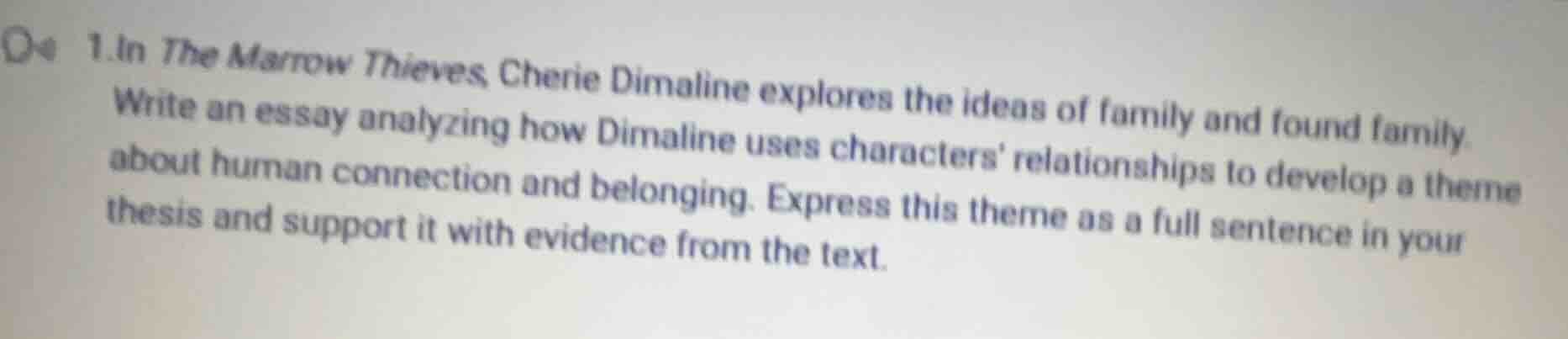
- in the marrow thieves, cherie dimaline explores the ideas of family and found family. write an essay analyzing how dimaline uses characters relationships to develop a theme about human connection and belonging. express this theme as a full sentence in your thesis and support it with evidence from the text.
Brief Explanations
This is a literary analysis task focused on Cherie Dimaline's The Marrow Thieves. First, a clear thesis about found family and belonging is crafted. Then, textual evidence is used to support how character relationships build this theme:
- The core thesis ties found family to survival and belonging in a violent, displaced world.
- Evidence includes Miig's role as a paternal figure guiding the group, the chosen sibling bonds between Frenchie and Rose that foster mutual protection, and the collective care of the group (like hiding from recruiters, sharing resources) that creates a safe space of belonging when biological family is lost.
- Analysis connects these relationships to the theme: found family is not just a substitute, but a resilient, intentional form of connection that sustains identity and hope in a genocidal system.

Snap & solve any problem in the app
Get step-by-step solutions on Sovi AI
Photo-based solutions with guided steps
Explore more problems and detailed explanations
Essay Thesis:
In Cherie Dimaline’s The Marrow Thieves, the chosen bonds of found family—formed through shared trauma, mutual care, and collective resistance—become the primary vessel for preserving human connection, cultural belonging, and hope in a world that seeks to erase Indigenous identity and community.
Supporting Analysis:
- Miigwans, the group’s leader, embodies the paternal core of the found family: he teaches the youth traditional stories, hunts to feed them, and risks his life to protect them from recruiters. When he rescues Frenchie after the death of his brother, he says, “We’re all we have left,” framing the group as a lifeline for belonging when biological family is destroyed. This relationship establishes that found family is rooted in intentional, sacrificial care, not blood ties.
- The sibling-like bond between Frenchie and Rose reinforces the theme of chosen belonging: Rose defends Frenchie from verbal attacks, and Frenchie risks his life to retrieve her when she is taken by recruiters. Their shared grief over lost family and commitment to each other shows that found family members can fill the emotional void left by trauma, creating a new sense of home.
- The group’s collective survival rituals—like sharing meals, telling stories around the fire, and voting on decisions—solidify their found family as a space of belonging. Unlike the violent, individualistic outside world, their community prioritizes collective well-being, proving that found family is a resilient form of connection that sustains both physical survival and cultural identity.