QUESTION IMAGE
Question
making an inference
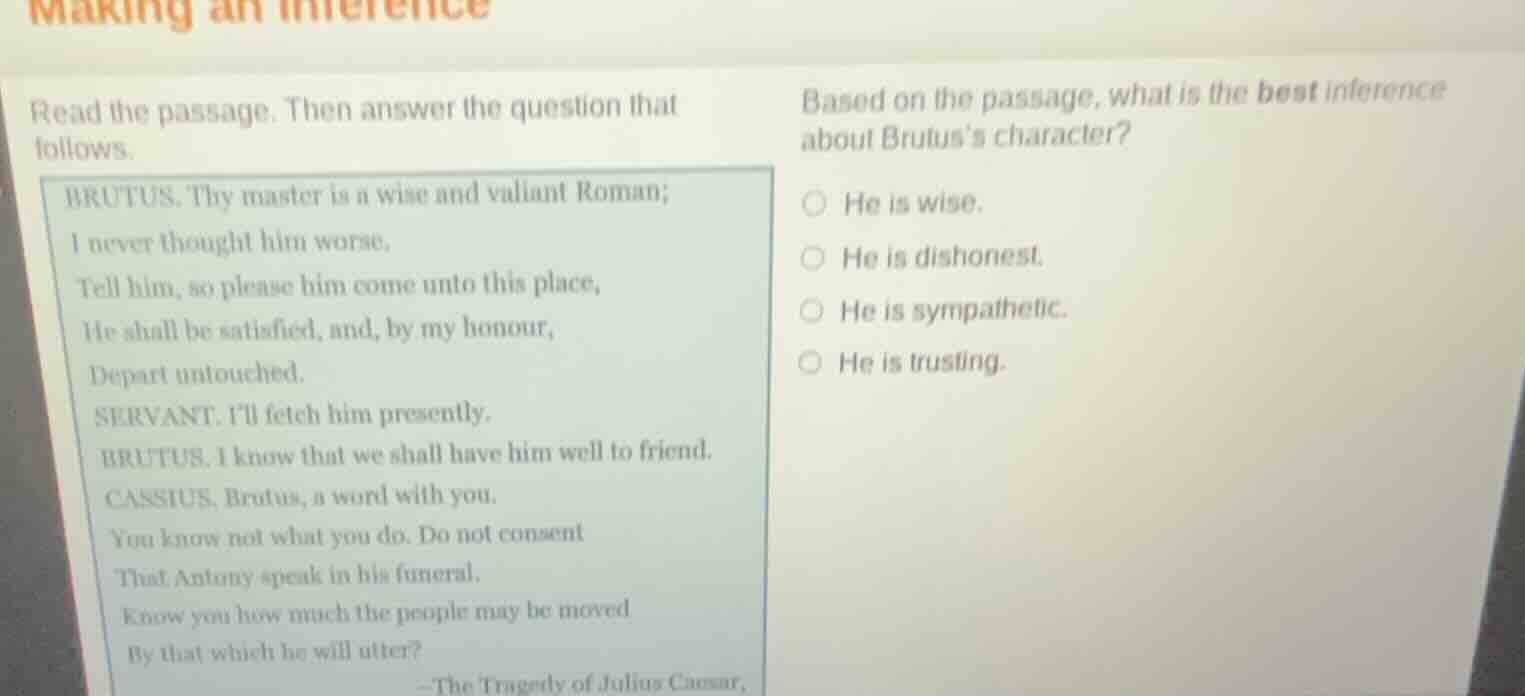
read the passage. then answer the question that follows.
brutus. thy master is a wise and valiant roman;
i never thought him worse.
tell him, so please him come unto this place,
he shall be satisfied, and, by my honour,
depart untouched.
servant. ill fetch him presently.
brutus. i know that we shall have him well to friend.
cassius. brutus, a word with you.
you know not what you do. do not consent
that antony speak in his funeral.
know you how much the people may be moved
by that which he will utter?
-the tragedy of julius caesar,
based on the passage, what is the best inference about brutuss character?
he is wise.
he is dishonest.
he is sympathetic.
he is trusting.
Analyze Brutus's statements
Using the Julius Caesar Plot and Textual Evidence Analysis knowledge points:
Brutus refers to Antony as "wise and valiant" and promises him safety ("by my honour, / Depart untouched"). He confidently states, "I know that we shall have him well to friend," showing he believes Antony will support them.
Analyze Cassius's warning
Using the Julius Caesar Plot and Textual Evidence Analysis knowledge points:
Cassius immediately warns Brutus: "You know not what you do. Do not consent / That Antony speak in his funeral." This contrast highlights Brutus's naive belief in Antony's loyalty.
Evaluate the options
Using the Textual Evidence Analysis knowledge point:
Brutus's quickness to believe Antony will be a friend, despite having just assassinated Caesar, demonstrates that he is overly trusting. This directly supports the inference "He is trusting."

Snap & solve any problem in the app
Get step-by-step solutions on Sovi AI
Photo-based solutions with guided steps
Explore more problems and detailed explanations
- He is wise.
- He is dishonest.
- He is sympathetic.
- He is trusting. (Correct answer)