QUESTION IMAGE
Question
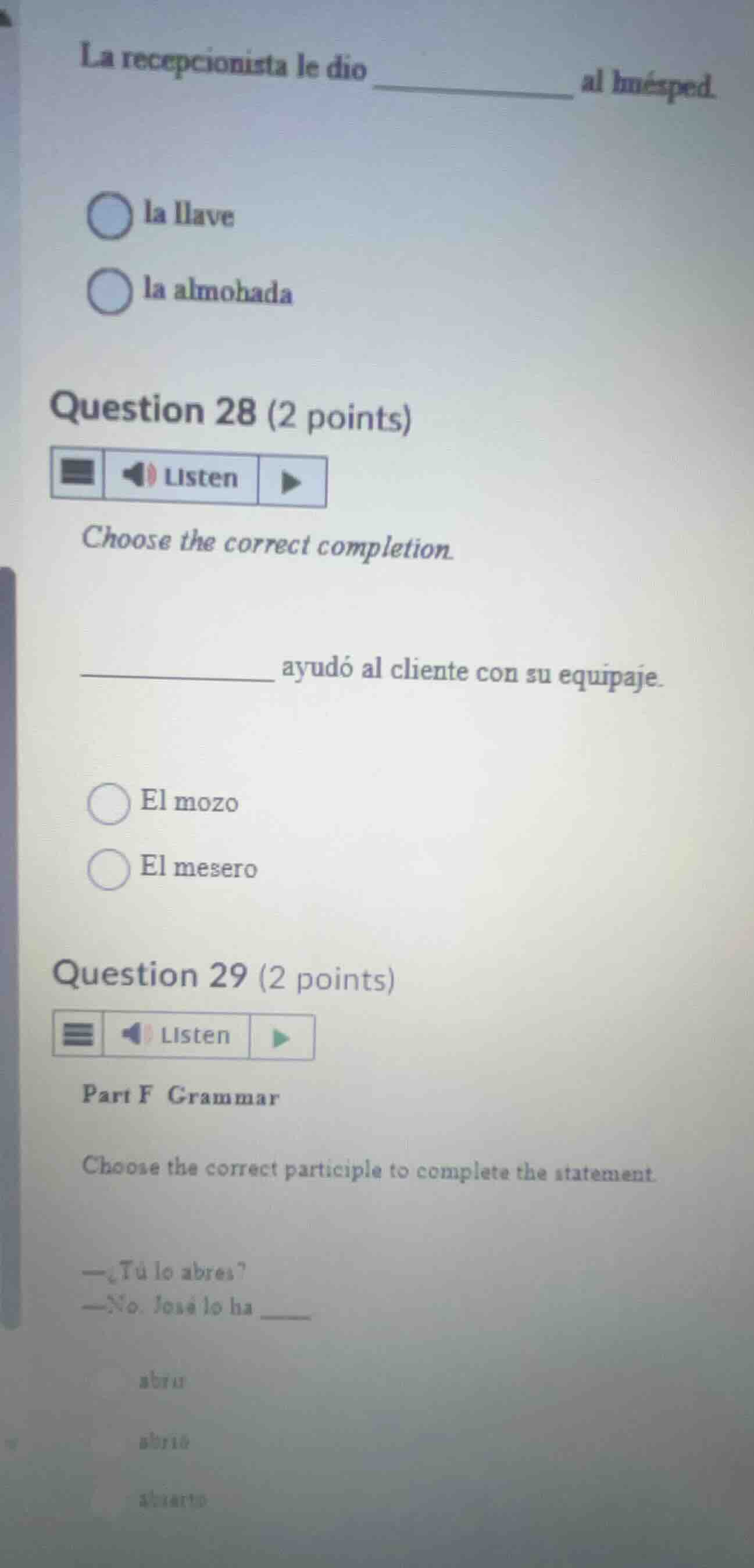
la recepcionista le dio ________ al huésped.
- la llave
- la almohada
question 28 (2 points)
choose the correct completion.
________ ayudó al cliente con su equipaje.
- el mozo
- el mesero
question 29 (2 points)
part f grammar
choose the correct participle to complete the statement.
- ¿tú lo abres?
- no, josé lo ha _______
- abrio
- abrió
- abierto
<pre_analysis>
{
"quality": "clear",
"question_count": 3,
"skills_matched": [
"direct_cot",
"multiple_choice_formatter",
"explain_then_answer",
"quick"
],
"needs_drawing": false,
"concepts_used": [
"Spanish Hotel Vocabulary",
"Spanish Past Participles"
],
"new_concepts": [],
"current_concepts": [
"Spanish Hotel Vocabulary",
"Spanish Past Participles"
]
}
</pre_analysis>
<reasoning>
Analyze the first question
The sentence is: "La recepcionista le dio ______ al huésped." (The receptionist gave the ______ to the guest.)
- "la llave" means "the key".
- "la almohada" means "the pillow".
A receptionist at a hotel front desk typically gives the key ("la llave") to the guest.
Analyze Question 28
The sentence is: "______ ayudó al cliente con su equipaje." (The ______ helped the customer with their luggage.)
- "El mozo" means "the bellhop" or "the porter".
- "El mesero" means "the waiter".
A bellhop ("el mozo") is the person who helps hotel guests with their luggage.
Analyze Question 29
The prompt asks to choose the correct past participle to complete the statement:
"—¿Tú lo abres? —No, José lo ha ________."
The verb is "abrir" (to open). The past participle of "abrir" is irregular: "abierto".
The options shown faintly at the bottom are "abro", "abrió", and "abierto".
Therefore, "abierto" is the correct choice.
</reasoning>
<answer>
Question 1
<mcq-correct>(A) la llave</mcq-correct>
<mcq-option>(B) la almohada</mcq-option>
Question 28
<mcq-correct>(A) El mozo</mcq-correct>
<mcq-option>(B) El mesero</mcq-option>
Question 29
<mcq-option>(A) abro</mcq-option>
<mcq-option>(B) abrió</mcq-option>
<mcq-correct>(C) abierto</mcq-correct>
</answer>
<post_analysis>
{
"subject": "Others",
"question_type": "Multiple Choice",
"knowledge_point": [
"Others",
"Spanish",
"Spanish Vocabulary and Grammar"
]
}
</post_analysis>
Snap & solve any problem in the app
Get step-by-step solutions on Sovi AI
Photo-based solutions with guided steps
Explore more problems and detailed explanations
<pre_analysis>
{
"quality": "clear",
"question_count": 3,
"skills_matched": [
"direct_cot",
"multiple_choice_formatter",
"explain_then_answer",
"quick"
],
"needs_drawing": false,
"concepts_used": [
"Spanish Hotel Vocabulary",
"Spanish Past Participles"
],
"new_concepts": [],
"current_concepts": [
"Spanish Hotel Vocabulary",
"Spanish Past Participles"
]
}
</pre_analysis>
<reasoning>
Analyze the first question
The sentence is: "La recepcionista le dio ______ al huésped." (The receptionist gave the ______ to the guest.)
- "la llave" means "the key".
- "la almohada" means "the pillow".
A receptionist at a hotel front desk typically gives the key ("la llave") to the guest.
Analyze Question 28
The sentence is: "______ ayudó al cliente con su equipaje." (The ______ helped the customer with their luggage.)
- "El mozo" means "the bellhop" or "the porter".
- "El mesero" means "the waiter".
A bellhop ("el mozo") is the person who helps hotel guests with their luggage.
Analyze Question 29
The prompt asks to choose the correct past participle to complete the statement:
"—¿Tú lo abres? —No, José lo ha ________."
The verb is "abrir" (to open). The past participle of "abrir" is irregular: "abierto".
The options shown faintly at the bottom are "abro", "abrió", and "abierto".
Therefore, "abierto" is the correct choice.
</reasoning>
<answer>
Question 1
<mcq-correct>(A) la llave</mcq-correct>
<mcq-option>(B) la almohada</mcq-option>
Question 28
<mcq-correct>(A) El mozo</mcq-correct>
<mcq-option>(B) El mesero</mcq-option>
Question 29
<mcq-option>(A) abro</mcq-option>
<mcq-option>(B) abrió</mcq-option>
<mcq-correct>(C) abierto</mcq-correct>
</answer>
<post_analysis>
{
"subject": "Others",
"question_type": "Multiple Choice",
"knowledge_point": [
"Others",
"Spanish",
"Spanish Vocabulary and Grammar"
]
}
</post_analysis>