QUESTION IMAGE
Question
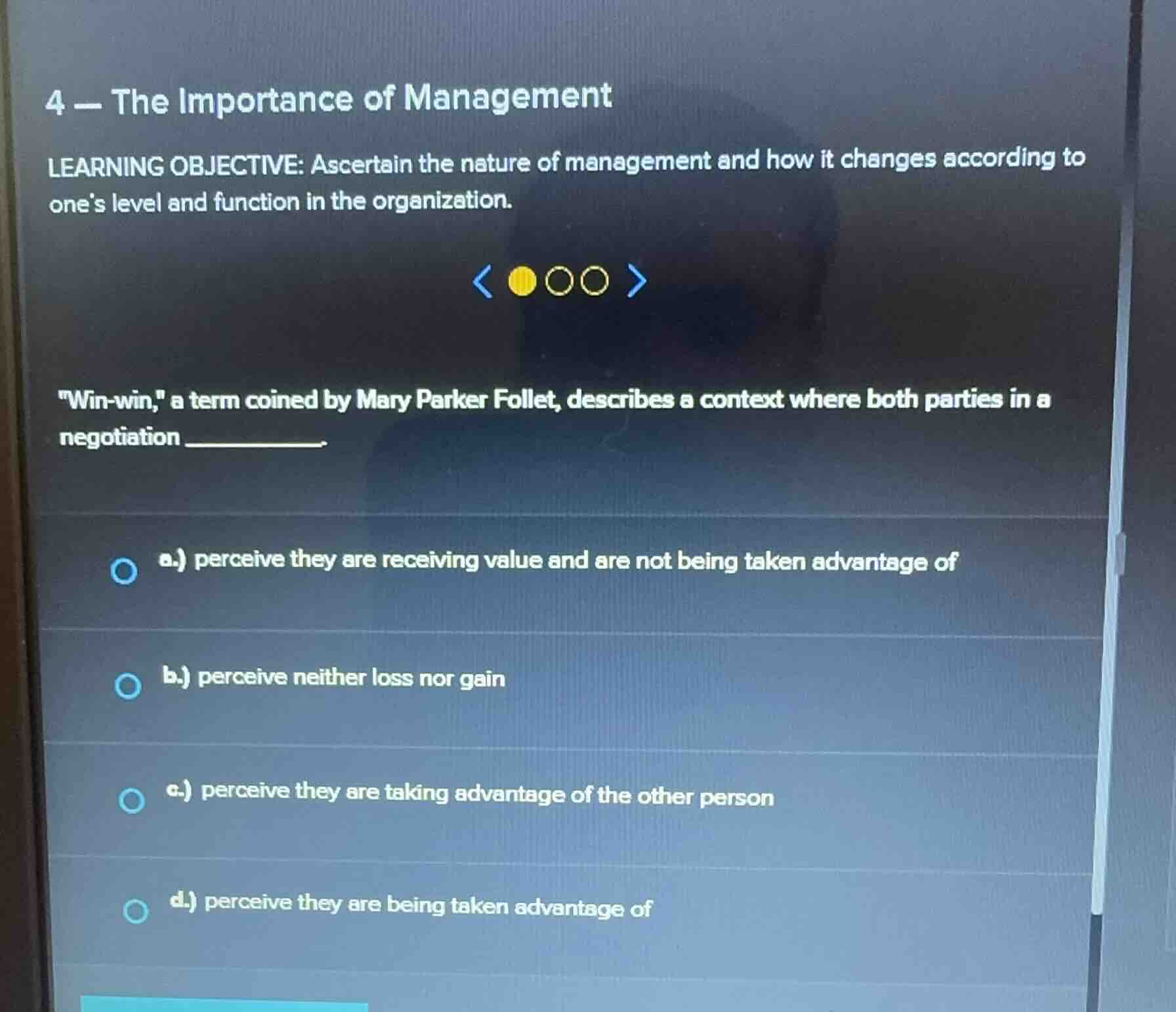
4 - the importance of management
learning objective: ascertain the nature of management and how it changes according to ones level and function in the organization.
\win-win,\ a term coined by mary parker follet, describes a context where both parties in a negotiation _______
a.) perceive they are receiving value and are not being taken advantage of
b.) perceive neither loss nor gain
c.) perceive they are taking advantage of the other person
d.) perceive they are being taken advantage of
Analyze the concept of "Win-win"
The term "win-win" in management and conflict resolution, historically associated with pioneering theorist Mary Parker Follett, refers to an integrative approach to resolving conflict. In this scenario, both parties work collaboratively to find a solution that satisfies the core needs and objectives of each side.
Evaluate the options
- Option a: "perceive they are receiving value and are not being taken advantage of" matches the definition of a win-win outcome, where mutual benefit and respect are achieved.
- Option b: "perceive neither loss nor gain" describes a neutral or compromise state, rather than a mutually beneficial "win-win" outcome.
- Option c: "perceive they are taking advantage of the other person" describes a win-lose scenario.
- Option d: "perceive they are being taken advantage of" describes a lose-win or lose-lose scenario.
Connect to management theory
Using the Functions of Management knowledge point, effective leadership and conflict resolution require managers to foster collaboration. Mary Parker Follett's integrative unity concept emphasizes that a true "win-win" occurs when both parties feel respected, gain value, and do not feel exploited. Thus, option a is the correct choice.

Snap & solve any problem in the app
Get step-by-step solutions on Sovi AI
Photo-based solutions with guided steps
Explore more problems and detailed explanations
- a.) perceive they are receiving value and are not being taken advantage of (Correct answer)
- b.) perceive neither loss nor gain
- c.) perceive they are taking advantage of the other person
- d.) perceive they are being taken advantage of