QUESTION IMAGE
Question
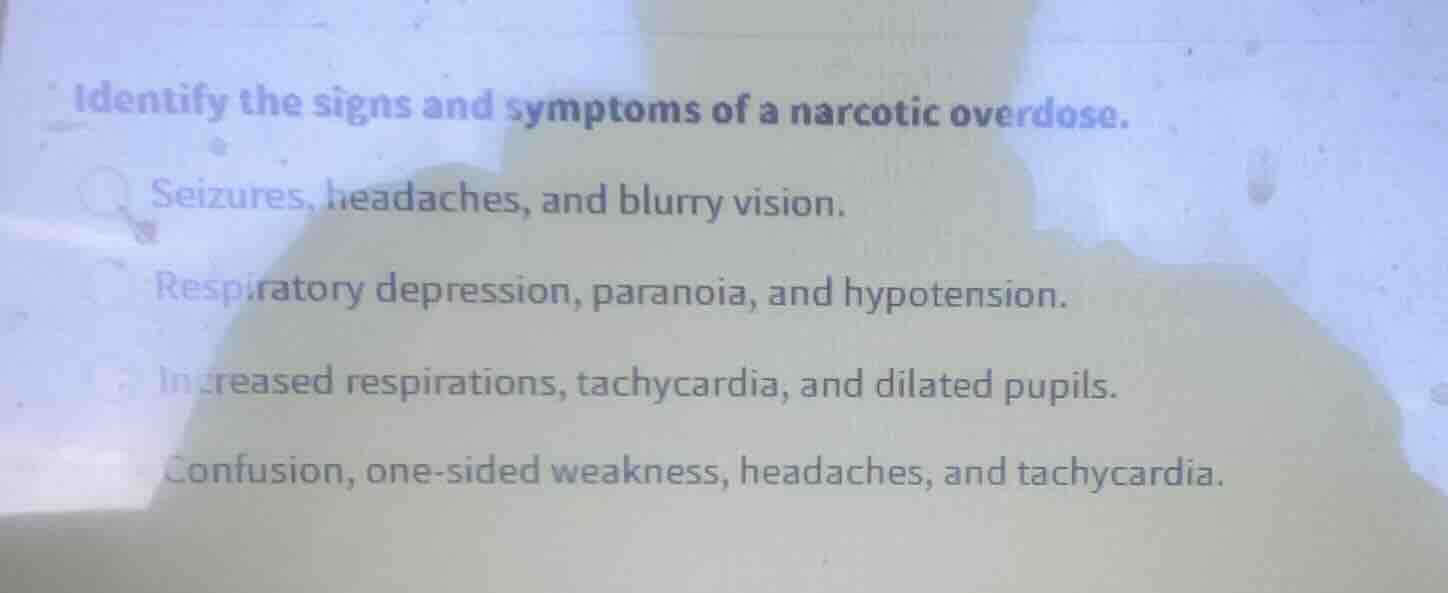
identify the signs and symptoms of a narcotic overdose.
seizures, headaches, and blurry vision.
respiratory depression, paranoia, and hypotension.
increased respirations, tachycardia, and dilated pupils.
confusion, one-sided weakness, headaches, and tachycardia.
Analyze the clinical presentation of narcotic overdose
Using the Narcotic Overdose Pathophysiology and Opioid Toxidrome knowledge points
- Narcotics (opioids) act as central nervous system (CNS) depressants.
- The classic opioid toxidrome triad consists of:
- Respiratory depression (slow, shallow breathing or apnea)
- Miosis (pinpoint pupils)
- Depressed mental status (ranging from drowsiness to coma)
- Cardiovascular effects commonly include hypotension and bradycardia.
- Neurological side effects can include dysphoria, hallucinations, or paranoia in some instances, alongside profound CNS depression.
Evaluate the given options
- Option 1: "Seizures, headaches, and blurry vision." This does not align with the classic presentation of a narcotic overdose.
- Option 2: "Respiratory depression, paranoia, and hypotension." This matches the expected physiological depression (respiratory depression and hypotension) caused by narcotics.
- Option 3: "Increased respirations, tachycardia, and dilated pupils." These are signs of a sympathomimetic or anticholinergic toxidrome (stimulants), which is the opposite of narcotic depression.
- Option 4: "Confusion, one-sided weakness, headaches, and tachycardia." One-sided weakness is a focal neurological deficit characteristic of a stroke, not a systemic narcotic overdose.

Snap & solve any problem in the app
Get step-by-step solutions on Sovi AI
Photo-based solutions with guided steps
Explore more problems and detailed explanations
- Seizures, headaches, and blurry vision.
- Respiratory depression, paranoia, and hypotension. (Correct answer)
- Increased respirations, tachycardia, and dilated pupils.
- Confusion, one-sided weakness, headaches, and tachycardia.