QUESTION IMAGE
Question
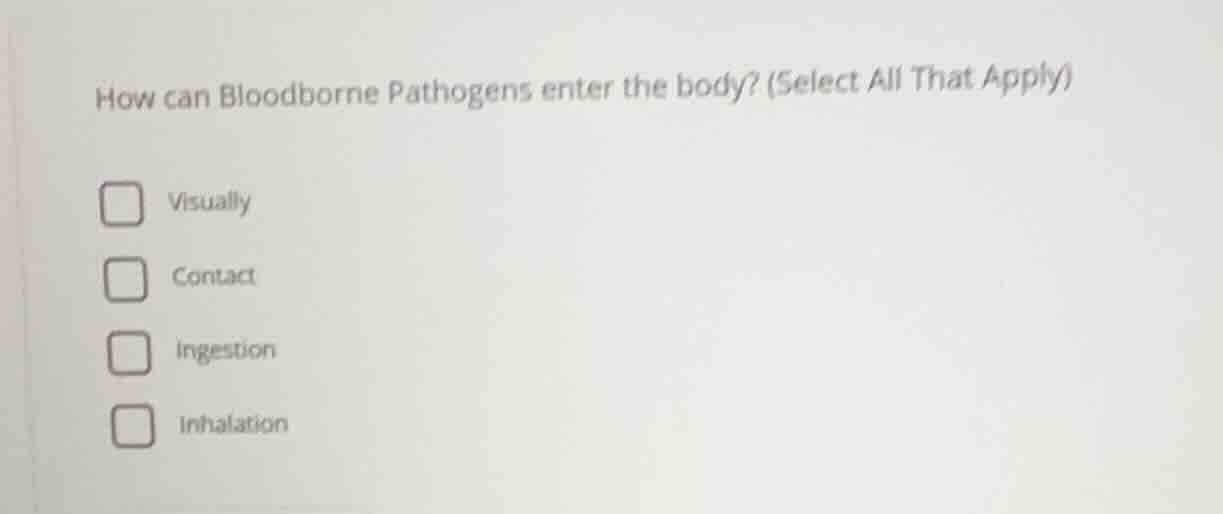
how can bloodborne pathogens enter the body? (select all that apply)
visually
contact
ingestion
inhalation
Define bloodborne pathogen transmission
Using the Bloodborne Pathogens and Infectious Diseases knowledge points, bloodborne pathogens are infectious microorganisms in human blood that can cause disease in humans. For transmission to occur, contaminated blood or other potentially infectious materials (OPIM) must enter the body.
Analyze the "Visually" option
Looking at something ("Visually") does not involve any physical transfer of bodily fluids. Therefore, pathogens cannot enter the body through visual contact.
Analyze the "Contact" option
Direct or indirect contact is a primary route of entry. This occurs when contaminated blood or OPIM comes into contact with non-intact skin (such as cuts, abrasions, or dermatitis) or mucous membranes (like the eyes, nose, or mouth).
Analyze the "Ingestion" option
Ingestion is a valid route of entry. This can happen if a person eats, drinks, or touches their mouth with hands contaminated with bloodborne pathogens, allowing the pathogens to enter the gastrointestinal tract.
Analyze the "Inhalation" option
Inhalation is generally not a primary route of entry for bloodborne pathogens, as they are not typically airborne. They require direct contact with blood or body fluids rather than inhalation of respiratory droplets or aerosols.

Snap & solve any problem in the app
Get step-by-step solutions on Sovi AI
Photo-based solutions with guided steps
Explore more problems and detailed explanations
- Visually
- Contact (Correct answer)
- Ingestion (Correct answer)
- Inhalation