QUESTION IMAGE
Question
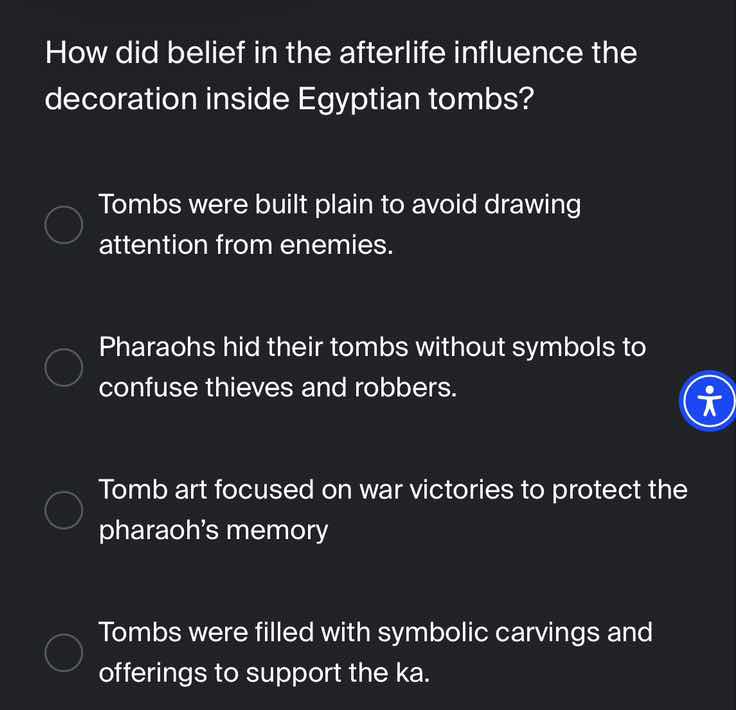
how did belief in the afterlife influence the decoration inside egyptian tombs?
tombs were built plain to avoid drawing attention from enemies.
pharaohs hid their tombs without symbols to confuse thieves and robbers.
tomb art focused on war victories to protect the pharaohs memory
tombs were filled with symbolic carvings and offerings to support the ka.
Analyze the core Egyptian belief in the afterlife
The ancient Egyptians believed that the soul consisted of several parts, including the ka (the life force or double), which required sustenance, shelter, and familiar surroundings in the afterlife to survive eternally.
Evaluate the purpose of tomb decorations
To support the ka, tombs were not left plain or hidden without symbols; instead, they were elaborately decorated with relief carvings, paintings of daily life, religious texts, and physical or painted offerings to ensure the deceased would have everything they needed in the next world.
Compare the given options
- Option 1 and Option 2 suggest tombs were plain or lacked symbols, which contradicts historical evidence of highly decorated Egyptian tombs.
- Option 3 claims tomb art focused primarily on war victories to protect memory, which is too narrow and does not address the spiritual needs of the afterlife.
- Option 4 correctly identifies that tombs were filled with symbolic carvings and offerings specifically to support the ka in the afterlife.

Snap & solve any problem in the app
Get step-by-step solutions on Sovi AI
Photo-based solutions with guided steps
Explore more problems and detailed explanations
- Tombs were built plain to avoid drawing attention from enemies.
- Pharaohs hid their tombs without symbols to confuse thieves and robbers.
- Tomb art focused on war victories to protect the pharaoh's memory
- Tombs were filled with symbolic carvings and offerings to support the ka. (Correct answer)