QUESTION IMAGE
Question
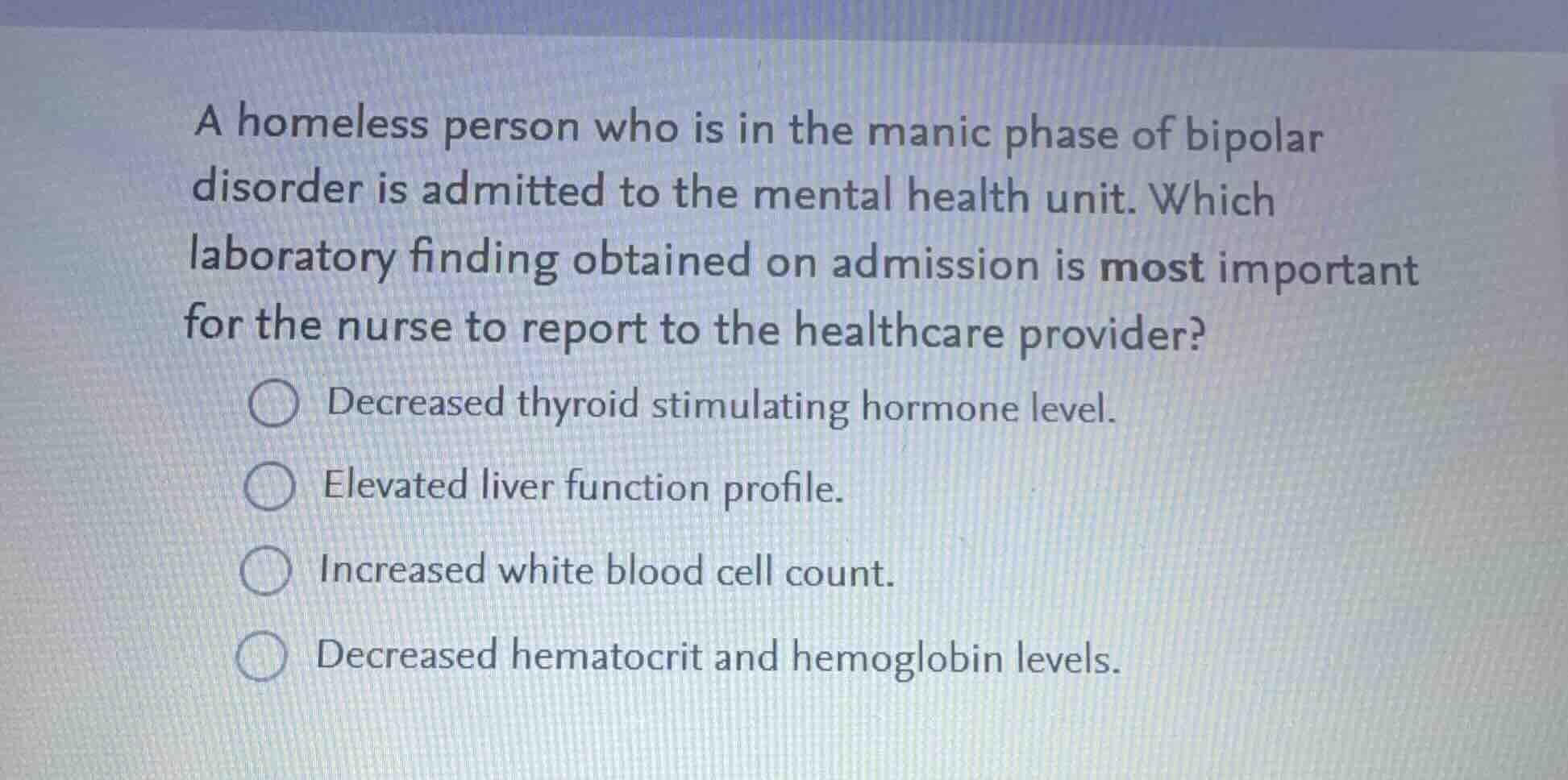
a homeless person who is in the manic phase of bipolar disorder is admitted to the mental health unit. which laboratory finding obtained on admission is most important for the nurse to report to the healthcare provider?
decreased thyroid stimulating hormone level.
elevated liver function profile.
increased white blood cell count.
decreased hematocrit and hemoglobin levels.
Analyze the clinical scenario and treatment implications
A patient in an acute manic phase of bipolar disorder is typically prescribed mood stabilizers, with lithium carbonate being a first-line pharmacological treatment. Before initiating lithium therapy, baseline laboratory tests must be evaluated because lithium is contraindicated or requires extreme caution in patients with renal impairment, cardiovascular disease, or thyroid dysfunction.
Evaluate the laboratory findings
- Decreased thyroid stimulating hormone (TSH) level: A decreased TSH level indicates hyperthyroidism. Hyperthyroidism can mimic, precipitate, or worsen manic symptoms. Furthermore, lithium therapy itself can cause thyroid dysfunction (typically hypothyroidism). Identifying an underlying thyroid abnormality is critical before starting lithium.
- Elevated liver function profile: While important, lithium is excreted entirely by the kidneys and is not metabolized by the liver, making renal function more critical than liver function for lithium initiation.
- Increased white blood cell count: Can indicate infection or stress, but is not the most critical baseline finding for initiating standard bipolar mania treatments.
- Decreased hematocrit and hemoglobin levels: Indicates anemia, which is common in homeless populations due to nutritional deficiencies, but does not directly impact the immediate pharmacological management of acute mania.
Determine the priority nursing action
The decreased TSH level is the most critical finding to report because hyperthyroidism must be ruled out or treated as a potential secondary cause of the manic behavior, and it directly impacts the safety of initiating lithium therapy.

Snap & solve any problem in the app
Get step-by-step solutions on Sovi AI
Photo-based solutions with guided steps
Explore more problems and detailed explanations
- (A) Decreased thyroid stimulating hormone level. (Correct answer)
- (B) Elevated liver function profile.
- (C) Increased white blood cell count.
- (D) Decreased hematocrit and hemoglobin levels.