QUESTION IMAGE
Question
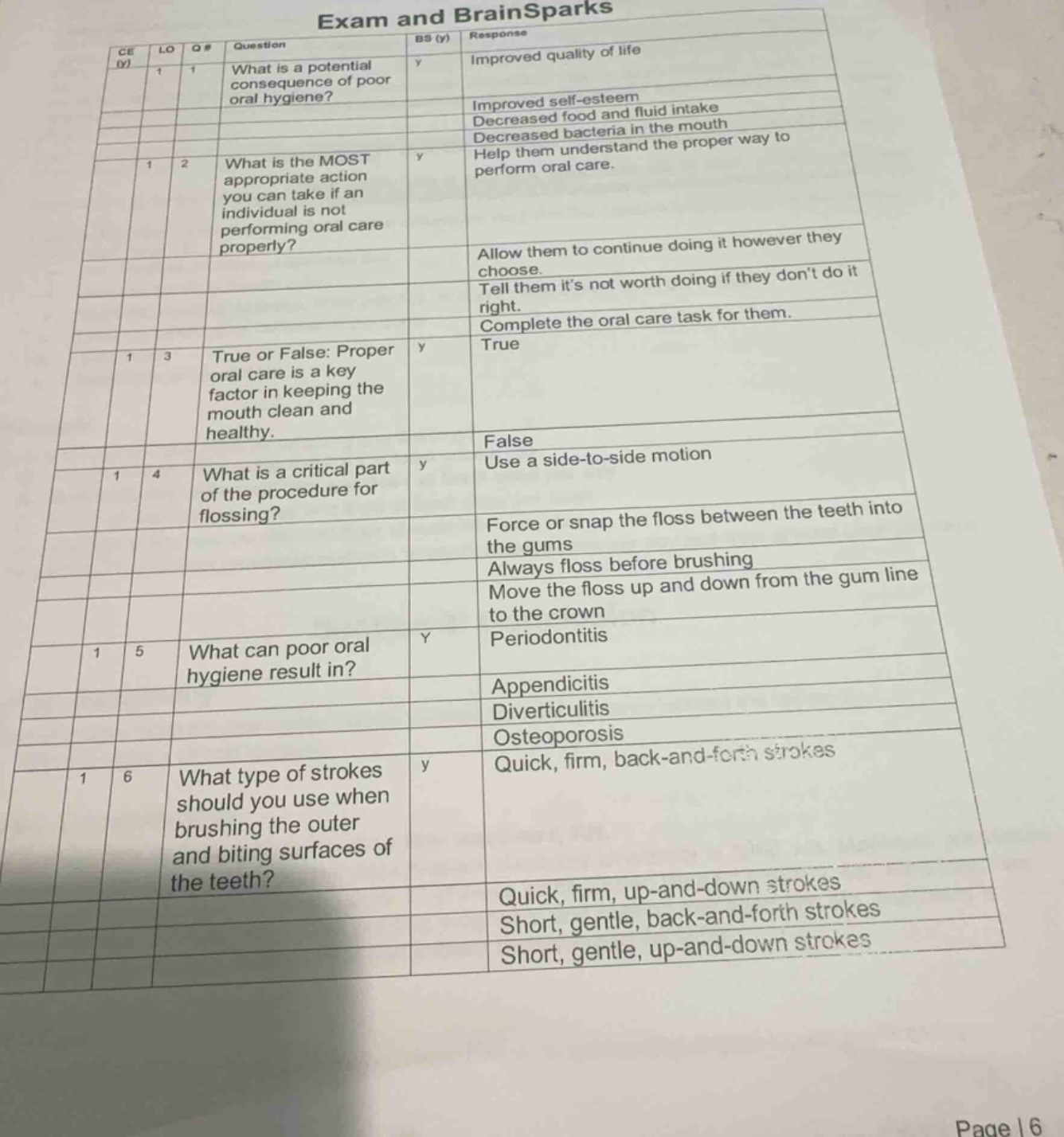
exam and brainsparks
q# 1
question: what is a potential consequence of poor oral hygiene?
response options:
- improved quality of life
- improved self-esteem
- decreased food and fluid intake
- decreased bacteria in the mouth
q# 2
question: what is the most appropriate action you can take if an individual is not performing oral care properly?
response options:
- help them understand the proper way to perform oral care.
- allow them to continue doing it however they choose.
- tell them its not worth doing if they dont do it right.
- complete the oral care task for them.
q# 3
question: true or false: proper oral care is a key factor in keeping the mouth clean and healthy.
response options:
- true
- false
q# 4
question: what is a critical part of the procedure for flossing?
response options:
- use a side-to-side motion
- force or snap the floss between the teeth into the gums
- always floss before brushing
- move the floss up and down from the gum line to the crown
q# 5
question: what can poor oral hygiene result in?
response options:
- periodontitis
- appendicitis
- diverticulitis
- osteoporosis
q# 6
question: what type of strokes should you use when brushing the outer and biting surfaces of the teeth?
response options:
- quick, firm, back-and-forth strokes
- quick, firm, up-and-down strokes
- short, gentle, back-and-forth strokes
- short, gentle, up-and-down strokes
Analyze Question 1
The question asks for a potential consequence of poor oral hygiene. Poor oral hygiene leads to pain, discomfort, and difficulty eating, which directly results in decreased food and fluid intake. The other options (improved quality of life, improved self-esteem, decreased bacteria) are positive outcomes, which are incorrect.
Analyze Question 2
The question asks for the most appropriate action when an individual is not performing oral care properly. In healthcare and caregiving, promoting independence while ensuring safety is key. Helping them understand the proper way to perform oral care supports their autonomy and skill development, rather than taking over completely or letting them do it incorrectly.
Analyze Question 3
The statement is "Proper oral care is a key factor in keeping the mouth clean and healthy." This is a fundamental fact of personal hygiene and healthcare, making the statement true.
Analyze Question 4
The question asks for a critical part of the flossing procedure. Proper flossing technique involves moving the floss gently up and down from the gum line to the crown of each tooth to scrape away plaque. Snapping the floss can damage gums, and side-to-side sawing motions can cause tissue trauma.
Analyze Question 5
The question asks what poor oral hygiene can result in. Periodontitis is a serious gum infection that damages the soft tissue and can destroy the bone that supports your teeth, directly caused by plaque buildup from poor oral hygiene. Appendicitis, diverticulitis, and osteoporosis are unrelated systemic or localized conditions.
Analyze Question 6
The question asks for the type of strokes to use when brushing the outer and biting surfaces of the teeth. Dental guidelines recommend using short, gentle, back-and-forth strokes to clean these surfaces effectively without causing recession of the gums or wear on the tooth enamel.

Snap & solve any problem in the app
Get step-by-step solutions on Sovi AI
Photo-based solutions with guided steps
Explore more problems and detailed explanations
Question 1
- Improved quality of life
- Improved self-esteem
- Decreased food and fluid intake (Correct answer)
- Decreased bacteria in the mouth
Question 2
- Help them understand the proper way to perform oral care. (Correct answer)
- Allow them to continue doing it however they choose.
- Tell them it's not worth doing if they don't do it right.
- Complete the oral care task for them.
Question 3
- True (Correct answer)
- False
Question 4
- Use a side-to-side motion
- Force or snap the floss between the teeth into the gums
- Always floss before brushing
- Move the floss up and down from the gum line to the crown (Correct answer)
Question 5
- Periodontitis (Correct answer)
- Appendicitis
- Diverticulitis
- Osteoporosis
Question 6
- Quick, firm, back-and-forth strokes
- Quick, firm, up-and-down strokes
- Short, gentle, back-and-forth strokes (Correct answer)
- Short, gentle, up-and-down strokes