QUESTION IMAGE
Question
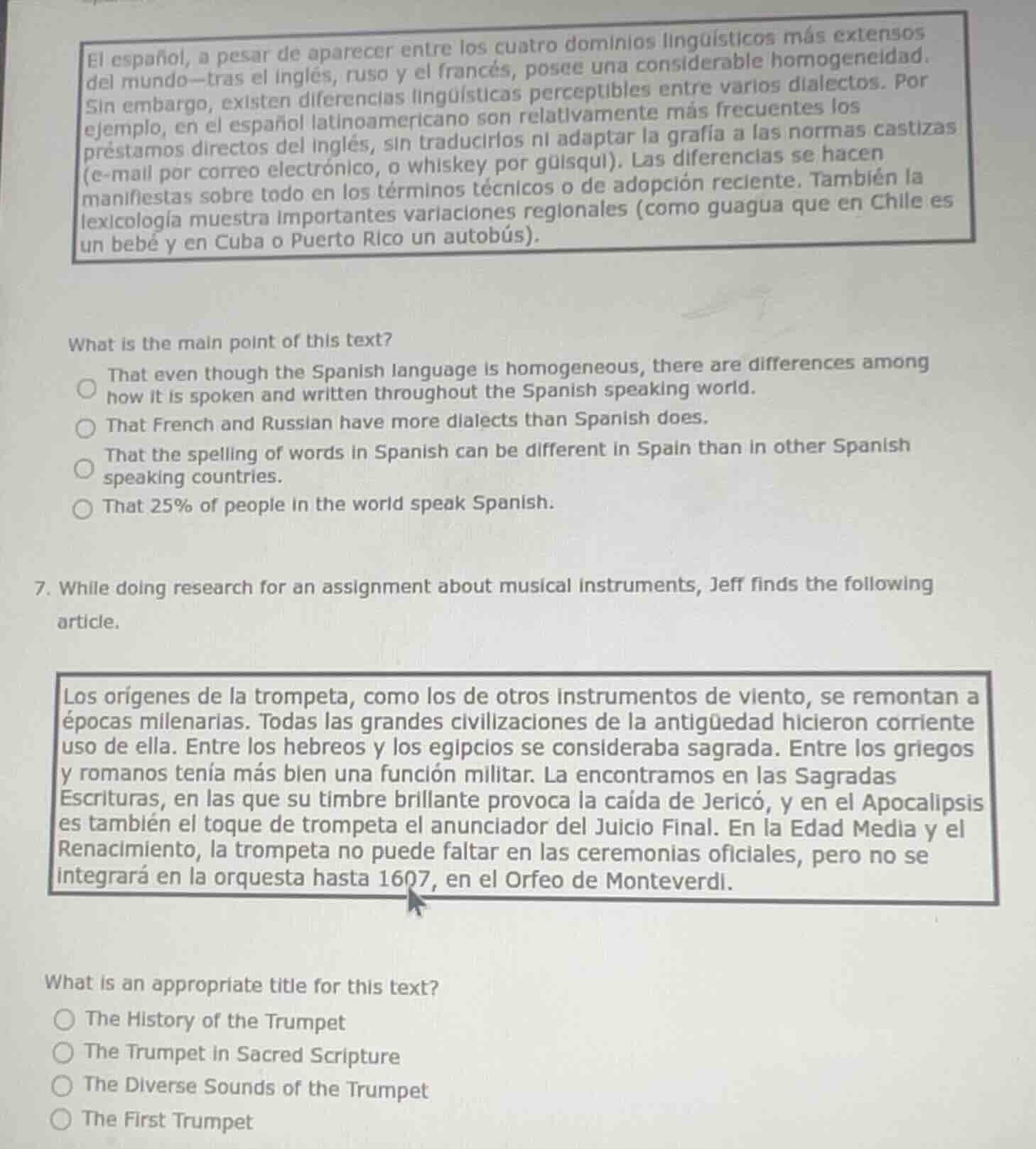
el español, a pesar de aparecer entre los cuatro dominios lingüísticos más extensos del mundo—tras el inglés, ruso y el francés, posee una considerable homogeneidad. sin embargo, existen diferencias lingüísticas perceptibles entre varios dialectos. por ejemplo, en el español latinoamericano son relativamente más frecuentes los préstamos directos del inglés, sin traducirlos ni adaptar la grafía a las normas castizas (e - mail por correo electrónico, o whiskey por güisqui). las diferencias se hacen manifiestas sobre todo en los términos técnicos o de adopción reciente. también la lexicología muestra importantes variaciones regionales (como guagua que en chile es un bebé y en cuba o puerto rico un autobús). what is the main point of this text? that even though the spanish language is homogeneous, there are differences among how it is spoken and written throughout the spanish speaking world. that french and russian have more dialects than spanish does. that the spelling of words in spanish can be different in spain than in other spanish speaking countries. that 25% of people in the world speak spanish. 7. while doing research for an assignment about musical instruments, jeff finds the following article. los orígenes de la trompeta, como los de otros instrumentos de viento, se remontan a épocas milenarias. todas las grandes civilizaciones de la antigüedad hicieron corriente uso de ella. entre los hebreos y los egipcios se consideraba sagrada. entre los griegos y romanos tenía más bien una función militar. la encontramos en las sagradas escrituras, en las que su timbre brillante provoca la caída de jericó, y en el apocalipsis es también el toque de trompeta el anunciador del juicio final. en la edad media y el renacimiento, la trompeta no puede faltar en las ceremonias oficiales, pero no se integrará en la orquesta hasta 1607, en el orfeo de monteverdi. what is an appropriate title for this text? the history of the trumpet the trumpet in sacred scripture the diverse sounds of the trumpet the first trumpet
For the first question: The text first states Spanish has considerable homogeneity, then details linguistic differences between its dialects (loanwords, regional lexicon). The correct option captures this core contrast.
For the second question: The text traces the trumpet's use from ancient civilizations, through religious texts, the Middle Ages/Renaissance, to its 1607 orchestral integration, covering its entire historical timeline.

Snap & solve any problem in the app
Get step-by-step solutions on Sovi AI
Photo-based solutions with guided steps
Explore more problems and detailed explanations
- That even though the Spanish language is homogeneous, there are differences among how it is spoken and written throughout the Spanish speaking world.
- The History of the Trumpet