QUESTION IMAGE
Question
course exam
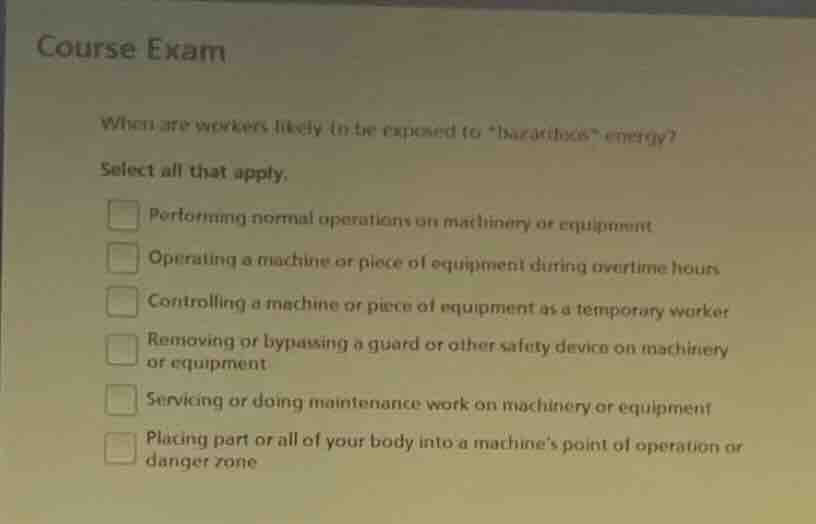
when are workers likely to be exposed to \hazardous\ energy?
select all that apply.
performing normal operations on machinery or equipment
operating a machine or piece of equipment during overtime hours
controlling a machine or piece of equipment as a temporary worker
removing or bypassing a guard or other safety device on machinery or equipment
servicing or doing maintenance work on machinery or equipment
placing part or all of your body into a machines point of operation or danger zone
Analyze the definition of hazardous energy exposure
Using the Hazardous Energy Control and Workplace Safety knowledge points, we evaluate when workers are exposed to hazardous energy. According to OSHA standards, exposure to hazardous energy typically occurs during servicing and maintenance activities, or when safety guards are bypassed, rather than during normal, guarded production operations.
Evaluate each option against safety standards
- Performing normal operations on machinery or equipment: Normal operations are generally protected by machine guarding, so workers are not typically exposed to hazardous energy unless a guard is bypassed.
- Operating a machine or piece of equipment during overtime hours: The time of day or overtime status does not inherently change the exposure to hazardous energy if normal guards are in place.
- Controlling a machine or piece of equipment as a temporary worker: Employment status does not change the physical exposure conditions of the machinery.
- Removing or bypassing a guard or other safety device on machinery or equipment: Bypassing a guard directly exposes the worker to the machine's moving parts and stored energy.
- Servicing or doing maintenance work on machinery or equipment: Servicing and maintenance are the primary activities where lockout/tagout is required because workers must bypass guards or work closely with energy sources.
- Placing part or all of your body into a machine's point of operation or danger zone: This action directly places the worker in the path of potential hazardous energy release.

Snap & solve any problem in the app
Get step-by-step solutions on Sovi AI
Photo-based solutions with guided steps
Explore more problems and detailed explanations
- Performing normal operations on machinery or equipment
- Operating a machine or piece of equipment during overtime hours
- Controlling a machine or piece of equipment as a temporary worker
- Removing or bypassing a guard or other safety device on machinery or equipment (Correct answer)
- Servicing or doing maintenance work on machinery or equipment (Correct answer)
- Placing part or all of your body into a machine's point of operation or danger zone (Correct answer)