QUESTION IMAGE
Question
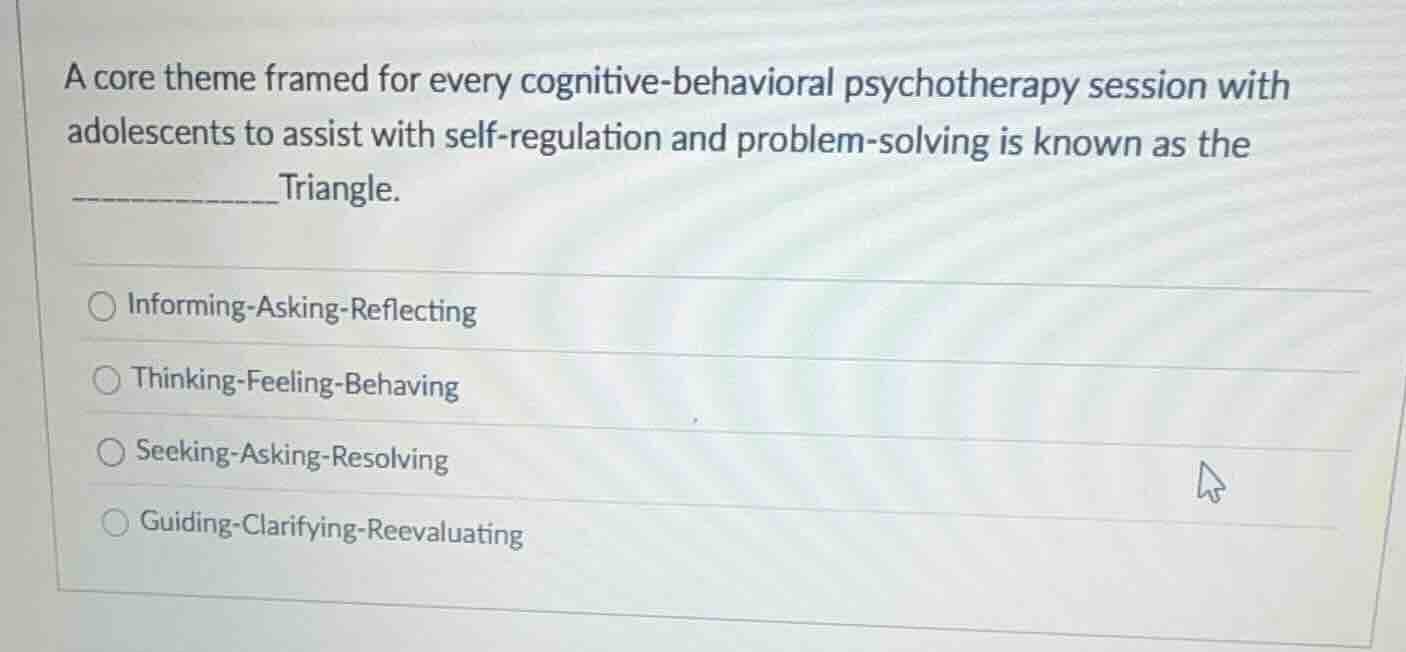
a core theme framed for every cognitive-behavioral psychotherapy session with adolescents to assist with self-regulation and problem-solving is known as the __________ triangle.
informing-asking-reflecting
thinking-feeling-behaving
seeking-asking-resolving
guiding-clarifying-reevaluating
🆕 New Concept Discovered: Cognitive Behavioral Triangle
How thoughts, feelings, and behaviors interact.
Step 1: Identify the core components of Cognitive Behavioral Therapy (CBT)
Cognitive-behavioral therapy (CBT) is built on the foundational premise that our thoughts, feelings, and behaviors are interconnected. A change in one area directly influences the other two.
Step 2: Define the CBT Triangle
In clinical practice, especially when working with adolescents on self-regulation and problem-solving, therapists use a visual tool known as the CBT Triangle (or Cognitive Triangle). This triangle maps out the relationship between three core human experiences:
- Thoughts (What we think)
- Feelings (What we feel emotionally and physically)
- Behaviors (What we do)
Teaching adolescents the Thinking-Feeling-Behaving Triangle helps them recognize how negative thought patterns can lead to distressing emotions and unhelpful behaviors, allowing them to intervene and self-regulate.
Step 3: Match with the given options
Looking at the provided choices:
- Informing-Asking-Reflecting
- Thinking-Feeling-Behaving (Matches the core components of the CBT triangle)
- Seeking-Asking-Resolving
- Guiding-Clarifying-Reevaluating

Snap & solve any problem in the app
Get step-by-step solutions on Sovi AI
Photo-based solutions with guided steps
Explore more problems and detailed explanations
Thinking-Feeling-Behaving