QUESTION IMAGE
Question
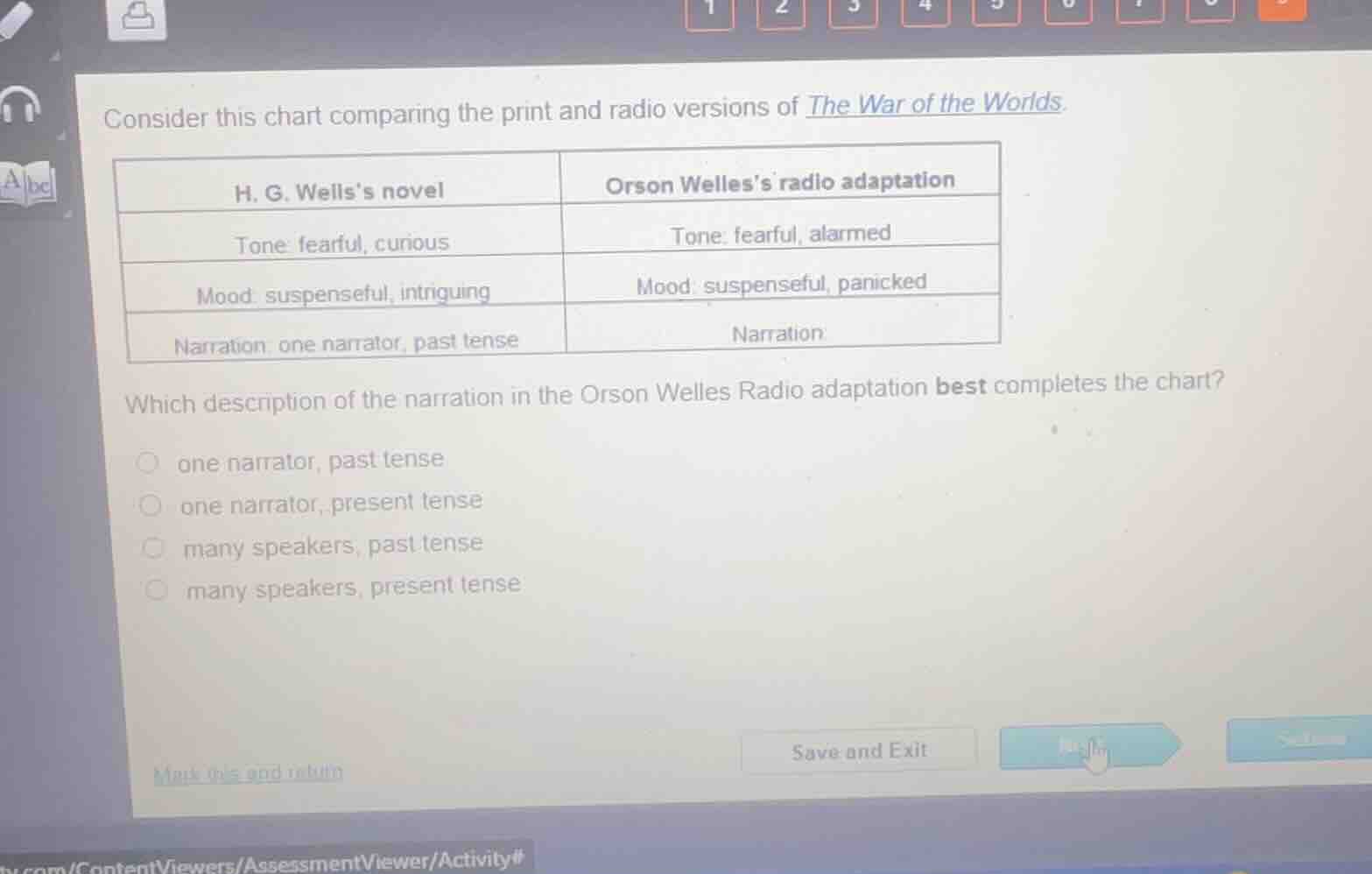
consider this chart comparing the print and radio versions of the war of the worlds.
\
which description of the narration in the orson welles radio adaptation best completes the chart?
one narrator, past tense
one narrator, present tense
many speakers, past tense
many speakers, present tense
Analyze the medium differences
Using the Media Adaptation Analysis and Comparative Text Analysis knowledge points, we compare H. G. Wells's original novel The War of the Worlds with Orson Welles's 1938 radio broadcast. The novel is written from the perspective of a single narrator reflecting on events that have already occurred, which is why its narration is described as "one narrator, past tense."
Evaluate the radio adaptation's narration
Orson Welles's radio adaptation was famously designed to sound like a live, breaking news broadcast. To achieve this realistic, urgent effect, the production utilized multiple voice actors playing different roles (such as news anchors, reporters, and military officials) rather than a single narrator.
Determine the tense and speaker format
Because the radio play simulates a live broadcast happening in real-time, the events are described as they unfold, using the present tense. Therefore, the narration style that best completes the chart for the radio adaptation is "many speakers, present tense."

Snap & solve any problem in the app
Get step-by-step solutions on Sovi AI
Photo-based solutions with guided steps
Explore more problems and detailed explanations
- one narrator, past tense
- one narrator, present tense
- many speakers, past tense
- many speakers, present tense (Correct answer)