QUESTION IMAGE
Question
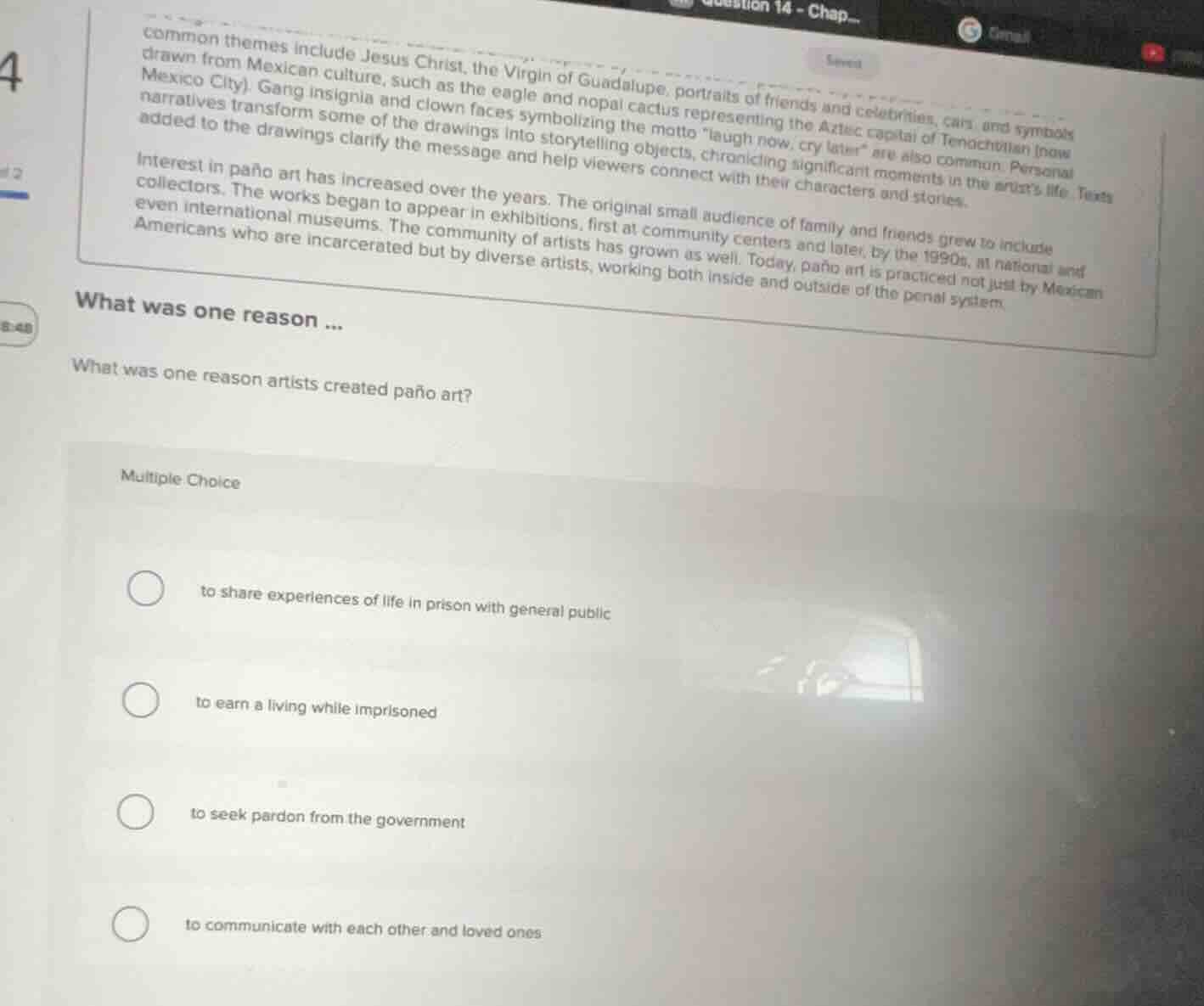
common themes include jesus christ, the virgin of guadalupe, portraits of friends and celebrities, cars, and symbols drawn from mexican culture, such as the eagle and nopal cactus representing the aztec capital of tenochtitlan (now mexico city). gang insignia and clown faces symbolizing the motto \laugh now, cry later\ are also common. personal narratives transform some of the drawings into storytelling objects, chronicling significant moments in the artists life. texts added to the drawings clarify the message and help viewers connect with their characters and stories.
interest in paño art has increased over the years. the original small audience of family and friends grew to include collectors. the works began to appear in exhibitions, first at community centers and later, by the 1990s, at national and even international museums. the community of artists has grown as well. today, paño art is practiced not just by mexican americans who are incarcerated but by diverse artists, working both inside and outside of the penal system.
what was one reason ...
what was one reason artists created paño art?
multiple choice
to share experiences of life in prison with general public
to earn a living while imprisoned
to seek pardon from the government
to communicate with each other and loved ones
Analyze the text passage
Using the Paño Art knowledge point
The provided text describes paño art as a form of storytelling and communication. It mentions that "Personal narratives transform some of the drawings into storytelling objects, chronicling significant moments in the artist's life. Texts added to the drawings clarify the message and help viewers connect with their characters and stories." It also notes that the original audience consisted of "family and friends," which indicates a primary purpose of communicating personal experiences and messages to loved ones and peers.
Evaluate the multiple-choice options
- Option 1 ("to share experiences of life in prison with general public"): Incorrect. The text states the original audience was small (family and friends), only later growing to include collectors and museums.
- Option 2 ("to earn a living while imprisoned"): Incorrect. There is no mention of creating these works to earn a living or for financial gain while incarcerated.
- Option 3 ("to seek pardon from the government"): Incorrect. The text does not mention seeking pardons as a purpose.
- Option 4 ("to communicate with each other and loved ones"): Correct. The text highlights personal narratives, storytelling, and clarifying messages for an audience that originally consisted of family and friends.

Snap & solve any problem in the app
Get step-by-step solutions on Sovi AI
Photo-based solutions with guided steps
Explore more problems and detailed explanations
- to share experiences of life in prison with general public
- to earn a living while imprisoned
- to seek pardon from the government
- to communicate with each other and loved ones (Correct answer)