QUESTION IMAGE
Question
case study - coromandel
the population of this particular area of the waikato region is around the 37,000 mark. however, this multiplies by six times during the christmas/new years period as domestic tourists make their way to their holiday homes/baches or travel to camping grounds/local accommodation, to enjoy the coastline this area has to offer.
with hundreds of thousands of visitors to the coromandel peninsula each year, we can understand how the natural resources of this particular area are being impacted on. this will continue to occur, as visitor numbers are forecasted to increase by about 215,000 per year! this large population increase will strain road and waste services. it will also put pressure on the coastline.
exercise fourteen
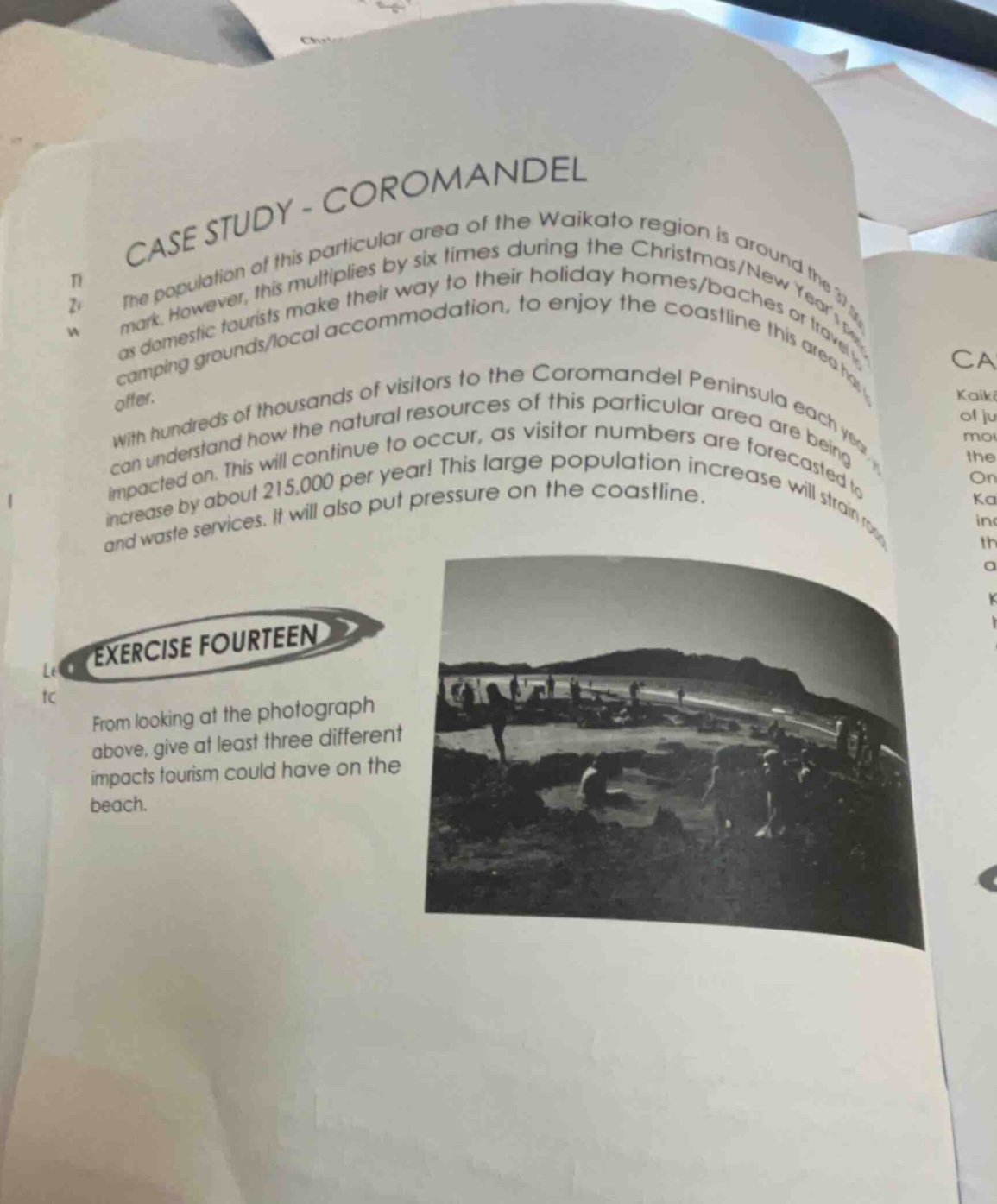
from looking at the photograph above, give at least three different impacts tourism could have on the beach.
Analyze the visual evidence in the photograph
The photograph shows a highly crowded beach (Hot Water Beach in Coromandel) with many tourists concentrated in a small area, digging in the sand and walking along the shoreline.
Identify potential environmental impacts from crowding
- Littering and Waste Accumulation: High density of visitors leads to increased rubbish left on the beach, which can pollute the marine environment.
- Erosion and Habitat Disruption: Heavy foot traffic and digging in the sand can destabilize the beach structure, accelerate coastal erosion, and disturb local coastal organisms.
- Water Pollution: Increased human activity in and near the water can lead to contamination from sunscreen, organic waste, and other pollutants.

Snap & solve any problem in the app
Get step-by-step solutions on Sovi AI
Photo-based solutions with guided steps
Explore more problems and detailed explanations
Based on the photograph showing a highly crowded beach, three potential impacts of tourism on this environment are:
- Litter and Waste Pollution: The large volume of visitors can lead to an accumulation of rubbish (such as plastic bottles, food wrappers, and packaging) left behind on the sand, which can harm marine wildlife and degrade the natural beauty of the beach.
- Sand and Dune Erosion: Heavy foot traffic from crowds walking, standing, and digging on the shoreline can destabilize the sand structures, accelerate coastal erosion, and damage fragile coastal vegetation.
- Water Contamination: High concentrations of people in the water and along the shore can introduce pollutants such as sunscreens, microplastics, and surface runoff, negatively affecting the local water quality and marine ecosystems.