Sovi.AI - AI Math Tutor

Scan to solve math questions

QUESTION IMAGE

the brain is most active during which portion of each sleep cycle? a. t…

Question

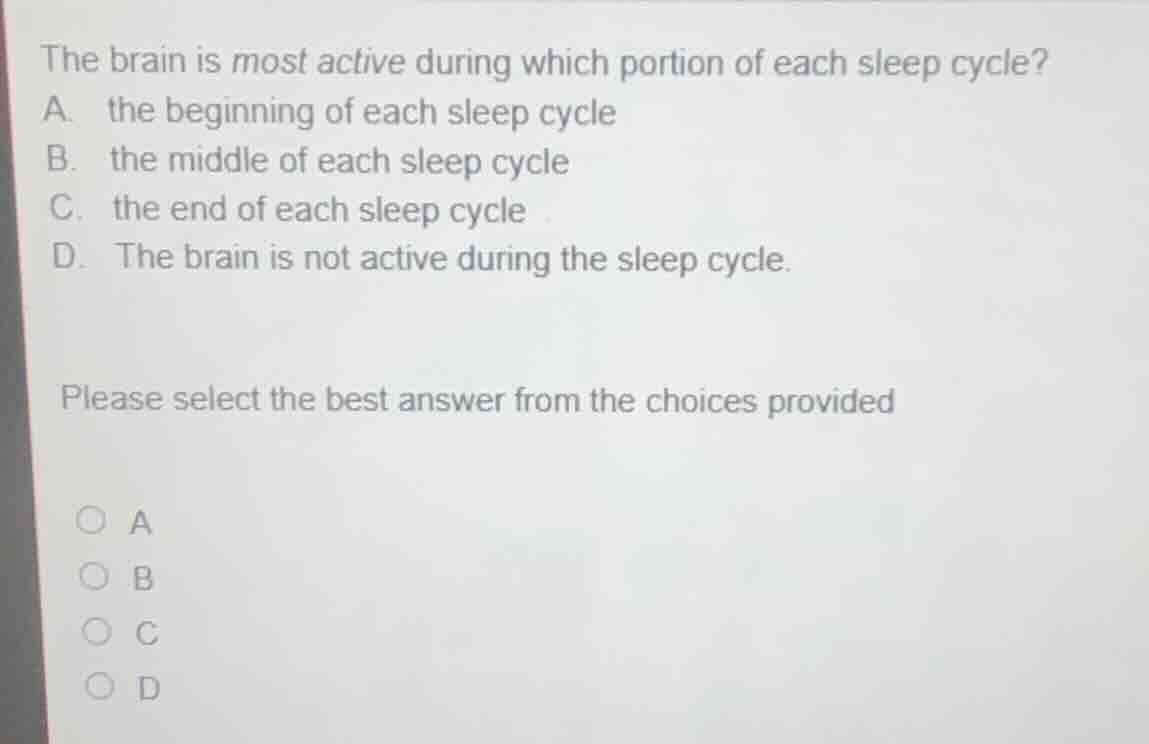
the brain is most active during which portion of each sleep cycle?
a. the beginning of each sleep cycle
b. the middle of each sleep cycle
c. the end of each sleep cycle
d. the brain is not active during the sleep cycle.

please select the best answer from the choices provided

a
b
c
d

Explanation:

Response

<pre_analysis>
{
"quality": "clear",
"question_count": 1,
"skills_matched": [
"direct_cot",
"multiple_choice_formatter",
"explain_then_answer",
"quick"
],
"needs_drawing": false,
"concepts_used": [
"REM Sleep Cycles"
],
"new_concepts": [],
"current_concepts": [
"REM Sleep Cycles",
"Sleep Architecture"
]
}
</pre_analysis>

<reasoning>

Analyze brain activity during sleep stages

During a typical 90-minute sleep cycle, a person progresses through non-REM stages (N1, N2, N3) and ends with REM (Rapid Eye Movement) sleep. Brain activity, characterized by high-frequency beta-like waves, is highest during REM sleep, which occurs at the end of each sleep cycle.

Evaluate the given options

  • A: The beginning of each sleep cycle consists of light non-REM sleep (N1), where brain activity begins to slow down.
  • B: The middle of each sleep cycle consists of deeper non-REM sleep (N2 and N3/slow-wave sleep), where brain activity is significantly reduced.
  • C: The end of each sleep cycle consists of REM sleep, where brain waves, heart rate, and respiration speed up to near-waking levels.
  • D: The brain remains highly active during various stages of sleep, particularly REM sleep.

</reasoning>

<answer>
<mcq-option>A. the beginning of each sleep cycle</mcq-option>
<mcq-option>B. the middle of each sleep cycle</mcq-option>
<mcq-correct>C. the end of each sleep cycle</mcq-correct>
<mcq-option>D. The brain is not active during the sleep cycle.</mcq-option>
</answer>

<post_analysis>
{
"subject": "Natural Science",
"question_type": "Multiple Choice",
"knowledge_point": [
"Natural Science",
"Biology",
"Sleep Physiology"
]
}
</post_analysis>

Answer:

<pre_analysis>
{
"quality": "clear",
"question_count": 1,
"skills_matched": [
"direct_cot",
"multiple_choice_formatter",
"explain_then_answer",
"quick"
],
"needs_drawing": false,
"concepts_used": [
"REM Sleep Cycles"
],
"new_concepts": [],
"current_concepts": [
"REM Sleep Cycles",
"Sleep Architecture"
]
}
</pre_analysis>

<reasoning>

Analyze brain activity during sleep stages

During a typical 90-minute sleep cycle, a person progresses through non-REM stages (N1, N2, N3) and ends with REM (Rapid Eye Movement) sleep. Brain activity, characterized by high-frequency beta-like waves, is highest during REM sleep, which occurs at the end of each sleep cycle.

Evaluate the given options

  • A: The beginning of each sleep cycle consists of light non-REM sleep (N1), where brain activity begins to slow down.
  • B: The middle of each sleep cycle consists of deeper non-REM sleep (N2 and N3/slow-wave sleep), where brain activity is significantly reduced.
  • C: The end of each sleep cycle consists of REM sleep, where brain waves, heart rate, and respiration speed up to near-waking levels.
  • D: The brain remains highly active during various stages of sleep, particularly REM sleep.

</reasoning>

<answer>
<mcq-option>A. the beginning of each sleep cycle</mcq-option>
<mcq-option>B. the middle of each sleep cycle</mcq-option>
<mcq-correct>C. the end of each sleep cycle</mcq-correct>
<mcq-option>D. The brain is not active during the sleep cycle.</mcq-option>
</answer>

<post_analysis>
{
"subject": "Natural Science",
"question_type": "Multiple Choice",
"knowledge_point": [
"Natural Science",
"Biology",
"Sleep Physiology"
]
}
</post_analysis>