Sovi.AI - AI Math Tutor

Scan to solve math questions

QUESTION IMAGE

according to the passage, what is the definition of vulnerable? a) anxi…

Question

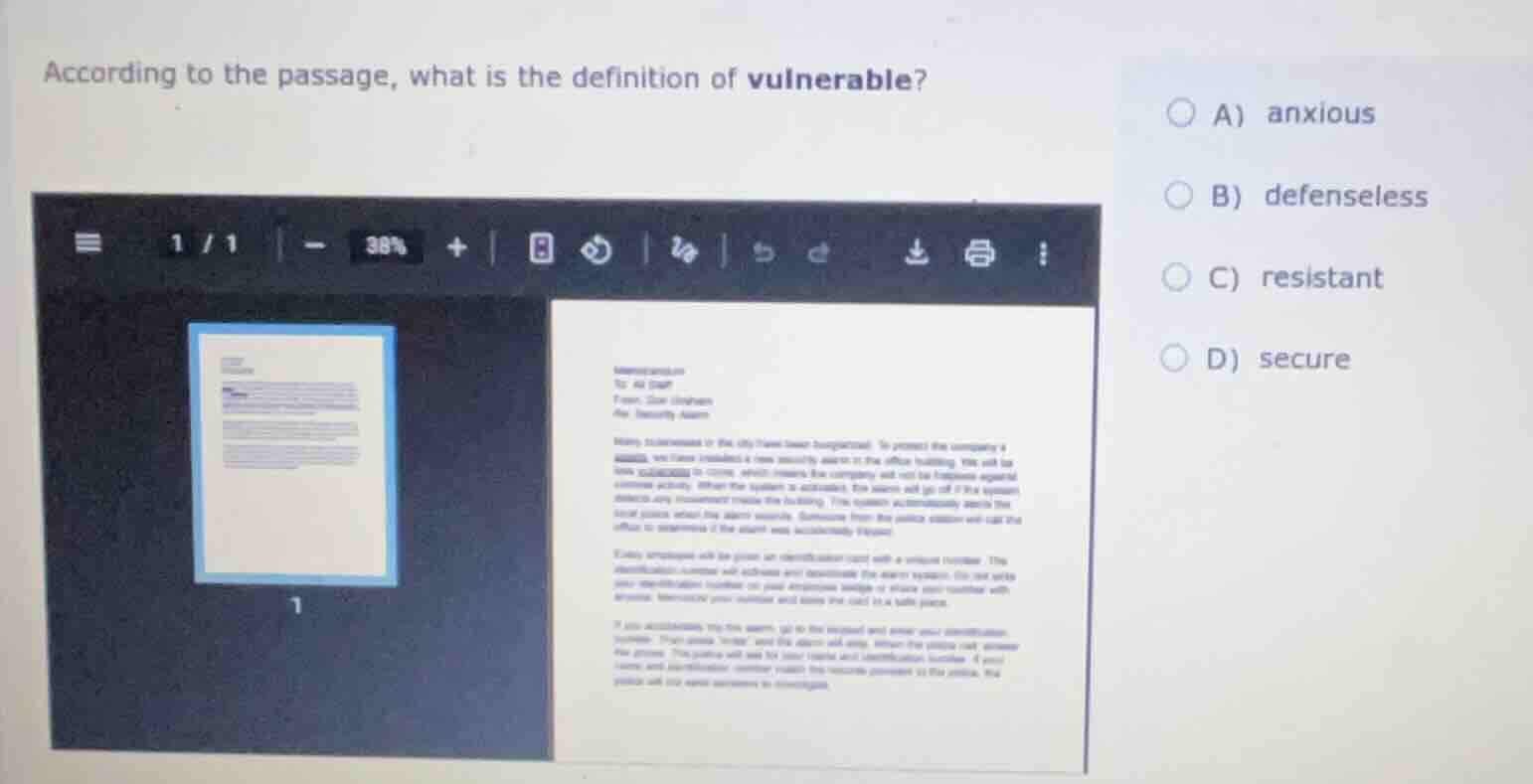
according to the passage, what is the definition of vulnerable?

a) anxious
b) defenseless
c) resistant
d) secure

Explanation:

Response

<pre_analysis>
{
"quality": "clear",
"question_count": 1,
"skills_matched": [
"direct_cot",
"multiple_choice_formatter",
"explain_then_answer",
"tutor"
],
"needs_drawing": false,
"concepts_used": [
"Vocabulary in Context",
"Reading Comprehension"
],
"new_concepts": [],
"current_concepts": [
"Vocabulary in Context",
"Reading Comprehension"
]
}
</pre_analysis>

<reasoning>

Locate the target word in the passage

Using the Reading Comprehension knowledge point, we scan the text to find the word "vulnerable". It appears in the first paragraph: "...We will no longer be vulnerable to crime, which means the company will not be helpless against criminal activity."

Analyze the context clues

Using the Vocabulary in Context knowledge point, we examine the sentence structure. The author directly defines the word in the next clause: "...which means the company will not be helpless...". This indicates that being "vulnerable" is equivalent to being "helpless" or unprotected against crime.

Evaluate the answer choices

We compare the contextual meaning ("helpless", "unprotected") with the given options:

  • (A) anxious: feeling worry or unease; does not match "helpless against crime".
  • (B) defenseless: lacking protection or support; directly matches "helpless against crime".
  • (C) resistant: offering opposition; this is the opposite of vulnerable.
  • (D) secure: safe from harm; this is also the opposite of vulnerable.

Select the correct option

Based on the contextual definition provided in the text, "defenseless" is the correct synonym for "vulnerable".
</reasoning>

<answer>
<mcq-option>(A) anxious</mcq-option>
<mcq-correct>(B) defenseless</mcq-correct>
<mcq-option>(C) resistant</mcq-option>
<mcq-option>(D) secure</mcq-option>
</answer>

<post_analysis>
{
"subject": "Others",
"question_type": "Multiple Choice",
"knowledge_point": [
"Others",
"Reading Comprehension",
"Vocabulary in Context"
]
}
</post_analysis>

Answer:

<pre_analysis>
{
"quality": "clear",
"question_count": 1,
"skills_matched": [
"direct_cot",
"multiple_choice_formatter",
"explain_then_answer",
"tutor"
],
"needs_drawing": false,
"concepts_used": [
"Vocabulary in Context",
"Reading Comprehension"
],
"new_concepts": [],
"current_concepts": [
"Vocabulary in Context",
"Reading Comprehension"
]
}
</pre_analysis>

<reasoning>

Locate the target word in the passage

Using the Reading Comprehension knowledge point, we scan the text to find the word "vulnerable". It appears in the first paragraph: "...We will no longer be vulnerable to crime, which means the company will not be helpless against criminal activity."

Analyze the context clues

Using the Vocabulary in Context knowledge point, we examine the sentence structure. The author directly defines the word in the next clause: "...which means the company will not be helpless...". This indicates that being "vulnerable" is equivalent to being "helpless" or unprotected against crime.

Evaluate the answer choices

We compare the contextual meaning ("helpless", "unprotected") with the given options:

  • (A) anxious: feeling worry or unease; does not match "helpless against crime".
  • (B) defenseless: lacking protection or support; directly matches "helpless against crime".
  • (C) resistant: offering opposition; this is the opposite of vulnerable.
  • (D) secure: safe from harm; this is also the opposite of vulnerable.

Select the correct option

Based on the contextual definition provided in the text, "defenseless" is the correct synonym for "vulnerable".
</reasoning>

<answer>
<mcq-option>(A) anxious</mcq-option>
<mcq-correct>(B) defenseless</mcq-correct>
<mcq-option>(C) resistant</mcq-option>
<mcq-option>(D) secure</mcq-option>
</answer>

<post_analysis>
{
"subject": "Others",
"question_type": "Multiple Choice",
"knowledge_point": [
"Others",
"Reading Comprehension",
"Vocabulary in Context"
]
}
</post_analysis>