QUESTION IMAGE
Question
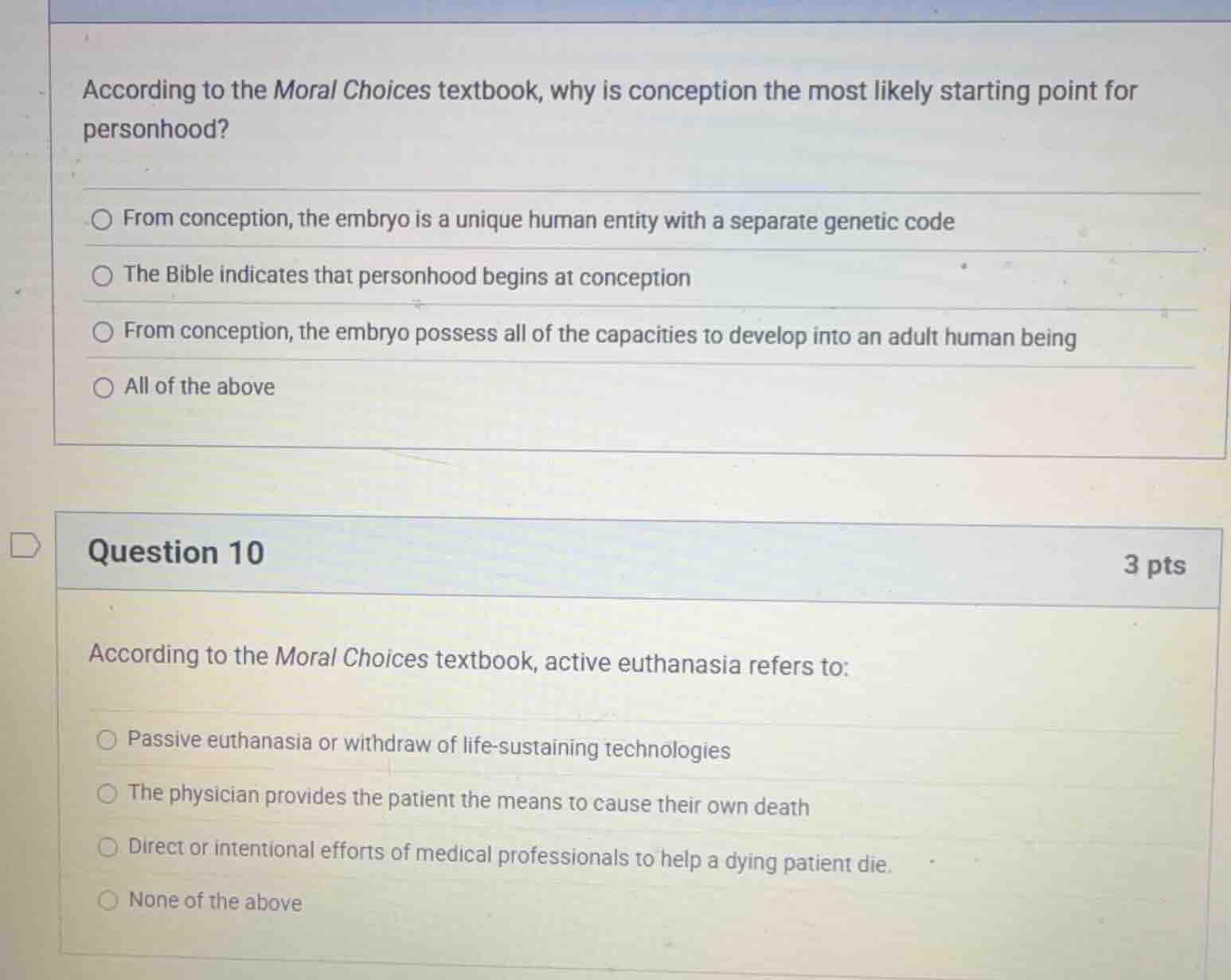
according to the moral choices textbook, why is conception the most likely starting point for personhood?
from conception, the embryo is a unique human entity with a separate genetic code
the bible indicates that personhood begins at conception
from conception, the embryo possess all of the capacities to develop into an adult human being
all of the above
question 10
3 pts
according to the moral choices textbook, active euthanasia refers to:
passive euthanasia or withdraw of life-sustaining technologies
the physician provides the patient the means to cause their own death
direct or intentional efforts of medical professionals to help a dying patient die.
none of the above
🆕 New Concept Discovered: Ethical Frameworks of Personhood and Euthanasia
Understanding how bioethics defines the beginning and end of life.
Step 1: Analyze the first question on personhood
The first question asks why conception is considered the most likely starting point for personhood according to Scott Rae's textbook Moral Choices.
In Christian ethics and the arguments presented in Moral Choices:
- Genetic uniqueness: At the moment of conception, a genetically distinct human entity is formed with its own unique DNA code (different from both the mother and the father).
- Biblical perspective: The text discusses biblical passages (such as Psalm 139) indicating that God attributes personal value to the unborn from their earliest stages.
- Inherent capacity: From conception, the zygote/embryo possesses the internal, active potential and capacity to develop into a mature adult human being, rather than just being a passive clump of cells.
Because all three individual statements represent core arguments used in the textbook to support conception as the start of personhood, the correct choice is All of the above.
Step 2: Analyze the second question on active euthanasia
The second question asks for the definition of "active euthanasia" according to the Moral Choices textbook.
Let's evaluate the distinctions made in bioethics:
- Passive euthanasia: Withholding or withdrawing life-sustaining treatment, allowing the patient to die from their underlying natural condition.
- Physician-assisted suicide: The physician provides the medical means (like a prescription), but the patient performs the final act to end their life.
- Active euthanasia: Direct, intentional actions taken by a medical professional or third party to end a patient's life (such as administering a lethal injection) to relieve suffering.
Therefore, active euthanasia refers to "Direct or intentional efforts of medical professionals to help a dying patient die."

Snap & solve any problem in the app
Get step-by-step solutions on Sovi AI
Photo-based solutions with guided steps
Explore more problems and detailed explanations
First Question:
- Correct Option: All of the above
Question 10:
- Correct Option: Direct or intentional efforts of medical professionals to help a dying patient die.