QUESTION IMAGE
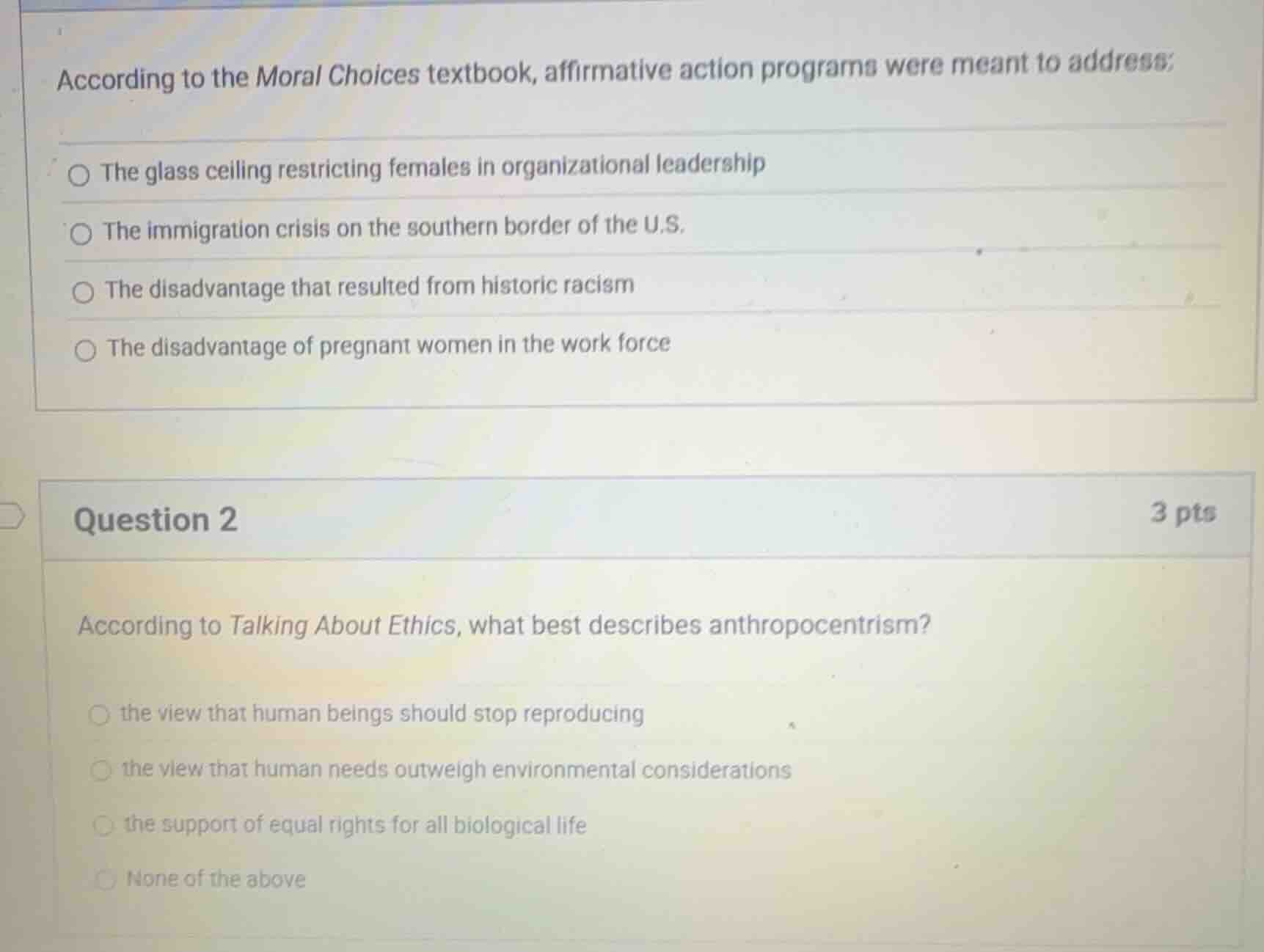
Question
according to the moral choices textbook, affirmative action programs were meant to address:
- the glass ceiling restricting females in organizational leadership
- the immigration crisis on the southern border of the u.s.
- the disadvantage that resulted from historic racism
- the disadvantage of pregnant women in the work force
question 2
according to talking about ethics, what best describes anthropocentrism?
- the view that human beings should stop reproducing
- the view that human needs outweigh environmental considerations
- the support of equal rights for all biological life
- none of the above
🆕 New Concept Discovered: Anthropocentrism and Ethical Frameworks
Human-centered perspectives in moral decision-making
Step 1: Analyze Question 1 (Affirmative Action)
According to standard ethical and sociological discussions in textbooks like Moral Choices by Scott Rae, affirmative action programs were historically designed to level the playing field. They aim to remedy the lingering systemic inequalities and disadvantages that resulted from historic discrimination and racism.
- Option 1 (glass ceiling): While related to gender equity, this is not the primary historical foundation for the initiation of affirmative action programs.
- Option 2 (immigration crisis): Unrelated to the core purpose of affirmative action.
- Option 3 (disadvantage from historic racism): This is the primary justification and intent behind affirmative action policies.
- Option 4 (pregnant women): This is addressed by specific labor laws (like the Pregnancy Discrimination Act) rather than general affirmative action.
Therefore, the correct choice is The disadvantage that resulted from historic racism.
---
Step 2: Analyze Question 2 (Anthropocentrism)
In environmental ethics, anthropocentrism is a human-centered philosophy. The word comes from the Greek anthropos (human) and kentron (center). It posits that humans are the central or most significant entities in the world, and that nature or non-human entities are valuable primarily to the extent that they serve human interests.
- Option 1 (stop reproducing): This describes anti-natalism, not anthropocentrism.
- Option 2 (human needs outweigh environmental considerations): This directly aligns with the definition of anthropocentrism, where human values and needs are prioritized over the intrinsic value of nature.
- Option 3 (equal rights for all biological life): This describes biocentrism or ecocentrism, which is the opposite of anthropocentrism.
Therefore, the correct choice is the view that human needs outweigh environmental considerations.

Snap & solve any problem in the app
Get step-by-step solutions on Sovi AI
Photo-based solutions with guided steps
Explore more problems and detailed explanations
- Question 1: The disadvantage that resulted from historic racism
- Question 2: the view that human needs outweigh environmental considerations