QUESTION IMAGE
Question
- why do coastal regions in the united states tend to have larger populations than inland regions?
a. they are farther from resources
b. they have fewer jobs
c. they offer trade access, milder climates, and major cities
d. they are protected from the weather
- which factor best explains the difference between u.s. and canadian population patterns?
a. size of the land
b. time zones
c. climate severity and settlement history
d. type of government
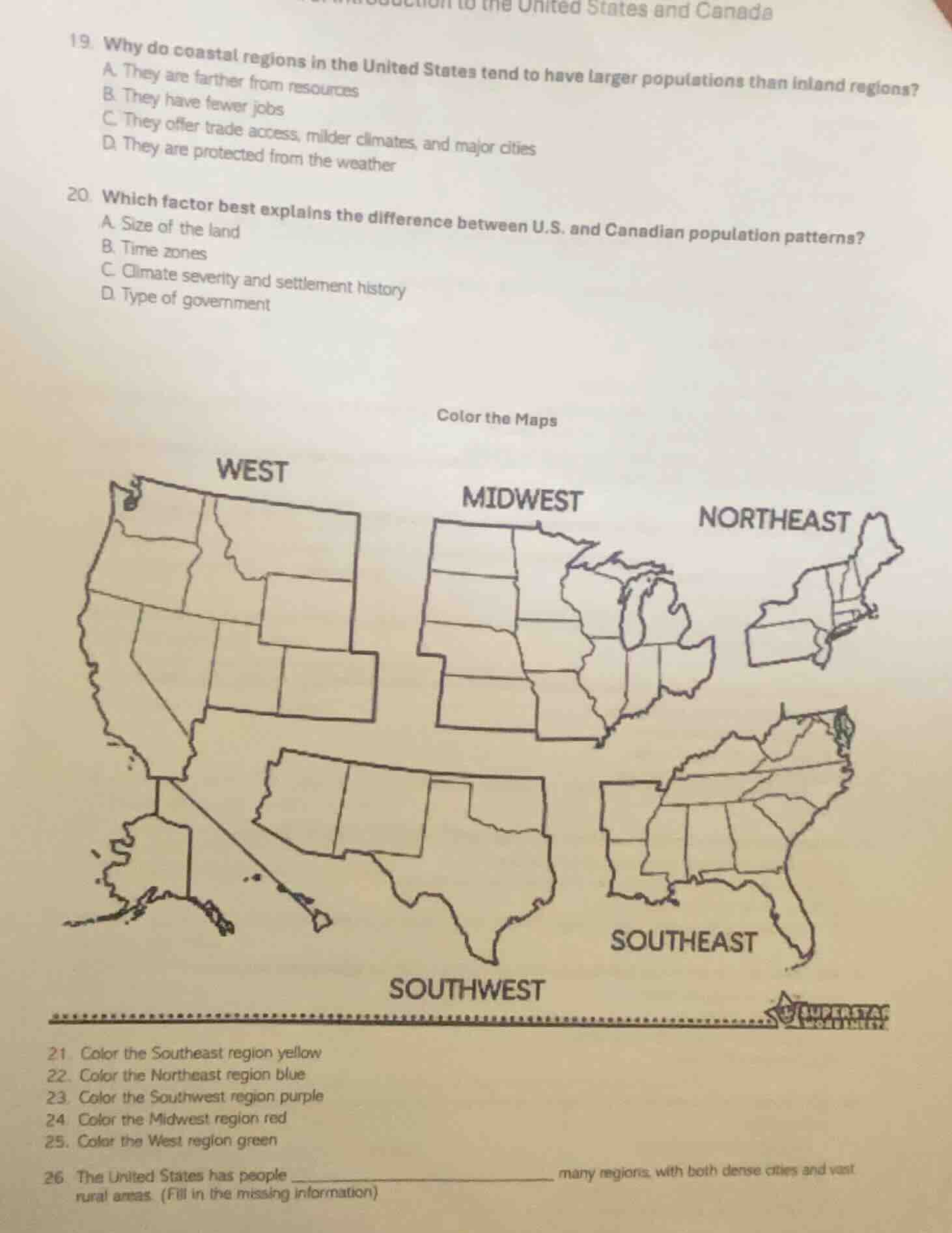
color the maps
map of us regions: west, midwest, northeast, southeast, southwest
- color the southeast region yellow
- color the northeast region blue
- color the southwest region purple
- color the midwest region red
- color the west region green
- the united states has people ______________ many regions, with both dense cities and vast rural areas. (fill in the missing information)
Brief Explanations
- Coastal U.S. regions have trade access via ports, milder climates than harsh inland areas, and major cities that draw residents, making this the correct reason for larger populations.
- Canada's harsher northern climate limits settlement to southern areas, while its later, more concentrated settlement history differs from the U.S.'s broader expansion, explaining population pattern differences.
21-25: These are map-coloring tasks matching each U.S. region to a specified color.
- The sentence describes the U.S. having people spread across many regions with diverse settlement types.

Snap & solve any problem in the app
Get step-by-step solutions on Sovi AI
Photo-based solutions with guided steps
Explore more problems and detailed explanations
- C. They offer trade access, milder climates, and major cities
- C. Climate severity and settlement history
- Color the labeled SOUTHEAST region yellow
- Color the labeled NORTHEAST region blue
- Color the labeled SOUTHWEST region purple
- Color the labeled MIDWEST region red
- Color the labeled WEST region green
- spread across