Sovi.AI - AI Math Tutor

Scan to solve math questions

QUESTION IMAGE

3. when you apply for a loan, there are a few financial terms you need …

Question

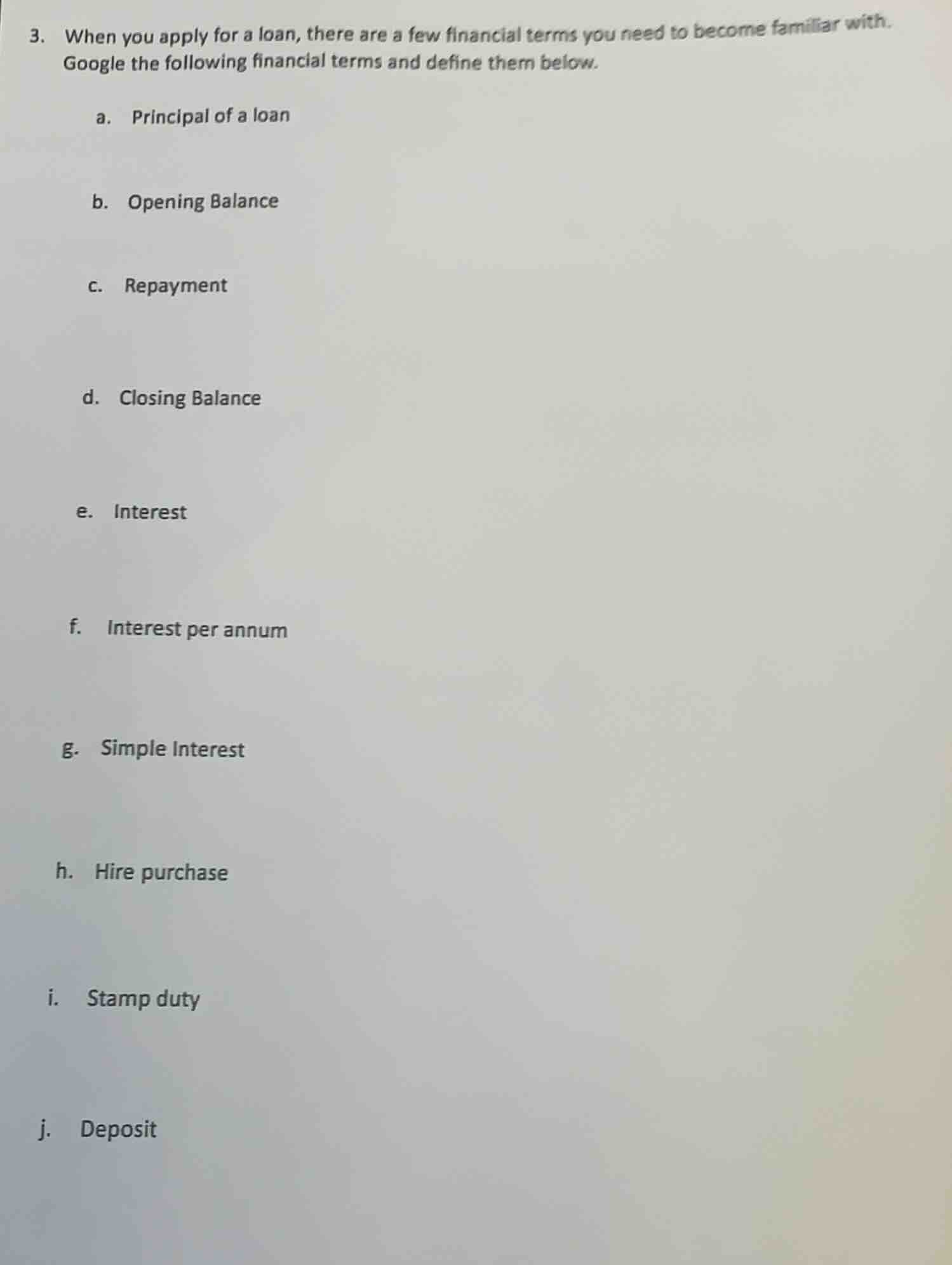
  1. when you apply for a loan, there are a few financial terms you need to become familiar with. google the following financial terms and define them below.

a. principal of a loan

b. opening balance

c. repayment

d. closing balance

e. interest

f. interest per annum

g. simple interest

h. hire purchase

i. stamp duty

j. deposit

Explanation:

Response

<pre_analysis>
{
"quality": "clear",
"question_count": 1,
"skills_matched": [
"direct_cot",
"explain_then_answer",
"tutor"
],
"needs_drawing": false,
"concepts_used": [],
"new_concepts": [
"Financial Terminology",
"Loan Concepts",
"Interest Types"
],
"current_concepts": [
"Financial Terminology",
"Loan Concepts",
"Interest Types"
]
}
</pre_analysis>

<reasoning>

Define core loan balance terms

We define the initial amount borrowed and the starting balance of a period.

  • Principal of a loan: The original sum of money borrowed, excluding interest.
  • Opening Balance: The amount of money in an account at the start of a tracking period.

Define transaction and ending terms

We define the payments made and the final balance of a period.

  • Repayment: A regular payment made to pay back a debt.
  • Closing Balance: The amount of money in an account at the end of a tracking period.

Define interest-related terms

We define the cost of borrowing money over time.

  • Interest: The fee charged by a lender for borrowing money.
  • Interest per annum: The yearly interest rate charged on a loan.
  • Simple Interest: Interest calculated only on the original principal amount.

Define purchasing and tax terms

We define specialized buying methods, government fees, and initial payments.

  • Hire purchase: A system where a buyer pays in installments while using the asset.
  • Stamp duty: A government tax levied on legal documents and transactions.
  • Deposit: An initial partial payment made to secure a purchase or loan.

</reasoning>

<answer>
a. Principal of a loan: The original amount of money borrowed, before any interest is added.

b. Opening Balance: The amount of money in a financial account or loan at the start of a specific accounting period.

c. Repayment: A scheduled payment made by a borrower to a lender to pay down the outstanding balance of a loan.

d. Closing Balance: The final amount of money remaining in a financial account or loan at the end of a specific accounting period.

e. Interest: The cost of borrowing money, typically expressed as a fee or charge paid by the borrower to the lender.

f. Interest per annum: The annual rate of interest charged on a loan or earned on an investment.

g. Simple Interest: A quick method of calculating interest charge where interest is determined solely on the original principal amount.

h. Hire purchase: A buying arrangement where a customer makes an initial down payment and pays the remaining balance plus interest in installments, obtaining ownership only after the final payment.

i. Stamp duty: A state or local government tax imposed on certain legal documents and transactions, such as purchasing property or vehicles.

j. Deposit: A sum of money paid upfront as an initial installment to secure the purchase of an item or to initiate a loan.
</answer>

<post_analysis>
{
"subject": "Business",
"question_type": "Free Response",
"knowledge_point": [
"Business",
"Finance",
"Financial Terminology"
]
}
</post_analysis>

Answer:

<pre_analysis>
{
"quality": "clear",
"question_count": 1,
"skills_matched": [
"direct_cot",
"explain_then_answer",
"tutor"
],
"needs_drawing": false,
"concepts_used": [],
"new_concepts": [
"Financial Terminology",
"Loan Concepts",
"Interest Types"
],
"current_concepts": [
"Financial Terminology",
"Loan Concepts",
"Interest Types"
]
}
</pre_analysis>

<reasoning>

Define core loan balance terms

We define the initial amount borrowed and the starting balance of a period.

  • Principal of a loan: The original sum of money borrowed, excluding interest.
  • Opening Balance: The amount of money in an account at the start of a tracking period.

Define transaction and ending terms

We define the payments made and the final balance of a period.

  • Repayment: A regular payment made to pay back a debt.
  • Closing Balance: The amount of money in an account at the end of a tracking period.

Define interest-related terms

We define the cost of borrowing money over time.

  • Interest: The fee charged by a lender for borrowing money.
  • Interest per annum: The yearly interest rate charged on a loan.
  • Simple Interest: Interest calculated only on the original principal amount.

Define purchasing and tax terms

We define specialized buying methods, government fees, and initial payments.

  • Hire purchase: A system where a buyer pays in installments while using the asset.
  • Stamp duty: A government tax levied on legal documents and transactions.
  • Deposit: An initial partial payment made to secure a purchase or loan.

</reasoning>

<answer>
a. Principal of a loan: The original amount of money borrowed, before any interest is added.

b. Opening Balance: The amount of money in a financial account or loan at the start of a specific accounting period.

c. Repayment: A scheduled payment made by a borrower to a lender to pay down the outstanding balance of a loan.

d. Closing Balance: The final amount of money remaining in a financial account or loan at the end of a specific accounting period.

e. Interest: The cost of borrowing money, typically expressed as a fee or charge paid by the borrower to the lender.

f. Interest per annum: The annual rate of interest charged on a loan or earned on an investment.

g. Simple Interest: A quick method of calculating interest charge where interest is determined solely on the original principal amount.

h. Hire purchase: A buying arrangement where a customer makes an initial down payment and pays the remaining balance plus interest in installments, obtaining ownership only after the final payment.

i. Stamp duty: A state or local government tax imposed on certain legal documents and transactions, such as purchasing property or vehicles.

j. Deposit: A sum of money paid upfront as an initial installment to secure the purchase of an item or to initiate a loan.
</answer>

<post_analysis>
{
"subject": "Business",
"question_type": "Free Response",
"knowledge_point": [
"Business",
"Finance",
"Financial Terminology"
]
}
</post_analysis>