QUESTION IMAGE
Question
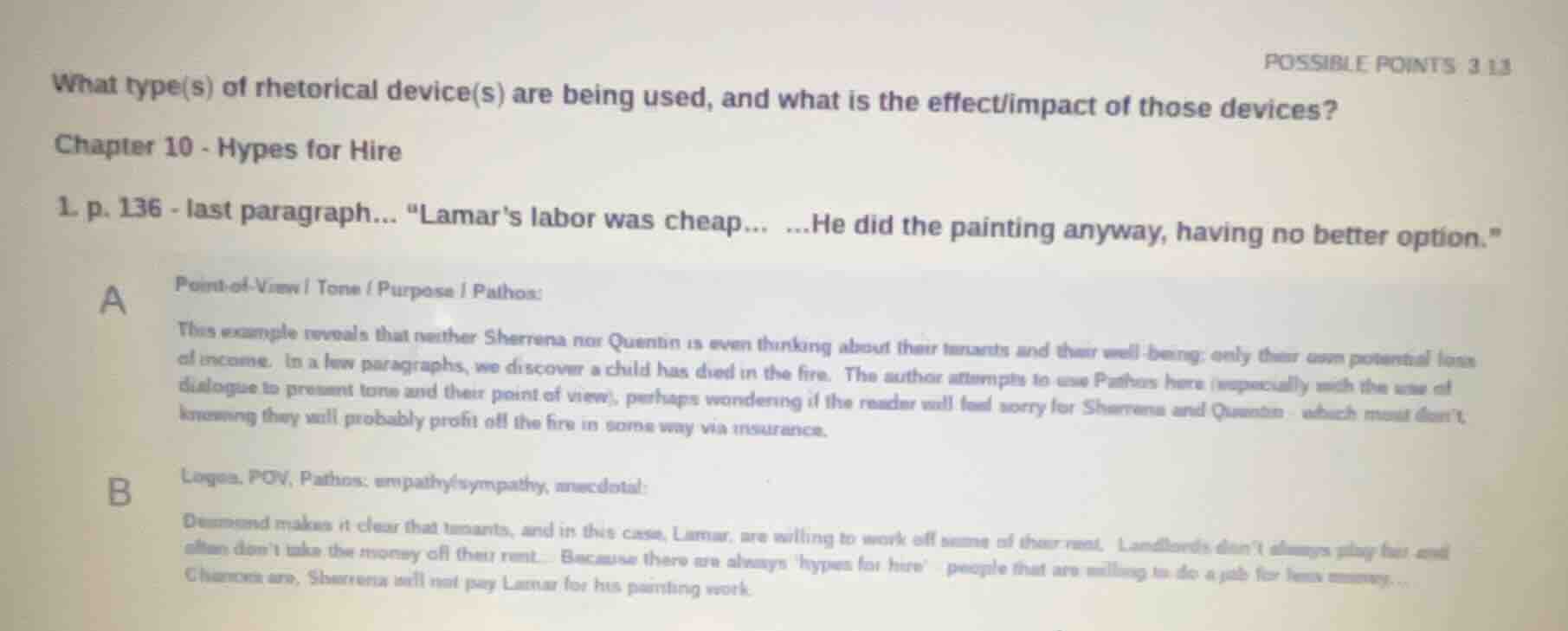
what type(s) of rhetorical device(s) are being used, and what is the effect/impact of those devices?
chapter 10 - hypes for hire
- p. 136 - last paragraph... \lamars labor was cheap... ...he did the painting anyway, having no better option.\
a point-of-view / tone / purpose / pathos:
this example reveals that neither sherrena nor quentin is even thinking about their tenants and their well - being; only their own potential loss of income. in a few paragraphs, we discover a child has died in the fire. the author attempts to use pathos here (especially with the use of dialogue to present tone and their point of view), perhaps wondering if the reader will feel sorry for sherrena and quentin - which most dont, knowing they will probably profit off the fire in some way via insurance.
b logos, pov, pathos; empathy/sympathy, anecdotal:
desmond makes it clear that tenants, and in this case, lamar, are willing to work off some of their rent. landlords dont always play fair and often dont take the money off their rent. because there are always hypes for hire - people that are willing to do a job for less money... chances are, sherrena will not pay lamar for his painting work.
To answer this, we analyze the options:
For Option A:
- Rhetorical Devices & Effect: The analysis focuses on Pathos (appeal to emotion) and point - of - view/tone. The author uses the situation of Lamar (working cheaply, no better option) and the later tragedy of a child’s death to create an emotional appeal. The effect is to make readers question their sympathy for the landlords (Sherrena, Quentin) as they prioritize profit over tenants’ well - being, and the contrast between the landlords’ profit - seeking and the tenants’ hardships evokes an emotional response (Pathos) and shapes the reader’s view (point - of - view/tone) about the landlords’ morality.
For Option B:
- Rhetorical Devices & Effect: It uses Logos (logical appeal: stating that tenants like Lamar work off rent, landlords often don’t play fair, and there are always “hypes for hire”) and Pathos (empathy/sympathy for tenants like Lamar who work for low pay). The anecdotal device (using Lamar’s example) supports the logical argument (Logos) about landlords’ unfair practices and the prevalence of “hypes for hire”. The effect is to logically convince readers of the landlords’ unfairness and evoke sympathy for tenants, while the anecdote makes the argument more relatable.
If we consider the question’s focus on rhetorical devices and their impact, and the common use of Pathos (emotional appeal) and anecdotal/logical appeals in such literary analysis (subfield: Literature, under Arts), let's assume the best - fitting option based on typical rhetorical analysis:

Snap & solve any problem in the app
Get step-by-step solutions on Sovi AI
Photo-based solutions with guided steps
Explore more problems and detailed explanations
A. Point - of - View / Tone (Purpose) / Pathos: This example reveals that neither Sherrena nor Quentin is even thinking about their tenants and their well - being; only their own potential loss of income. In a few paragraphs, we discover a child has died in the fire. The author attempts to use Pathos here (especially with the use of dialogue to present tone and their point of view), perhaps wondering if the reader will feel sorry for Sherrena and Quentin – which most don’t, knowing they will probably profit off the fire in some way via insurance.
(Note: The choice between A and B can also depend on the exact text context, but A’s focus on Pathos and the emotional impact of the later tragedy (child’s death) ties well to rhetorical analysis of emotional appeal in literary texts.)