QUESTION IMAGE
Question
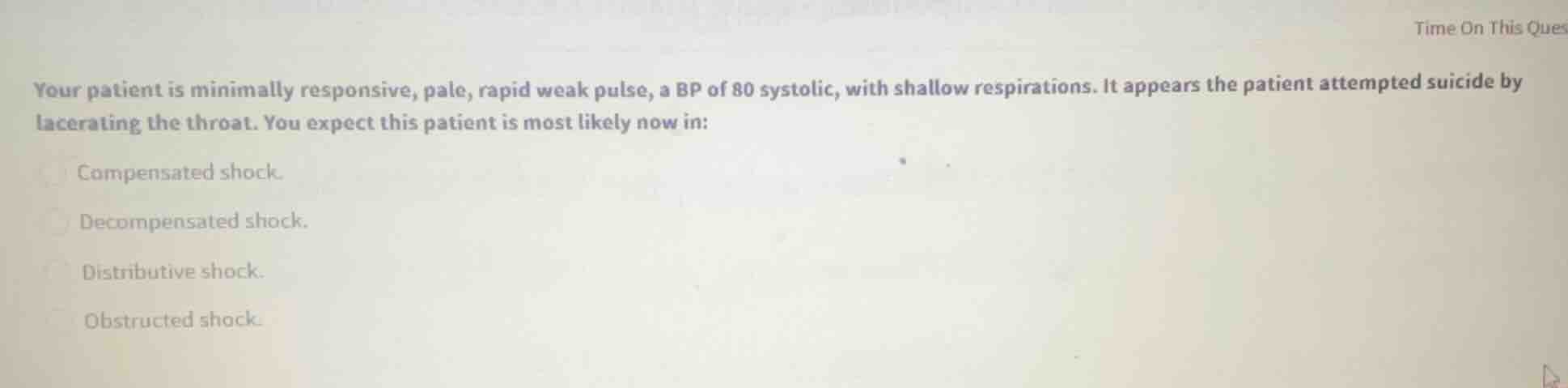
your patient is minimally responsive, pale, rapid weak pulse, a bp of 80 systolic, with shallow respirations. it appears the patient attempted suicide by lacerating the throat. you expect this patient is most likely now in:
compensated shock.
decompensated shock.
distributive shock.
obstructed shock.
Analyze patient presentation
The patient is minimally responsive, pale, has a rapid weak pulse, shallow respirations, and a blood pressure of 80 mmHg systolic. There is a history of trauma (throat laceration), indicating severe external hemorrhage.
Evaluate blood pressure status
A key clinical indicator of the stage of shock is the patient's blood pressure. In adults, a systolic blood pressure below 90 mmHg indicates hypotension. When the body can no longer maintain a normal blood pressure despite compensatory mechanisms (like tachycardia and vasoconstriction), the patient has transitioned from compensated shock to decompensated shock.
Differentiate shock stages
- Compensated shock: The body maintains cardiac output and organ perfusion. Blood pressure remains within normal limits, though heart rate increases and skin becomes pale/cool.
- Decompensated shock: Compensatory mechanisms fail. Blood pressure drops (systolic < 90 mmHg), mental status deteriorates (minimally responsive), and respirations become shallow.
- Distributive/Obstructive shock: These are functional classifications of shock etiology, but the clinical presentation of profound hypotension and altered mental status specifically defines the stage of shock as decompensated.

Snap & solve any problem in the app
Get step-by-step solutions on Sovi AI
Photo-based solutions with guided steps
Explore more problems and detailed explanations
- Compensated shock.
- Decompensated shock. (Correct answer)
- Distributive shock.
- Obstructed shock.