QUESTION IMAGE
Question
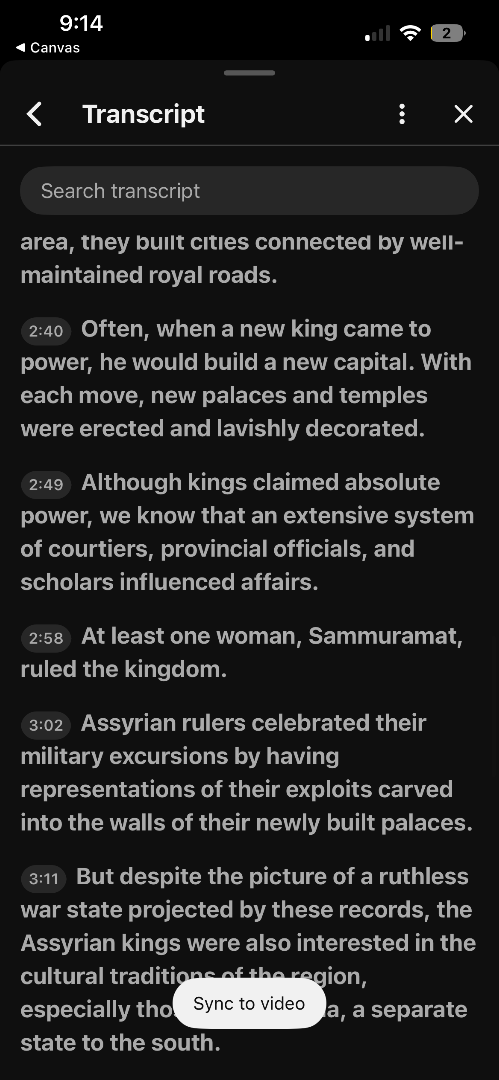
area, they built cities connected by well-maintained royal roads.
often, when a new king came to power, he would build a new capital. with each move, new palaces and temples were erected and lavishly decorated.
although kings claimed absolute power, we know that an extensive system of courtiers, provincial officials, and scholars influenced affairs.
at least one woman, sammuramat, ruled the kingdom.
assyrian rulers celebrated their military excursions by having representations of their exploits carved into the walls of their newly built palaces.
but despite the picture of a ruthless war state projected by these records, the assyrian kings were also interested in the cultural traditions of the region, especially those of babylonia, a separate state to the south.
🆕 New Concept Discovered: Historical Evidence Analysis
Evaluating primary and secondary accounts to understand ancient governance.
Step 1: Analyze the claim of absolute power
The transcript states: "Although kings claimed absolute power, we know that an extensive system of courtiers, provincial officials, and scholars influenced affairs."
This tells us that while the rulers publicly projected a system of total, unchecked control (absolute power), the actual administration of the empire relied heavily on a large network of advisors, administrators, and experts who held significant influence over state decisions.
Step 2: Identify the role of palace carvings
The transcript notes: "Assyrian rulers celebrated their military excursions by having representations of their exploits carved into the walls of their newly built palaces."
This indicates that palace art and relief carvings served as a form of state propaganda, designed to project an image of military dominance, strength, and a ruthless war state to anyone who visited the palace.
Step 3: Synthesize the findings
By combining these points, we can draw two main conclusions about Assyrian governance and power projection:
- Governance was collaborative, not purely absolute: Despite the official narrative of absolute royal authority, a complex bureaucracy of officials, scholars, and courtiers actively shaped imperial policy and daily affairs.
- Art was used as political propaganda: Palace carvings were deliberately used to project power, document military victories, and reinforce the fearsome reputation of the state.

Snap & solve any problem in the app
Get step-by-step solutions on Sovi AI
Photo-based solutions with guided steps
Explore more problems and detailed explanations
Based on the transcript, we can conclude two key aspects of Assyrian governance:
- The limits of absolute rule: While Assyrian kings claimed absolute power, their actual governance was highly dependent on and influenced by an extensive bureaucracy of courtiers, provincial officials, and scholars.
- The use of art for propaganda: Rulers used palace architecture and wall carvings of their military exploits to project an image of a powerful, ruthless war state to consolidate their authority.